Languages
Wednesday, November 18, 2026



News and Views from the Global South
Global Governance
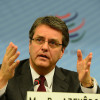
A Healthy Trading System Requires Progress and Engagement at All Levels
This is a challenging time for global trade. According to the current World Trade Organization (WTO) new trade forecasts, global goods trade is expected to grow by 2.8%, making 2016 the fifth consecutive year of sub 3% growth. The gross domestic product (GDP) is still the most critical variable in the trade expansion equation, and as long as GDP growth remains low, trade numbers are likely to follow a similar trend.
The Art of Covering Up in Somaliland
Amid the hustle and bustle of downtown Hargeisa, Somaliland’s sun-blasted capital, women in various traditional Islamic modes of dress barter, argue and joke with men—much of it particularly volubly. Somaliland women are far from submissive and docile.
India’s Dwindling Tiger Population Face Water Shortages

At the beginning of the 19th century there were 40, 000 tigers in the world. Today, around 4,000 tigers are left in the wild globally, 2,226 of which are in India.

A Triple Threat in the Fight Against AIDS
The exclusion of key regions, contexts and actors must be addressed in order to successfully and significantly reduce HIV and AIDS by 2020, many have noted during the High Level Meeting on Ending AIDS this week.
‘What Can We Do for You?’ Aid Projects Pour Into Myanmar
International aid agencies, big and small, are beating a path to Myanmar, relishing the prospect of launching projects in a nation of 51 million people tentatively emerging from more than five decades of military rule.
Asia-Pacific Region Aims at Hunger-Free Goal by 2030
The Asia Pacific region - home to two of the world's most populous countries - faces major food security challenges. According to the Asian Development Bank (ADB), both China and India are not only two of the world's biggest producers of food but also the world's biggest consumers.
Thousands of Minor Refugees Stranded Alone in Greece
Closure of the Western Balkans route has trapped tens of thousands of refugees heading to Central and Northern Europe in Greece, including many unaccompanied minors who either escaped from war zones after having lost their relatives, or were sent ahead in hopes of helping their families follow afterwards.
Humanitarian Aid – Business As Unusual?
Big business is most often seen by human rights defenders and civil society organisations as “bad news,” as those huge heartless, soulless corporations whose exclusive goal is to make the biggest profits possible. Too often and in too many cases this is a proven fact.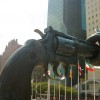
UN-Backed Findings Reveal Startling Small Arms Trade Increase
A report released by The Small Arms Survey here Monday shows the alarming rate at which the trade of small arms and light weapons has been increasing.
New Protocol Aims to Cut Trillion-Dollar Food Waste Bill
Four years ago, 27-year-old Tsering Dorji of western Bhutan’s Satsam village took to organic vegetable farming. Since then, thanks to composted manure and organic pesticide, the soil health of his farm has improved, and the yield has increased manifold.
Polynesian Voyagers Bring Messages of Hope to UN on World Oceans Day
Polynesian voyagers who have sailed the world by canoe using ancient navigation skills will bring pledges they collected along the way to the UN on Wednesday as part of World Oceans Day celebrations.
World Bank Slightly Downgrades Global Economic Prospects for 2016
Global economic growth prospects for 2016 have been downgraded to 2.4 percent, in contrast to the initial 2.9 percent rate expected in January 2016, according to a World Bank report released here Wednesday.
“Them” and “Us”, a Metaphor for Urban Inequality
For the inhabitants of “Bajo Autopista” (Under the Freeway), a slum built under an expressway in the Argentine capital, “they” are the people who live in areas with everything that is denied to “us” – a simple definition of social inclusion and a metaphor for urban inequality.
Coral Reef Tourism in Danger as Reefs Struggle to Adapt to Warming
A recent UN Educational, Scientific and Cultural Organization (UNESCO) report on world heritage sites in danger from climate change received widespread media attention after the Australian government requested the removal of a chapter on the Great Barrier Reef.
Of GPA 5 and Journalistic Ethics
We can all agree that in recent years, there has been a tremendous increase in the number of Bangladeshi students who achieved GPA 5 in both the secondary and higher secondary school level. It is no doubt heartening to see that our young people are doing so well in their studies, but it also raises a pertinent question as to the standard of education that is being imparted in our schools and colleges. The question that has been frequently asked is “Do so many deserve GPA 5 or is it being handed out to them?” This issue undoubtedly requires serious reflection.Reproductive Violence
Two things happened in Islamabad on the same day recently, one pertaining to the Council of Islamic Ideology and the other to Pemra, the electronic media regulator. CII sanctioned `lightly beating` of wives and Pemra banned (and then partially withdrew) advertisements of contraceptives.
Q&A: Crisis and Climate Change Driving Unprecedented Migration
Climate change is now adding new layers of complexity to the nexus between migration and the environment.Issues of Overdevelopment
Urbanisation in Pakistan has been moving at a swift pace, albeit in a rudderless fashion. The Planning Commission estimates that half of our population shall be living in cities by 2030. Among other impacts, the approach and conduct of land governance shall drastically change for the worse, clear evidence of which is visible even today.
Playing Pandu with Politics and Cricket Too
Writing in the British newspaper “Guardian”, columnist Owen Jones gave a succinct reason why politicians in this country are trusted even less than estate agents, a breed that hardly evokes public confidence and respect.
World Oceans Day – A Death Sea Called Mediterranean
While the United Nations identifies 17 major regional seas in its planning, the Mediterranean is perhaps the most dramatic case as it has gone from being the so-called cradle of civilization to be a cemetery for thousands of asylum-seekers and migrants. And it is most probably also the most polluted water basin the whole world. See this report.
Mega Dams Remain Controversial Source of Energy
Although mega dams can have devastating impacts on ecosystems and indigenous communities, many of the world’s poorest countries still see them as a way to fill gaping holes in their energy supplies.« Previous Page — Next Page »


The Week with IPS

NEXT STOP - SDGs
Tracking global progress towards a sustainable world
Tracking global progress towards a sustainable world
