Languages
Saturday, October 17, 2026



News and Views from the Global South
Global Governance
South-South & Triangular Cooperation to Help Achieve UN’s Development Goals
The 2021 high-level commemoration of the United Nations Day for South-South Cooperation, organized ahead of the opening of the seventy-sixth session of the United Nations General Assembly, provided an opportunity to discuss Southern solidarity in support of a more inclusive, resilient and sustainable future while effectively responding to the global COVID-19 crisis across the global South.
Latin America’s Central Banks Push Climate Crisis to the Back Burner
Despite the impact that their policies have with regard to the climate emergency, Latin America's central banks continue to avoid applying guidelines in measures that affect the operation of credit institutions, which distances them from compliance with the Paris Agreement on climate change.
“Time Is A-Wasting”: Making the Case for CEDAW Ratification by the United States
The U.S. is one of only a handful of countries that has yet to ratify the Convention on the Elimination of Discrimination against Women (CEDAW), rendering it “strange bedfellows” with Sudan, Somalia, Iran, Tonga, and Palau.
The Main Contradiction of the Modern Era
The main contradiction of the modern era, and indeed of all human history, is not between capitalism and socialism, and not even between authoritarianism and democracy, but between individualism and collectivism, between public and personal interests. Countries that are getting ahead in the economic race allow themselves the luxury of individualism, prioritizing human rights, which ultimately undermines their political and economic power and causes their decline and the rise of more collectivist civilizations. It is literally the story that is as old, as the world itself…
Afghanistan – Another Viet Nam?
There are several points of similarity between the war in Afghanistan and the war in Viet Nam. The Taliban, like the North Vietnamese and the Viet Cong, proved to be formidable tacticians and fighters. They managed to contain a far better equipped opponent and mount effective counteroffensives; access sufficient domestic and foreign funding to pay their fighters and support their families; build a formidable intelligence network; and acquire necessary technical capabilities in areas such as repair and maintenance of small arms.
Afghanistan – a Turning Point?
Headlines in the press, live TV and internet coverage of the chaos at Kabul airport following the American withdrawal from Afghanistan has generated an impression around the world of an American foreign policy debacle, belittling the supremacy of American military power.
Biden’s Revenge: Fueling ‘Madness of Militarism’ in Afghanistan
Joe Biden provided a stirring soundbite days ago when he spoke from the White House just after suicide bombers killed 13 U.S. troops and 170 Afghans at a Kabul airport: “To those who carried out this attack, as well as anyone who wishes America harm, know this: We will not forgive. We will not forget. We will hunt you down and make you pay.”
South Korea’s Women Fire Back
A strong movement of feminism is sweeping South Korea. While women feel empowered to stand their ground, the men are retaliating. When South Korean archer An San won two gold medals in just two days during the recent Tokyo Olympics, the response the 20-year-old received at home was a mixed. Some men were angered and said her medals should be taken away. Why? Because her short hair was a sign that she was a ‘man-hating’ feminist.
Taliban’s Quest for Legitimacy – and a Seat at the United Nations
When the Taliban captured power back in 1996, one of its first political acts was to hang the ousted Afghan President Mohammed Najibullah in Ariana Square in Kabul. The newly-installed government played a triple role: judge, jury and hangman, all three rolled into one.
Social Protection at a Crossroad—and Poverty On the Rise
How can we ensure a resilient and inclusive recovery from COVID-19? How can we hold on to the target of eradicating poverty and hunger by 2030, with the pandemic still ongoing?
After Afghanistan, War’s Idealists Must Accept Defeat
As the Western occupation of Afghanistan has come to an end, TV news is broadcasting harrowing scenes of death and destruction, citizens in fear, allies abandoned, and dreams dashed.
Crisis in Afghanistan: All Eyes on Central Asia
The political and human catastrophe in Afghanistan is threatening to boost autocratic tendencies in Tajikistan and Uzbekistan. With the withdrawal of US and coalition forces from Afghanistan and the rapid takeover by the Taliban, neighbouring Central Asian countries are once again at the focus of international attention.
Cuba, a Small Island State Seeking to Manage Its Vulnerability
Cuba, already beset by hurricanes, floods, droughts that deplete its main water sources, among other natural disasters, has seen its socioeconomic difficulties, similar to those faced by other Caribbean island nations, aggravated by the COVID-19 pandemic.
The Tragedy of Afghanistan: Is there a Way Forward?
The desperate scenes at Kabul airport of Afghans trying to flee and the image of the US Airforce flight taxying down the runway with people scrambling to climb on, is an image that will be etched on our minds forever.
Afghanistan – What Will Happen Now?
As I write this, India has just celebrated the 75th anniversary of its independence from British rule (Pakistan celebrated it a day earlier). But there is little cause for celebration. A dark shadow looms over both countries, indeed over much of the world as well.
Where Did We Go So Wrong in Afghanistan?
President Biden’s decision to finally withdraw US forces from Afghanistan was the correct decision and certainly overdue. However, the lack of preparation to do so orderly and safely was yet another terrible mistake in a string of mistakes that have plagued the US from day one.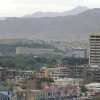
Were US War Profiteers the Ultimate Winners in Battle-Scarred Afghanistan?
As the 20-year-old occupation of Afghanistan came to an inglorious end last week, there were heavy losses suffered by many-- including the United States, the Afghan military forces and the country’s civilian population.
Afghan Female Journalist: “I may not be Alive by the time US can Evacuate Me”
Steven Butler describes it as “mass panic.” As the Taliban seized control of Afghanistan, CPJ’s Asia program coordinator has been fielding “hundreds and hundreds” of daily pleas from journalists asking for help to flee the country.
How Many More Innocent Lives Must be Lost in Tigray, asks Adama Dieng
Despite a June 30 unilateral ceasefire declaration by Ethiopian President Abiy Ahmed, United Nations agencies say a recent escalation in fighting has been ‘disastrous’ for children, amid reports of over 100 children being killed in an attack on displaced families.
How to Protect Your Data from Malicious Encryption?
Ransomware is deploying its encryption right on your computer. The malicious process runs in the background as you continue your everyday activities suspecting no cyber disaster ahead.
As the Taliban Returns, 20 Years of Progress for Women Looks Set to Disappear Overnight
As the Taliban takes control of the country, Afghanistan has again become an extremely dangerous place to be a woman.« Previous Page — Next Page »





The Week with IPS

NEXT STOP - SDGs
Tracking global progress towards a sustainable world
Tracking global progress towards a sustainable world
