Languages
Saturday, October 17, 2026



News and Views from the Global South
Global Governance

A New Global Agenda on Sport for 2030
Does sport need to change to better serve society? What can sport and development actors do better in the future? How can sport play a greater role in contributing to development and peace? Can we reimagine the role of sport? Can we resolve the conflict and contradictions inherent within sport?
Indigenous Peoples Need Recognition, Reciprocity & a New Social Contract
The coronavirus pandemic has invited the world to reflect on relationships – between people within and across countries and communities, and between people and nature around the planet.
UN’s Ultimatum to Staff & Diplomats: Get Vaccinated or Go Hungry
As New York city struggles to cope with the widespread outbreak of the deadly new coronavirus Delta variant -– which has claimed more than 100,000 cases per day in the US— the United Nations is laying down strict guidelines at its headquarters (UNHQ) for staffers, diplomats and visiting delegates.
World Bank Looks to Trains in Argentina’s Climate Battle
Argentina will receive a 347 million dollar loan from the World Bank to upgrade one of the most important suburban railway lines in the city of Buenos Aires. The operation is part of the multilateral lender’s new policy, which deepens its commitment to the fight against climate change.
Will World Leaders Risk a UN Visit Amid a Surge in the Deadly Virus?
The annual high-level debate during the upcoming 76th General Assembly sessions beginning September 21 —which traditionally attracted over 150 world leaders in a pre-pandemic era-- is now clouded in uncertainty.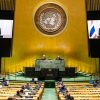
Trouble in the Land of Smiles?
Could the rise of the youth-led 'Ratsadon' movement lead to changes in Thai politics? Prime Minister General Prayuth Chan-ocha now faces an ongoing threat as the movement continues to mobilize many, especially young people, against the government. They have broken traditional taboos by opening new conversations about the monarchy and shaping public discourse to question many conservative views in Thai society.
UN Preaches Transparency to the Outside World but Fails to Practice it in its Own Backyard
The United Nations has long preached the wisdom of transparency and accountability to the outside world, but has failed to practice the same principles in its own backyard – or even on the 39th floor of the Secretary-General’s office in the UN Secretariat.
Human Ingenuity Now Needed for Our Survival
The scientific and other human accomplishments in my 90-year lifetime are not only amazing but also seem to have apparently made too many of us arrogant and feckless about our future human survival on Earth. Or, if not arrogant or feckless, at least largely or unknowingly ignoring the urgency of the onset of devastating environmental threats.
Hunger Will Not Be Defeated Without a Better Environment, Nutrition and Health
The UN Food Systems Pre-Summit, held from 26 to 28 July in Rome, highlighted, as perhaps never before, that hunger can be defeated if we also manage to protect the environment, promote better nutrition and health. This new mentality and comprehensive approach consist of considering higher levels of economic investment to stimulate trade in agriculture and food and pursue a path towards a sustainable future.
Multilateral Peace Operations in 2020: Developments & Trends
The first year of the Covid-19 pandemic saw wide-ranging impacts on multilateral peace operations. The crisis simultaneously affected all operations, host nations, headquarters and contributing countries. It caused major disruption—from the political-strategic level where mandates are drawn up, down to the operational and tactical levels.
Daphne Caruana Galizia’s Family Hope ‘Lessons are Learnt’ to Protect Investigative Journalists
The family of slain journalist Daphne Caruana Galizia has called for “lessons to be learnt” after an independent inquiry found that the Maltese state bore responsibility for her death.
Increasing Revenue & Protecting Public Health During the COVID-19 Pandemic
The COVID-19 pandemic has taken its toll on millions of families and damaged the economy of countries around the globe. Rich countries with higher vaccination rates have opened up their economy ahead of poor countries that are still struggling to fight the pandemic.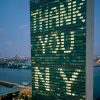
After Vilifying the UN, US Returns to the World Body
Ed Koch, a sharp-tongued Mayor of New York city (1978-89), once stopped short of using a four-letter word to denounce the United Nations. Instead, he opted for a five-letter word dismissing the UN as a “sewer” relegating it to the lower depths of degradation.
WTO Inches Closer To Agreement on Harmful Fishing Subsidies
After more than 20 years of negotiations, the World Trade Organization (WTO) has moved a step closer to an agreement on ending harmful fishing subsidies. The deal would set new rules for the global fishing industry and limit government funding that contributes to unsustainable fishing and the depletion of global fish stocks.
Are UN’s Sustainable Development Goals in the Doldrums Due to the Corona Virus?
A short answer to this question is yes, but it is obvious and predictable failure was visible for some time. This debate started before 2015, the year in which the Sustainable Development Goals (or SDGs) were adopted as successors to the Millennium Development Goals (MDGs) agreed in 2000. The 8 MDGs were expanded to 17 massive goals and 169 targets.
Alarming Crisis of Impunity for Crimes Against Journalists in DRC
The Democratic Republic of Congo is one of the most hostile and dangerous regions for journalists. A complex conflict, deeply rooted in the country’s past, allows very little freedom, both movement and the press.
Revamped UN System Crucial for a Changing World
From an international humanitarian perspective, the first half of 2021 has been disappointing. We’re no further ahead in ending the conflict in Syria and Yemen. From the fledgling democracy that it had become, Myanmar has descended into what most of its people had hoped was a bygone era of military rule. And in Ethiopia, where its Prime Minister, Ably Ahmed, was awarded the Nobel Peace Prize in 2019, armed conflict in Tigray is preventing the 2020 winners of the very same prize, the World Food Programme, from delivering the food needed to stop at least 350,000 Ethiopians from starving to death.
Stepping Up to Meet Low-Income Countries’ Pandemic Recovery Needs
Low-income countries have been hard hit by the pandemic. Their large financing needs are only likely to grow as they deal with the crisis and its economic aftermath.
Latin America Sets an Example in Welcoming Displaced Venezuelans
The exodus of more than five million Venezuelans in the last six years has led countries in the developing South, Venezuela's neighbours, to set an example with respect to welcoming and integrating displaced populations, with shared benefits for the new arrivals and the nations that receive them.
UNFPA Calls for Protection & Justice for Women & Girls in Tigray
The 2018 Nobel Laureate, Dr. Denis Mukwege, a gynaecologist celebrated for his work with survivors of sexual assault in the Democratic Republic of the Congo's Panzi Hospital once said: “Rape is a strategy of war – it is meant to destroy women and communities physically and mentally”.
Is it Time to Create a UN Political Body for Climate Change?
As a wisecracking cynic once remarked: “The sun would never set on the British empire because God wouldn’t trust an Englishman in the dark“. Perhaps it was an uncharitable remark because most of the British colonies have long gone.« Previous Page — Next Page »





The Week with IPS

NEXT STOP - SDGs
Tracking global progress towards a sustainable world
Tracking global progress towards a sustainable world
