
Saturday, October 17, 2026



News and Views from the Global South
IPS UN: Inside the Glasshouse

Mozambique Reels from Repeated Attacks on Press Freedom
While Mozambique was recently rattled by an arson attack on a local media organisation, experts say that it’s only a part of a worrying pattern of continuous attacks on the media in the country.
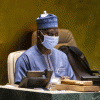
The First “Virtual” Post-Pandemic UN General Assembly Meeting
Although we have not convened in this Hall since March, New York-based delegations have worked tirelessly to uphold the values and principles set out in the Charter of the United Nations, whilst contending with the COVID-19 pandemic.
Qatar Accuses UAE of Racial Discrimination in UN’s Highest Court
Qatar officials reiterated their claim on Wednesday that the United Arab Emirates (UAE) be held responsible for their “discrimination” against Qatari citizens, as the third day of public hearings proceeded at the International Court of Justice (ICJ), the United Nation’s highest court. But foreign policy experts caution that the case is not good for stability in the Persian Gulf region.
South Sudan – COVID-19 and Ongoing Violence has Catastrophic Impact on Civilians
Large-scale intercommunal violence on civilians in the Jonglei and greater Pibor regions in South Sudan has led to the mass displacement of thousands of people who are living in the open without health care, adequate food, shelter, water or sanitation in the middle of the rainy season.
Racism at the UN: Practice What You Preach
When two recent staff surveys, one in Geneva and the other in New York, revealed widespread racism at the United Nations, it triggered the obvious question: why shouldn’t the UN Human Rights Council (HRC) probe these charges?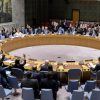
It is Time for a Democratic Global Revolution
The people of the world need to seize the moment and bring about a democratic global revolution. It is time for a global parliament and real representation. More than 21 million people got infected with the novel coronavirus and over 770,000 have died. Never before did the world witness similar collective lockdowns of social and economic activity that had to be enforced to contain the pandemic.
Madagascar – Jails Hold more Pre-trial Prisoners than Convicted Criminals
The recent killing of 22 prisoners in Madagascar during a prison escape on Sunday, Aug. 23 has brought the extraordinary situation of the country’s prisons under a spotlight. Human rights watchdog Amnesty International has condemned the killings, criticising the current judicial system that has led to Madagascar’s prisons holding more people awaiting trial than convicted criminals.
Covid is a Great Unequaliser, But the Crisis Could Enable us to Build a More Equal Future
Any of the first names that the media reported as having Covid were those of the rich and powerful, from movie stars to political leaders. Be ye ever so high, the virus is above thee – or so it seemed.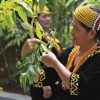
Covid-19 Pandemic Another Threat to Indigenous Communities
The voices of indigenous people worldwide are being silenced and their lives made invisible. Stewards of the earth, they are left at the fringes of public discourse in countries around the globe. Indigenous people are not “extinct”, they exist, and they are building innovative networks and solutions, that could be the key to many of our world’s problems.
Transforming the Global Economy or Parachuting Cats into Borneo?
The COVID 19 Pandemic continues relentlessly. Deaths approaching a million globally, 22 million infected and growing. Brazil, India, the US and Russia accounting for almost 50% of the total cases in the world.
Q&A: Ageing Africa Left out of COVID-19 Policies
Nearly three quarters of respondents in a survey across 18 African countries have claimed that their countries’ COVID-19 responses are gravely lacking in addressing the ageing population.
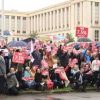
Staff Surveys Reveal Widespread Racism at the United Nations
As it continues to vociferously preach the virtues of equality—advocating equal rights for all, irrespective of race, sex, language or religion-- the United Nations has been quick to condemn racism and racial discrimination worldwide.
We Must Prioritize Local Solutions to Global Problems
World Humanitarian Day is the perfect time to refresh our push to localize humanitarian aid for COVID-19 and all the challenges we face. Celebrating #RealLifeHeroes!
Q&A: Family Farming in Latin America & the Caribbean Hard Hit by COVID-19 Restrictions
With limited transport options to carry their goods to the market, lack of protective gear, and limited financial resources, family farmers across Latin America are facing grave consequences as a result of the COVID-19 pandemic.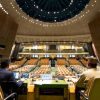
If Trump Delivers His Last Hurrah to an Empty United Nations, Will it Still Make a Sound?
There is no love lost between the United Nations and US President Donald Trump. When he addressed the high-level segment of the UN General Assembly in September 2018, Trump falsely told delegates that "in less than two years, my administration has accomplished more than almost any administration in the history of our country"
Impending Food Crisis in Lebanon will Largely Affect Migrant Workers
Migrant workers and refugees in Lebanon will “inevitably” suffer the most as food insecurity threatens the nation following last week’s blast.
Reform of the United Nations Organization
The US detains essential keys to the political and economic stability of the planet. The last four years have been challenging for Americans, their allies, and the rest of the world.
COVID-19 – Some 23.8 Million More Children Will Drop out of School
Countries with low human development are facing the brunt of school lockdowns, with more than 85 percent of their students effectively out of school by the second quarter of 2020, according to a United Nations policy brief on the impact of COVID-19 on education.
The UN General Assembly: A 75-Year Journey Towards the Future We Want
The United Nations came into existence at a time of great despair, when the penholders of its founding document dared to imagine a better world, one that would be defined by peace and equality. Visionary world leaders chose hope over cynicism, empathy over indifference and partnership over distrust when they came together in San Francisco on 26 June 1945 to sign the Charter of the United Nations. They embarked upon a new, rules-based world order, with an Organization of unrivalled legitimacy at its core.
The Charter of the United Nations: Ideals for Shaping Our Reality
“Reconciling the requirements of the ideal with the possibilities of the real": this is how Georges Bidault, Minister for Foreign Affairs and head of the French delegation to the San Francisco Conference, summed up the objective pursued by the drafters of the Charter of the United Nations. On the still living ashes of the Second World War, the fathers of an Organization charged with developing friendly relations between nations, promoting human rights and economic and social progress were less utopian than visionary. They understood that the community of States should have a common constitution. It has been tested by conflict, crisis and upheaval, but its resilience and strength have shaped the very structure of contemporary international relations.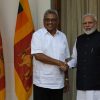
Modern Tools, Age-old Wisdom: on India-Sri Lanka Relations
The unique India-Sri Lanka relationship, de jure, is between equals as sovereign nations. But it’s asymmetric in terms of geographic size, population, military and economic power, on the one hand, and social indicators and geographical location, on the other. It is steeped in myth and legend, and influenced by religious, cultural and social affinities.« Previous Page — Next Page »





It was dubbed "The Glass House" by U.S. ambassador James Wadsworth in 1966. Half a century later, the United Nations has gradually expanded its role as agent of peace and protector of the world's vulnerable populations, while simultaneously facing internal pressures to become more inclusive, increase transparency and maintain legitimacy in the post-Cold War political and economic order. Highlighting the local impacts of global policies on economic development, environment, health and human rights, IPS's coverage goes beyond the edicts of the Security Council to illuminate the power struggles, successes and shortcomings of the 193-member institution as it grapples with crises like climate change, armed conflict, poverty and HIV/AIDS.

The Week with IPS
