
Thursday, October 29, 2026



News and Views from the Global South
IPS UN: Inside the Glasshouse

Online Trolls, Bots, Snoopers Imperil Democracy: Report
Using armies of online fans, trolls and, automated ‘bots’, the world’s authoritarians and populists are increasingly using the web to drown out opponents and swing public opinion and elections their way, a new study says.
#KeepthetruthAlive
 Each year 100 journalists are killed in the course of their work. Nine out of 10 cases remain unresolved.
On Nov. 2 the United Nations recognises the International Day to End Impunity for Crimes against Journalists.

The Rapid Decline in Civic Freedoms: 5 Countries to Keep an Eye on
2019 has been a year of protest. From Algeria, to Chile, to Hong Kong, ordinary people have taken to the streets to voice their dissatisfaction with governance systems. Their causes are as diverse as the people pouring into the streets.
UN Turns to Global Investors for Billions Needed for its 2030 Development Agenda
A Republican US Senator of a bygone era was once quoted as saying “a billion here, a billion there, and pretty soon you're talking about real money.”
Beyond the Headlines: the Development Story Behind Irregular Migration
Last week, a too-familiar human tragedy captured news headlines. 39 people were found dead inside a shipping container on an industrial estate in Essex in Southeast England; 31 men and 8 women whose individual identities, for now, remain anonymous, as authorities begin to investigate one of Europe’s worst people-trafficking cases.
Insurance Scheme Offers Hope for Drought-stricken African Farmers
A partnership between United Nations and African Union (AU) agencies will help African economies insure themselves against the droughts and other extreme weather events that plague the continent, organisers say.
Swiftly Ending Tobacco Epidemic Requires Government Action, Not Empty Promises
New information published in the Morbidity and Mortality Weekly Report shows that action taken by just 11 countries – most of them low- or middle-income – has resulted in 20 million fewer adult tobacco users in 2017 compared with 2008. Seventy percent of the world’s tobacco users live in low- and middle-income countries.
Europe Should Rethink Assumptions about African Migrants: UN
Sub-Saharan African migrants who risk perilous sea crossings to Europe are often assumed to be illiterate, jobless chancers in desperate bids to flee stagnation and rampant corruption in their home countries. But a survey of some 2,000 irregular African migrants in Europe found them to be more educated than expected, while many of them were leaving behind jobs back home that paid better-than-average wages.
The Neoliberal Fuel to the Anti-Gender Movement
The number of newly elected Members of the European Parliament (MEPs) who oppose women’s reproductive rights, gender equality, sexuality education, same sex marriage and the Council of Europe Convention on Violence Against Women (Istanbul Convention) stands at around 30 per cent.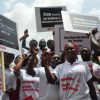
Private Finance and Agenda 2030: Way Off-Track
Four years ago, UN member states proclaimed their ambitions for development in a document named “Transforming Our World”, also known as Agenda 2030. Today, according to several assessments including of the UN’s inter-agency task force on financing for development (FfD) transformation has fallen off-track. It has received too little money, political commitment and action to change the workings of the global economy. Agenda 2030 spells out the Sustainable Development Goals (SDGs) needed to ‘transform our world’.
Trump Poised to Withdraw from Open Skies Treaty
The Trump administration is reportedly on the verge of withdrawing from the 1992 Open Skies Treaty, according to lawmakers and media reports. Rep. Eliot Engel (D-N.Y.), chairman of the House Foreign Affairs Committee, first sounded the public alarm in an Oct. 7 letter to National Security Advisor Robert C. O’Brien.
Religious Leaders’ Plea to Member States: Honour Your Commitment to the UN
On the 8th of October, the United Nations Secretary General Antonio Guterres warned that the organisation is running out of money by the end of October - "member States have paid only 70 percent of the total amount needed for [our] regular budget”.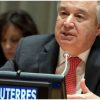
UN’s 75th Anniversary Shadowed by Right-Wing Nationalism, Widespread Authoritarianism & Budgetary Cuts
When the six much-ballyhooed high-level UN meetings concluded late September, there were mixed feelings about the final outcomes. And civil society organizations (CSOs), who were mostly disappointed with the results, are now gearing themselves for two upcoming key climate summit meetings: COP25 in Santiago, Chile in December and COP26 in Glasgow, UK in late 2020, along with the 25th anniversary of the Beijing Women’s Conference scheduled to take place in September 2020 in New York.
Huge moment for Ethiopia as Abiy Ahmed wins Nobel Peace prize
Ethiopia found itself in the global spotlight for all the right reasons after Abiy Ahmed, its young, dynamic prime minister was awarded the Nobel Peace Prize.
Wanted: Bold Leadership by António Guterres: On Sustainable Funding of United Nations
The United Nations is faced with a financial crisis once again. Leaders of as many as 64 countries who paraded and pontificated at the UN General Assembly and its multiple Summit meetings in September 2019 were deadbeats, who had not paid their dues in full to the UN for this year.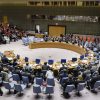
Aid Groups Warn of Humanitarian Crisis from Turkey’s Assault on Syria
Aid groups operating in northeastern Syria have been raising the alarm about civilian casualties and an impending humanitarian crisis this week, as Turkey began a military assault on the turbulent region’s Kurdish militants.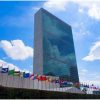
UN’s Cash Crisis Can Have Serious Consequences, Staff Unions Warn
The UN’s smoldering cash crisis, which has threatened staff salaries and payments to vendors, has triggered strong reactions and rattled the over 6,400 staffers who work in the 39-storeyed Secretariat building in New York.
“Window of Opportunity to Avoid Catastrophic Climate Change is Fast Shrinking”
 “The window of opportunity to avoid catastrophic climate change is fast shrinking,” executive director of the Green Climate Fund (GCF), Yannick Glemarec, tells IPS.
UN Faces its Worst Cash Crisis in Nearly a Decade
The Secretary-General wrote to Member States about the worst cash crisis facing the United Nations in nearly a decade. The Organization runs the risk of depleting its liquidity reserves by the end of the month and defaulting on payments to staff and vendors.
UN Women Ambassadors Rise to New Heights But Fall Short of Gender Parity
New York’s diplomatic community has continued to be enriched by a record number of women Permanent Representatives (PRUNs)—50 in all, as of October 2 – compared with about 15 to 20 back in the 1980s and early 1990s.
Global Climate Change Investment Heavily Tilted Towards Mitigation and Low on Adaptation
Good news: the graph depicting climate investments has been steadily increasing. Climbing from the 2012 figure of $360 billion in climate investments across the world to close to $600 billion currently.« Previous Page — Next Page »





It was dubbed "The Glass House" by U.S. ambassador James Wadsworth in 1966. Half a century later, the United Nations has gradually expanded its role as agent of peace and protector of the world's vulnerable populations, while simultaneously facing internal pressures to become more inclusive, increase transparency and maintain legitimacy in the post-Cold War political and economic order. Highlighting the local impacts of global policies on economic development, environment, health and human rights, IPS's coverage goes beyond the edicts of the Security Council to illuminate the power struggles, successes and shortcomings of the 193-member institution as it grapples with crises like climate change, armed conflict, poverty and HIV/AIDS.

The Week with IPS
