Languages
Thursday, October 1, 2026



News and Views from the Global South
Headlines
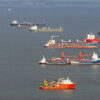
Global Economy Endures War Shock—So Far
More than three months into the war in the Middle East, the global economy appears to be holding up. Commodity prices, inflation and expectations for it, and financial conditions have all been impacted—but not yet in ways that signal a global slowdown. And we have seen strong economic momentum in the world’s biggest economies, the United States and China.
GLOBAL TAX TREATY: ‘Without Sustained Pressure from Organised Movements, the Political Space to Win Simply Doesn’t Open’
CIVICUS discusses a proposed United Nations (UN) tax treaty with Jenny Ricks, General Secretary of Fight Inequality Alliance, a global movement that organises to counter the concentration of power and wealth in the hands of a small elite.

New Caledonia’s Election to Set the Stage for New Talks With France on Its Political Future
The French overseas territory of New Caledonia in the Pacific will hold elections on 28 June in the wake of the latest agreement on its political status with France being rejected. The representatives elected in the three provincial assemblies and territorial congress will then determine a new round of negotiations as the mission of achieving consensus on New Caledonia’s future continues.
Fiscal Reform Needs More Than Strong Finance Ministries
In the human body, connective tissue rarely gets the attention given to the heart, lungs or brain. But without it, even the strongest organs cannot function as a system. It binds, supports and connects a healthy body. Fiscal systems work in a similar way.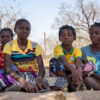
UNICEF: Overlapping Climate Hazards Threaten Children’s Quality of Life
A new report from the United Nations Children’s Fund (UNICEF) highlights the vast, overlapping climate threats affecting children worldwide, which is leaving them increasingly vulnerable to escalating risks across health, security, and education.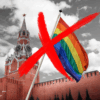
Systematic Vilification of Russian LGBTQ+ Community Pushes Them Underground
LGBTQ+ people in Russia are being forced to increasingly use self-censoring strategies in their daily lives as they struggle with systemic vulnerability, one of the largest surveys of the LGBTQ+ community in the country has shown.
This Is Not Just Ukraine: The Global Danger of Normalising Russia’s Occupation Crimes
People often discuss Russia’s aggressive war against Ukraine in terms of drones, missiles, shifting front lines, and territorial borders. But this war has another dimension — the human one.
The Last Bottle of Halothane: Why Africa Cannot Wait
Global health has a habit of mobilizing around the visible and the dramatic. Ebola, malaria, and Mpox have all dominated headlines related to Africa in recent years, and understandably so. But nobody is talking about one of the most consequential regional health crises waiting to happen.
From Victoria to Mombasa: Will Africa’s Ocean Voice Be Heard?
Tomorrow, Africa hosts the Our Ocean Conference on its own shores for the first time, in Mombasa. This is more than a diplomatic milestone. It is a test of whether we, as Africans, are prepared to safeguard our ocean as a shared heritage and a pillar of our future prosperity.
World Cup Preparation Scores a Goal against the Environment
The construction of an elevated pedestrian bridge connecting central and southern Mexico City –one of roughly 2,000 urban works tied to the 2026 FIFA World Cup, began last October, and, with only days to go before the tournament's kickoff, remains unfinished.
How the G7 Can Reset Global Finance
When G7 leaders arrive in Evian-les-Bains this month, France will host more than another summit. It will host a test of whether rich-country coordination can still solve problems that no country can manage alone. Aid budgets are shrinking, debt-service bills are crowding out investment, climate shocks are damaging infrastructure, and private capital remains scarce and expensive where it is needed most.
Chatbots & AI Companions: From Science Fiction to Everyday Reality
AI chatbots and AI companions designed to simulate human-like conversation and provide relationships and companionship through generative artificial intelligence (AI) have rapidly evolved from science fiction into everyday reality.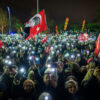
Erdoğan’s Race to Avoid Orbán’s Fate
When Hungary’s Prime Minister Viktor Orbán lost by a landslide to a unified opposition in April, Turkey’s President Recep Tayyip Erdoğan was watching. The lesson he drew was not that he should be more moderate; it was that he needed to crack down harder. He had already arrested Istanbul Mayor Ekrem İmamoğlu, the opposition Republican People’s Party (CHP)’s leading presidential contender, in March 2025. After Orbán’s defeat, he has accelerated his campaign to fracture the opposition and rewrite the rules before the next election in 2028.
Nuclear Nonproliferation Outcomes Stall in Backdrop of Geopolitical Strife
On principle, the nonproliferation of nuclear weapons is an issue that unites the international community. But for a select few states, these principles came with conditions and a refusal to compromise on their security strategy.
The End of the Gulf Model?
The German government, along with a number of other countries, are currently organising flights to evacuate travellers and influencers stranded in the Gulf states. For many citizens of other nationalities, however, there is no such assistance. They remain stuck in precarious situations, marked by exploitation and insecurity.
Health Emerges as a Strategic Frontline for Africa Ahead of Bonn Climate Conference
Africa contributes the least to global greenhouse gas emissions, yet it faces some of the world's most severe climate-related health impacts. Several realities define the continent's climate and health landscape – increased infectious diseases, air pollution, death, disruption and pressure on health systems through heatwaves, floods, droughts and storms.
Africa Needs a Radical Plan to Tackle 15M Youth Job Crisis
Africa has no problem with ideas, but the struggle is in how to implement them, leaders said at an inaugural forum convened to promote action on development.
BOTSWANA: ‘Court Rulings Matter, but It’s Sustained Civic Action That Turns Them into Real Protection’
CIVICUS discusses Botswana’s decriminalisation of same-sex relations with Faith Gunda, a Botswana-based law student and human rights defender, a member of the CIVICUS Protest Lab and co-founder of Sisterhood Chain International, a solidarity initiative that supports grassroots groups and amplifies young women’s voices.

Ocean Economy Reaches $2.5 Trillion as Services Become the Largest Share of Ocean Trade
The global ocean economy continues its expansion, with ocean-related trade reaching USD 2.5 trillion as of 2025. Ocean services now make up the majority of the ocean trade, accounting for 58.9 percent of the composition, up from 47.8 percent in 2020.
Africa Pushes for Data Sovereignty and Digital Independence
African leaders are sharpening their focus on digital sovereignty, warning that the continent’s economic future will depend not just on connectivity, but on who controls its data—and where it is stored.
In Afghanistan, Female Journalists Can Neither Ask Questions Nor Appear on Screen
Afghanistan ranks 175th in the Reporters Without Borders Press Freedom Index this year. Out of 180 countries on the list, only Iran, Syria, China, North Korea and Eritrea ranked lower than Afghanistan.« Previous Page — Next Page »


