Languages
Friday, November 13, 2026



News and Views from the Global South
Headlines

To Fund Grand Inga Using Green Hydrogen, Equity and Ethics Matter
Visions of Grand Inga, a proposed massive hydropower plant in the Democratic Republic of Congo (DRC) powering much of Africa, have excited energy experts, investors, and governments for decades. The announcements this week by the Australian company, Fortescue Metals Group, and its chairman, billionaire Andrew Forrest, of their plans to develop Inga for green hydrogen exports brings this vision a little closer to reality.
Africa Can Be Self-Sufficient in Rice Production
Every year, people in Sub-Saharan Africa consume 34 million tons of milled rice, of which 43 percent is imported. But the COVID-19 pandemic has greatly hampered supply chains, making it difficult for imported rice to reach the continent. Indeed, if immediate action is not taken, the supply shortfall will further strain the region’s food systems which are already impacted by the pandemic.
The Energy Revolution Is Here: How to Be Part of It
The industrial revolution took 100 years. The digital revolution, two decades. The next global revolution, the energy revolution, has already begun. But how fairly and how fast it happens is the biggest challenge of our time.
For People with Disabilities, COVID-19 Lays Bare the Weaknesses in Social Safety Nets
People with disabilities were particularly hard hit by the social and economic impacts of efforts to control COVID-19.
Call for Political Belt-tightening to Prevent Drought Becoming the Next Pandemic
“Drought is on the verge of becoming the next pandemic and there is no vaccine to cure it.”
The Caribbean Looks to Research for Answers to COVID-19, NCD’s and Climate Change Challenges
In 1956, the Caribbean held its first major scientific meeting, organised by the Standing Advisory Committee for Medical Research in the British Caribbean. At the time, the Mayaro Virus, a dengue-like viral disease often called ‘jungle flu’ had just been identified as a new human disease agent by W.G Downs and G.H Wattley in Trinidad.
Apocalypse Now? Christian Fundamentalists and COVID-19
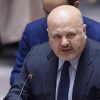
Will a British ICC Chief Prosecutor be Brave Enough to Investigate UK & its Allies?
As British barrister Karim Khan QC begins his term as ICC chief prosecutor, his first steps should be to proceed with investigations into alleged war crimes involving UK allies in Afghanistan and Palestine.
‘Prison was Horrible but I Will Still do my Work as a Journalist’ – Jeffrey Moyo Upon Prison Release
International correspondent Jeffrey Moyo, who was a released from detention today after being arrested for breaching Zimbabwe’s Immigration Act by helping two foreign journalists work in the country, says press freedom is undermined when journalists cannot work undeterred.
To Reverse Food Insecurity Build a Climate Resilient Agricultural Sector
The number of people facing acute food insecurity has hit a five-year high, according to a recently released annual report by the Global Network Against Food Crises (GNAFC) - an international alliance of the United Nations, the European Union, governmental and non-governmental agencies working to tackle food crises. In addition, the report noted that 28 million people were one step away from starvation. This was attributed to conflict, economic shocks due to COVID-19 and climate change associated weather events.
Setting the Stage for Wars During a Global Pandemic
Looking through my emails for the last year, I was struck by how often the adjective “unprecedented” occurred. The term, of course, referred to the global Covid-19 pandemic. One would imagine that this unprecedented year would result in unprecedented trends in other aspects of life.
Central Sahel: Ground Zero in Tackling Climate Change Through Education
The climate crisis is amplifying the effects of instability and violence in the world’s poorest countries. Nowhere is this more visible than in Africa’s Central Sahel region, where increasing temperature, floods, droughts and other climate change-induced disasters are triggering conflicts, displacement, and pushing girls and boys into the shadows.
Soil for Survival: Countries Commit to Halt Land Degradation
India’s Prime Minister Narendra Modi has told the first United Nations General Assembly meeting on desertification and drought in a decade, that his country’s report card will show it is well on track to meet its land restoration commitments.

Betting on Green Hydrogen in Chile, a Road Fraught with Obstacles
Chile is in a privileged position in the world to produce green hydrogen and boost the development of the new fuel thanks to the country’s optimal conditions for generating solar and wind energy, but the large investment required and the scarcity of water are two of the biggest obstacles to overcome.
Developing Country Health Professionals Sidelined in Canadian Healthcare
In Canada, we are fortunate to have many talented newcomers eager to contribute to the country, including thousands of doctors from Africa, Asia and the Middle East who meet Canadian standards but are blocked from becoming practicing physicians. These doctors are Canadian citizens and permanent residents with recognized training and experience.
The Marginalisation of Africa
Is Africa marginalised in contemporary economics and politics, and in contemporary economic and political research? Impressions gathered over the years and a bit of evidence (much more could be assembled) indicate that it is. I would distinguish three types of marginalisation: objective, objectified and subjective marginalisation.
World’s Nuclear Arms on High Operational Alert — & Ready to Strike
The world’s nine nuclear armed states have downsized their military arsenals, but made up for their loss by increasing the number of weapons on high operational alert, according to a new report from the Stockholm International Peace Research Institute (SIPRI).
Powerful States Push Tax Race to the Bottom
Last week, the largest rich countries, home to most major transnational corporations (TNCs), agreed to a global minimum corporate income tax (GMCIT) rate. But the low rate proposed and other features will deprive developing countries of their just due yet again.
Britain Must Fix Its Anti-Muslim Sentiment Problem
In 2015, When Rabina Khan was running as an independent candidate in the Tower Hamlets’ mayoral elections in London, a male voter asked her what colour her hair was under her veil. Rabina replied and said, it was pink. This small interaction is what got Rabina inspired to write her book, My Hair is Pink Under This Veil.
Charcoal Production Risks Future of Zimbabwe’s Native Forests
Once a week a tonnage of fresh charcoal is dropped off at Sibangani Tshobe's rugged, pit-stop stall by a hired, battered old Bedford lorry. Small, makeshift trolleys — nicknamed Scania's — quickly cart off small loads and disappear into Old Pumula, the oldest suburb in the country’s second-largest city of Bulawayo.
Letter from Rome – Italy at the Crossroads
Italy, as other countries, has been struggling to balance the health and economic challenges posed by COVID-19. Controlling the spread of the virus implied restrictions on economic activity, on school and college attendance, and on personal movement. It also had to deal with the economic and social implications of a fall of almost 10% in GDP. This has been hard for a country which, even before the pandemic, was one of the slowest growing economies in Europe, with unemployment, especially among young people in the South of the country, at alarming levels.« Previous Page — Next Page »


