Languages
Saturday, November 14, 2026



News and Views from the Global South
Headlines

More Children in Zimbabwe Are Working to Survive: What’s Needed
The ability of Zimbabwean families to take care of children has been compromised by a collapsing economy, compounded by COVID-19. About 4.3 million people in rural communities, including children, are food insecure this year. The World Food Programme indicates that at least 60% of the population of Zimbabwe need food aid.
Despite Conflict and COVID-19, Children Still Dream to Continue Their Education in Afghanistan
As if four decades of war were not enough, then came the pandemic. For each of the past five years, Afghanistan has been identified by the United Nations as the world’s deadliest country for children and, despite progress made in peace talks between the government and the Taliban, child and youth casualties from the ongoing conflict continue to mount in 2020.
Trump Is Gone, But Trumpism Remains
Now it is clear that Joe Biden is the new president of the United States. It is unlikely that Donald Trump’s legal manoeuvring will change the election results, as when a conservative Supreme Court in 2000 decided in favour of George Bush over Al Gore, who lost by 535 votes.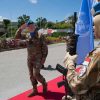
Peacekeeping is a Double-Edged Sword
UN peacekeeping dangerously overlooks the reality that peace operations have both unintended and negative consequences. Any intervention into the politics and culture of a community is bound to create tensions between local practices and foreign peacebuilding practices.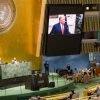
Trump’s “America First” Foreign Policy Faces an Unceremonious Burial
The ouster of Donald Trump from the US presidency last week may well be the dawn of a new era for multilateralism – and perhaps for a besieged United Nations— after nearly four years of misguided political rhetoric emerging from the White House.
The Covid Pandemic: Broadening the Discourse
SARS-CoV-2, the corona virus that causes COVID-19, has been spreading exponentially across the world over the last ten or so months. As of November 6th, according to the Center for Systems Science at Johns Hopkins University, there have been 49,195,581 cases of COVID-19, including 1,241,031 deaths.
Is Development for the World Bank Mainly Doing Business?
The World Bank has finally given up defending its controversial, but influential Doing Business Report (DBR). In August, the Bank “paused” publication of the DBR due to a “number of irregularities” after its much criticized ranking system was exposed as fraudulent.
Q & A: Escalating Tensions in Ethiopia adds to Tenuous Refugee Setting
Already reeling from conflict, extreme weather events and growing displacement due to the COVID-19 pandemic, escalating tensions in Ethiopia’s Tigray region have placed the country on the brink of civil war and many are looking to Nobel Peace Prize-winning Prime Minister Abiy Ahmed to avert a potential humanitarian disaster.
Chile’s Energy Revolution Has an Achilles’ Heel
The Atacama Desert, a giant reservoir of solar power, is the battering ram of the transformation undertaken by Chile to decarbonise its energy mix, in a country with enormous potential in non-conventional renewable sources.
How Did Trump Get this Far?
To believe that Biden's triumph is the end of the drama that has unfolded since January 2016 is an example of a mirage with fatal consequences. Pretending that those more than 70 million voters who have followed Trump to the end will disappear from the map on January 20 with the inauguration of Biden and Harris reveals a blindness to how much America has changed in recent generations.
Q&A: How Desert Dust Storms Supply Vital Nutrients to the Oceans
When sand and dust storms (SDS) rage in the Sahara Desert, more than 10,000 km away in the Caribbean Sea the very same storms have a range of effects on the 1,360 species of shorefish that populate the waters there.

From Paraguay to Italy: Development at All Costs
I am speaking with Gladys and Raúl about civic space in Paraguay, when Raúl suddenly tells me about the fires. Thick smoke has reached the capital Asunción where he is based. In October, Paraguay became Dante’s Inferno.
Pandemic Induced Drop in Remittance Flows to South Asia
Remittances are an essential part of economic activity in low and middle-income countries (LMIC), including those in South Asia. Because of the pandemic remittances to LMIC are expected to drop from $548 billion on 2019 to $508 billion in 2020 and $470 billion in 2021. The implied growth rates for 2020 and 2021 are -7.2% and -7.5%. For South Asia the drop will be from $140 billion in 2019 to $135 billion in 2020 and $ 120 billion in 2021 with implied growth rates of -3.6% and -10.9%. https://www.knomad.org/publication/migration-and-development-brief-33
The Problem Is Not Trump
The election tie, whatever the end result, that has been revealed is not a temporary phenomenon. The protagonist of Trump's resistance is not the tenant of the White House of the last four years. The real agent, although the constitutional winner is Biden, is that sector that for decades was considered an abnormality.
India: How Did Young People Access Care During the Lockdown?
COVID-19 has developed into an unprecedented public health crisis, the impact of which has been seen across global health systems and services. As the crisis continues to evolve in India, there is a need to examine the impact of the pandemic and ensuing nation-wide shutdown on young people’s lives, particularly, their experience of mental ill health.
Punches & Insults: Why Zimbabwe’s Women Candidates Want to Change the Political Playing Field
“I have long given up on active politics,” Gertrude Sidambe, a 36-year-old member of one of Zimbabwe’s opposition parties, tells IPS. When female members of the ruling Zimbabwe African National Union – Patriotic Front complained last month about political violence as male members chose brawn over brains to solicit for positions, the party’s National Secretary for Women’s Affairs Mabel Chinomona advised that they enter the punch-and-insult battlefield and “fight” like everyone else.
Growing Resilient Food Systems Post Covid Is Key for Africa
When it comes to food security, the challenge is not always about producing more - it’s also about quality: producing food that is wholesome and preserved safely.
UN Takes Preventive Measures Following 5,660 Lab-Confirmed COVID-19 Cases System-Wide
As we navigate the COVID-19 pandemic response, I would like to assure you once again that the health and safety of personnel and delegates continues to be our number one priority.
UN’s $5.1 Billion Shortfall Threatens Operations Worldwide
When the United Nations was struggling to cope with a cash crisis back in April 1996, one of the many drastic measures it undertook was to cut down on its staff.
South Africa Has Failed to Harness the Digital Revolution: How It Can Fix the Problem
The COVID-19 pandemic has precipitated a migration from physical work spaces in many sectors of the economy to online, digital services, supported by staff working from home. Parts of the economy such as mining, manufacturing and hospitality still require workers to be physically present. But other sectors have discovered that virtual platforms are effective substitutes for offices.
Women in War-Ravaged Afghanistan Fight Back for Their Rights
Bullets, bombs, tyranny and torture. Children crying for food, civilians struggling to survive, women unable to walk out of their homes freely. When we are not under siege from bombs and landmines, ordinary Afghans suffer from hunger, natural hazards and poverty.« Previous Page — Next Page »


