Languages
Saturday, November 14, 2026



News and Views from the Global South
Headlines

The Unprecedented US Presidential Election and its Consequences
American democracy has survived a dangerous virus, and it has even come off the ventilator, but whether it will be restored to full health or will suffer for a long time (like a long Covid) from the negative effects of the virus of personality cult, chauvinism, populism, racism, militarism and, yes let’s say it, fascism, remains to be seen.
Mexican’s Labor Rights Closely Watched… by the US
As many have observed worldwide, the outcome of the US presidential elections has been, as expected - full of hope and fear. Many people had the bad feeling that if Trump were to be re-elected, the uncertainty, already enormous due to the pandemic and its effects, would jeopardize the economic recovery worldwide. The triumph of Democrat Biden does not guarantee great solutions, but at the least offers a little more of transparency, certainty, and stability.
Bringing Clean Water On Tap To Rural Villages In Polynesian Island Nation Of Tuvalu
Rural communities on one of the nine islands that make up the Polynesian nation of Tuvalu are anticipating how life will change when they are connected to piped clean water for the first time.
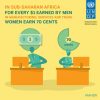
African Employers for Gender Equality
Africa has over 700 companies with an annual revenue of more than $500 million, including 400 with revenue above $1 billion. The ability of these companies to thrive rests on building and retaining talented women and men.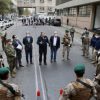
On the Back of the Pandemic, the Militarisation of Latin America is Gathering Momentum, Analysts Warn
During the Covid-19 pandemic, armed forces in Latin America have been taking on essential tasks: manufacturing protective equipment, delivering food and treating civilians in hospitals. In at least a dozen countries, soldiers have been deployed to enforce containment measures, often using brute force, on populations made up of largely poor informal workers.
Eswatini makes Progress on NDCs thanks to Crucial Partnership Support
Barry de Maine, the director of Green Cross Pharmacy, lost about $ 7,675 worth of stock when The Mall, the largest shopping centre in Mbabane, was flooded back in 2003. But when the flash floods hit again this year, he had already installed a flange to stop water from coming in. “This is the best I could do under the circumstances,” De Maine told IPS, adding: “Otherwise since we started experiencing floods at The Mall (17 years ago) nothing has been done.”
Our Development Priorities Have Shifted to the Immediate Task of Saving Lives & Livelihoods.
We have come to the point in the agenda where we must take a ‘deep-dive’ in reviewing the lessons learnt so far in our response to the COVID-19 pandemic, in order to chart a way for the future. But the future, by its very definition, must be relative. Flexibility and change will define policy making and the scope of action needed for development.
COVID-19 Compounding Inequalities
The United Nations’ renamed World Social Report 2020 (WSR 2020) argued that income inequality is rising in most developed countries, and some middle-income countries, including China, the world’s fastest growing economy in recent decades. Inequality dimensions While overall inter-country inequalities may have declined owing to the rapid growth of economies like China, India and East Asia, national inequalities have been growing for much of the world’s population, generating resentment.
Reversing the Rohingya Crisis: One Woman at a Time
“This is a crisis without a quick fix that could take years to resolve unless there are concerted efforts to address its root causes”, says Manuel Fontaine, UNICEF Director of Emergency Programmes.
Redesigning Urban Markets Post-Covid
Across Africa, even in cities with relatively modern infrastructure, many shoppers prefer the informal markets. In our case, both our mothers preferred the fresh produce sold at informal markets by women from the rural areas.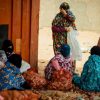
The Silence of the International Community on Western Sahara
For my entire life, I have been forgotten. I am a Sahrawi refugee, born and raised in the Algerian desert, where my people have remained displaced for 45 years, awaiting the moment when we can finally return to our homeland, Western Sahara.
WFP – ‘Focus on Starvation, Destabilisation and Migration to Avert a COVID-19 Global Food Crisis’
Food security has become a priority in the Caribbean as COVID-19 pandemic travel restrictions have hit the tourism-dependent region hard.
African Languages Matter: Is There Still Time to Prevent Cultural Genocide?
As a 10 year-old newly arrived in Lagos from England, I recall listening intently to how the Yoruba language - my father's language - was spoken. I would constantly repeat in my head or verbally repeat what I thought I had heard. I was not always successful. Many times, what would come out of my mouth would throw my friends into fits of laughter.
Ecuadorian Director Shows a Different Kind of Migration
Ecuador’s entry for the 2021 Academy Awards’ International Feature section is a surprising movie, highlighting a story that up to now has been little-known. Titled Vacío / Emptiness and directed by self-taught filmmaker Paúl Venegas, the work focuses on how increasing numbers of Chinese migrants have ended up in Latin America over the past 15 years, and it features a cast of mainly non-professional actors – speaking Mandarin, Spanish, English and some Cantonese.
US Republican Party’s Soul in Danger as Trump Hijacks the GOP
What has happened to the Republican Party? Picking Donald Trump in 2016 as the Republican candidate, giving him victory in primary after primary and later tolerating his idiosyncrasies and unpredictably dangerous behaviour and policy decisions were bad enough however much one tries to digest them as vagaries of the democratic tradition.
Working Class Bears Disproportionate Burden of COVID-19 Economic Fallout
Back in May 2019, we were visiting a large garment factory in Arsikere, Karnataka, when we asked some of the workers, “What would you do if you got Saturdays off?” Their responses to this simple question summed up their priorities. A majority said they would spend time with family or friends and take care of their children. Many said they would use this time to relax or do household chores. Only a few said they’d look for additional pay.
Secretive Mega-Trade Deal Rules Could Harm Asia’s Covid-19 Recovery
Fifteen countries will sign a mega-trade deal at the ASEAN conference this weekend imposing secretive restrictions on how governments help workers through the pandemic, trade union leaders and parliamentarians have warned.
Global Summit of Development Banks Fails to Learn from Destructive Past
This week, 450 public development banks from around the world met for the Finance in Common Summit at the Paris Peace Forum. They gathered to discuss how they can direct their combined investments of over USD 2 trillion - 10% of total investments in the world - “to support the transformation or the global economy” and “build new forms of prosperity that take care of people and the planet.”
In India, Ending FGM Demands Truth and Transparency
“My daughter is eight years old. In May 2017, I had her ‘Khatna,’ her circumcision, done. I had taken her to a traditional cutter. Once back home I made her sleep on the bed. After some time, around 4:00 p.m. I took her to the bathroom, she was bleeding as if she had started her menses. It seemed like she was urinating blood. By 6:00 p.m. my daughter had been bleeding so heavily, the blood had soaked three bed sheets and I was very worried. And my daughter was quiet and she also kept asking me if she will be fine.” Excerpt from: How I got her from the hands of death: WeSpeakOut study 2018
The Armored Divisions of the European Union
An anecdote tells, never sufficiently confirmed, that in the hardest moments of the Second World War when Stalin was dictating his orders of battle to his subordinates, he was told that perhaps it would be advisable to consult with the Pope. The Soviet dictator replied: "And how many armored divisions does the Pope have?"
Vietnam Takes the Lead on Indo-Pacific Economic Integration
This was the year that Vietnam was poised to make progress on its rise as a regional leader. Under the auspices of Vietnam’s ASEAN chairmanship, a breakthrough in global trade has been achieved despite rising protectionism and a global pandemic.« Previous Page — Next Page »


