Languages
Tuesday, November 17, 2026



News and Views from the Global South
Headlines

Can Indian Farmers Adapt to Water Loss?
Over the last few decades, groundwater has become the major source of irrigation for Indian agriculture. Pumped by millions of privately-owned tube-wells, it contributes 60 percent of the water used for irrigation, having grown by 105 percent since the 1970s.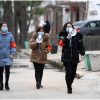
Coronavirus Epidemic Has Implications for Life Expectancy
As efforts to contain the Coronavirus epidemic enter a critical stage, it is important to remember that the costs cannot be measured purely in economic terms, as the measures taken will have implications for life expectancy across the entire nation.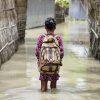
Tackling Climate Change and Preserving the Water Body: A Bangladeshi Perspective
For any riverine country, the state of the water body around big cities and conditions of major rivers hold a leadership position in the overall climate effects and how the water body is protected and preserved impacts the entire economy and living standards of that country. Bangladesh is renowned for the geomorphic features that include massive rivers flowing throughout the country. Within the border of Bangladesh lie the bottom reaches of the Himalayan Range water sources that flow into the Bay of Bengal totaling the number of rivers by a count of 700. The length of river bodies is about 24,140 km. There are predominantly four major river systems: the Brahmaputra-Jamuna, the Ganges-Padma, the Surma-Meghna, and the Chittagong Region river system. The Brahmaputra is the 22nd longest (2,850 km) and the Ganges is the 30th longest (2,510 km) river in the world. (1) The river system works as a backbone for agriculture, communication, drinking water source, energy source, fishing and as the principal arteries of commercial transportation in Bangladesh. During the annual monsoon period between June and October, the rivers flow about 140,000 cubic meters per second and during the dry period, the numbers come down to 7000 cubic meters per second.
That Mobile Game that’ll Generate Climate Solutions from Players Around the World
The United Nations Development Programme is leading a climate change effort that might finally address concerns many advocates have: bridging the gap between people and governments.
Why Trade in Services Matters for Development and Inclusiveness in Africa
The rise of the services economy around the world represents a profound transformation that offers significant opportunities for countries' sustainable development strategies.
A Multi-Billion Dollar US Mideast Arms Market May be in Jeopardy
When President Saddam Hussein ran one of the world’s most authoritarian regimes in the militarily-volatile Middle East during 1979-2003, US newspapers routinely described him as “the strongman of Iraq” — as most journalists rightly view dictators worldwide.
Coming Down the Davos Mountain with a Gender Lens
In a recent report by World Economic Forum (WEF) shows women suffer a “triple whammy” in the workplace. Without drastic action, gender parity will take more than a lifetime to achieve. This is the challenge that Katja Iversen, President and CEO of Women Deliver is staring down.
From Cocoa to Chocolate, Made With Love in Africa
A premium chocolate maker in São Tomé and Príncipe is on a drive to promote the taste for "made in Africa" chocolate, and tap into a $100 billion global indulgence associated with Valentine’s Day.
The Hammer of Justice for Sexual Assault Victims Must Be Swift, Loud and Consistent
Every year Valentines Day is celebrated with great relish & celebration. People show their affection for another person or people by sending cards, flowers or chocolates with messages of love.
Why Paraguay Can Be a “Beacon State” for Forest Management
Imagine a forest that covered half of your entire country. A biodiverse forest which supports thousands of species from giant anteaters to armadillos to jaguars. A forest that is home to one the world’s last uncontacted tribes.1
Amplifying Voices of Climate Activists of Color
Recently, the Associated Press cropped out Ugandan climate change activist Vanessa Nakate from a photo at the World Economic Forum. The remaining activists in the photo, including Greta Thunberg, were all white.
Desert Locusts Invade East Africa
Widespread hatching and movement of destructive desert locusts will turn into a full-blown crisis in the coming weeks in East Africa and neighbouring countries, the UN Food and Agriculture Organization warns.
Female Genital Mutilation: Not just an Emotional and Health Impact on Women but a $1.4 Billion Dollar Cost to Communities
When society doesn't act to prevent Female Genital Mutilation (FGM) it has a massive economic cost -- over $1 billion -- on communities globally. And while the practice is starting to become less common over time, experts say a large number of women and girls still remain affected.
Restoring Competition in ”Winner-took-All” Digital Platform Markets
Digital platforms are at the centre of the global economy and daily lives of consumers. A handful of these platforms have become dominant in specific markets without facing meaningful competition. They include Amazon as a marketplace, Facebook in social networking, Google in search engines and Apple and Google in application stores.
Internet Needs New Global Regulations Against Online Sexual Exploitation
Online sexual exploitation is a global epidemic that is increasing at an alarming rate.
Landmark Law Empowers Women Farmers
When Pakistan’s eastern Sindh province passed the ‘Sindh Women Agricultural Workers Bill’ on 20 December, giving women in agriculture, livestock, fisheries and other agro-based work the same rights and benefits enjoyed by workers in the industrial sector, it was a revolutionary step for the whole of South Asia.
Ancient Antarctic ice melt caused extreme sea level rise 129,000 years ago – and it could happen again
Rising global temperatures and warming ocean waters are causing one of the world’s coldest places to melt. While we know that human activity is causing climate change and driving rapid changes in Antarctica, the potential impacts that a warmer world would have on this region remain uncertain. Our new research might be able to provide some insight into what effect a warmer world would have in Antarctica, by looking at what happened more than 129,000 years ago.
War No More
75 years ago following the end of the Second World War and the first time any state has dropped an atomic bomb, not once, but twice, on Hiroshima and Nagasaki, 51 countries from all continents met to create the United Nations.
Are Economic Systems Sexist?
Women’s unpaid care work is the hidden engine that keeps the wheels of our economies, businesses, and societies moving, yet it is not accounted for.
Investigation a Crucial Tool for Preventing Child Rights Violations in Armed Conflicts
There has been a disturbing increase in violence perpetrated against children in conflicts worldwide, coupled with almost total impunity.
Q&A: Africa Must Innovate its Food Systems in Order to Beat Hunger and Poverty
Africa needs to invest in agriculture by putting more resources into innovative research and development that can boost food and nutritional security, according to leading scientist, Nteranya Sanginga.« Previous Page — Next Page »


