Languages
Saturday, November 21, 2026



News and Views from the Global South
Headlines
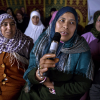
Ending the Male Monopoly on Peace: Women Still Need More Seats at the Table
Whether targeted by perpetrators of sexual violence, oppressed by ideological extremists, or uniquely threatened by the bombing of hospital maternity units, women often bear the brunt of conflicts. Yet when it comes to peace negotiations, women too often don’t have a seat at the table. The continuing reality that men, particularly armed men, enjoy an almost exclusive role in peace processes defies both logic and evidence.
Congo’s Wake Up Call
Late last week, the humanitarian community activated a Level 3 emergency for the Democratic Republic of the Congo (DRC). This trigger in the global humanitarian system is seldom used, and only after serious deliberation by the top echelons of the UN system.
Pollution or How the ‘Take-Make-Dispose’ Economic Model Does Kill
The prevailing “Take-Make-Dispose” linear economic model consisting of voracious depletion of natural resources in both production and consumption patterns has proved to be one of the world’s main killers due to the huge pollution it causes for air, land and soil, marine and freshwater.
Time Running Out for Somaliland’s Crumbling and Neglected Treasures
The name alone—Berbera—ripples with exotic resonance, conjuring images of tropical quays, swarthy traders and fiery sunsets imbued with smells of spices, incense and palm oil.
Deliberate Famine Should Be a War Crime, UN Expert Says
The deliberate starvation of civilians could amount to a war crime and should be prosecuted, said an independent UN human rights expert.
Russian & US Vetoes Protect Client States
The vote on the latest American-sponsored resolution in the UN Security Council (UNSC) on Syria was predictable: of the five big powers, China abstained and Russia vetoed, while the US, UK and France voted for it.No New Names
The names and places associated with the atrocities that stain the world’s recent history are only too well-known: Guernica, Babi Yar, Sharpeville, Treblinka, Hiroshima, Halabja, Rwanda, Srebrenica and, more recently, Aleppo and Yemen, to name but a few. The memories of those who have suffered are as painful as the list is long.
Why the West Grew Rich
About 1,000 years ago, when Europe was supposedly traversing through its dark ages, the Muslim empire was the envy of the world. Its wealth and material standards were such that Cordoba alone was pronounced as the ‘ornament of the world’ by Hrotsvitha, a mediaeval German writer and nun. By 1500, it was China and India whose riches and wealth became the stuff of fables. By the 17th century, the tide had started turning in favour of northern European nations. By the mid-19th century, this turnaround was complete. What accounts for this transformation?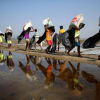
Case for a UN Interim Administration in Rakhine
The Myanmar military's latest campaign against the Rohingyas began after the attack on multiple police posts in Rakhine on August 25, 2017. The country's military leadership, with the support of radical Buddhist elements, is perpetrating an “ethnic cleansing” campaign killing, raping, maiming, and setting ablaze one Rohingya village after another. Nearly 600,000 Rohingya refugees have crossed into Bangladesh within a span of two months. The world has not witnessed such a large exodus of people in such a short period since the Rwandan genocide in 1994. As a result of this brutal campaign, the majority of Rohingyas are now residing in Bangladesh.
When a School Is Turned into a War Zone
It was 32 degrees Celsius outside, a sunny day in the last week of August. Yet, I vividly remember getting the chills.
Open or Closed Borders, or Something in Between?
Recent elections around the world have clearly shown growing public support for candidates and political parties advocating the deportation of migrants and stricter restrictions on immigration, including halting it altogether. At the same time, opposition, challenges and resistance to deportations and immigration restrictions have become more widespread, visible and vocal.
Latin America Heads to Climate Summit with Uneven Progress
Difficult to measure and unequal in their scope are the advances that the countries of Latin America will have to show, regarding their voluntary commitments to greenhouse gas emissions, during the climate summit to be hosted by Bonn, Germany in November.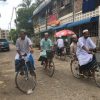
Myanmar’s Democracy Feels Strain of Religious Fault Lines
I try to hold on tight as my driver navigates his motorbike over a bumpy and muddy track. His helmet is decorated with a swastika and an eagle, part of an ill-inspired fashion trend called Nazi chic. It's symbolic for a country where hate and racism seen to have become normalized.
Lifting of All Sanctions Against Khartoum: A New Era for the Sudan
The lifting of sanctions on Sudan by the United States on 12 October was a monumental event that recognized the importance of engaging in dialogue with States in order to improve the human rights conditions. During his visit to New York to present his report to the General Assembly, the Special Rapporteur on the negative impact of the unilateral coercive measures on the enjoyment of human rights, Mr. Idriss Jazairy, reflected on his contribution to this event, and suggested it might be an example of how other unilateral sanction regimes could be lifted.
Why 1997 Asian Crisis Lessons Lost
Various different, and sometimes contradictory lessons have been drawn from the 1997-1998 East Asian crises. Rapid or V-shaped recoveries and renewed growth in most developing countries in the new century also served to postpone the urgency of far-reaching reforms. The crises’ complex ideological, political and policy implications have also made it difficult to draw lessons from the crises.
UN Day: Another Day, Another 34,000 Refugees
Oct. 24 is not just another day on the calendar. It is United Nations Day, an excellent time to take note of one of the accomplishments the world body has achieved in its 72-year history.
Rohingya Crisis Stokes Fears of Myanmar’s Muslims
In a quiet street, the sound of children's voices can be heard from an open window. They are reciting verses of the Koran in unison. The small Islamic school lays hidden in a walled neighborhood where only Muslims live. This is an island of tranquility in Mandalay, the second-largest city of predominantly Buddhist Myanmar.
Rules and Regulations. We Need them to Protect Minimum Standards in Education
Two years have already passed since the global education goal, SDG 4, was set by governments. But the vision of that goal has not yet fully trickled down to the country level. We need to know who is responsible for achieving this goal.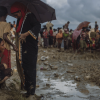
No Food, No Water, No Shelter: Two Days of Muck, Rain and Uncertainty
Last week, the Government of Bangladesh moved near 7,000 Rohingya refugees, who had been stranded in “no man’s land” near the Anjuman Para border crossing point in Cox’s Bazar’s Ukhia District, into more appropriate settlement areas. The Rohingya are fleeing violence, which broke out in Myanmar on 25 August.
The United Nations Is Needed More than Ever Before to Promote Peace and Justice Worldwide
In commemoration of the 2017 United Nations Day, the Chairman of the Geneva Centre for Human Rights Advancement and Global Dialogue H. E. Dr. Hanif Hassan Ali Al Qassim called for enhancing the role of the United Nations to address issues related to the promotion of peace and security as a platform for collaboration and the advancement of human rights.
Let’s Harness the Egalitarian Spirit of Sport for Global Cohesion
24 October has been celebrated as United Nations Day since 1948. In his message to the world the UN Secretary General, Mr Antonio Guterres remarked, “When we achieve human rights and human dignity for all people – they will build a peaceful, sustainable and just world”.« Previous Page — Next Page »


