Languages
Saturday, November 21, 2026



News and Views from the Global South
Headlines

Lack of International Action on Rohingya Crisis Called a “Disgrace”
As the crisis in Myanmar reaches unprecedented levels, frustration is at its peak as the international community remains slow to respond and act cohesively.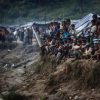
Donors Pledge over $344 Million in Response to Rohingya Refugee Crisis
The international donor community today announced pledges for more than US$344 million to urgently ramp up the delivery of critical humanitarian assistance to Rohingya refugees and host communities in Bangladesh.
Role of the Fashion Industry in UN’s Sustainable Development Goals
Fashion is not a sector that exists in a vacuum. In fact, the fashion industry is not unlike any other key economic drivers; it is a key component of a global economy and certainly an important sector to consider when thinking about the UN’s 17 Sustainable Development Goals (SDGs).
Innovation for Climate-Smart Agriculture Key to Ending Hunger in Kenya
Some parts of Kenya are reeling from the effects of probably the worst drought in the last 20 years. With nearly 3.4 million people food insecure, Kenya’s food security prognosis looks gloomy, with climate change and natural resource depletion set to pose even greater risks in the long term.
Austrian Elections: The Crisis of Europe Continues
The Austrian elections show clearly that media have given up on contextualising events. To do that, calls for a warning about Europe’s future, as a vehicle of European values is required. Europe has been weakened by all the recent elections, with the notable exception of France. Common to all, France included, were some clear trends, that we will hastily, and therefore maybe imperfectly, examine.
Cycles of Wealth in Brazil’s Amazon: Gold, Lumber, Cattle and Now, Energy
The burning down of the local forest, on Jun. 29, 1979, was the first step towards the creation of the city of Paranaita, in a municipality that is now trying to shed its reputation as a major deforester of Brazil’s Amazon rainforest and has named itself “the energy capital.”
Global Interfaith LGBTIQ Leaders Convene at UN for Expert-level Dialogue
On September 29, 2017, Yvette Abrahams, an indigenous religious leader from Cape Town, South Africa who served as the country’s Commissioner For Gender Equality for five years, gasped when she learned that South Africa had just voted in favor of United Nations Human Rights Council resolution condemning the death penalty for those found guilty of committing consensual same-sex sexual acts. She could not believe that the United States had not.
Good Men Should Not be Quiet Spectators in Sexual Assaults
The pain and anger of more than a million people who tweeted #MeToo in the last week have crowded social media with personal stories of sexual harassment or assault.
World Campaign to Clean Torrents of Plastic Dumped in the Oceans
With 30 countries from Kenya to Indonesia and from Canada to Brazil now involved in the world campaign to beat pollution by countering the torrents of plastic trash that are degrading oceans and endangering the life they sustain, the UN has strengthened its massive efforts to clean up the seas, which are the Earth’s main buffer against climate change.
UN Migration Chief Ends Visit to Bangladesh as Bleak Picture Emerges of Rohingya Settlements
Yesterday (19/10) over 6,900 Rohingya refugees who were stranded in dire conditions in no-man’s land at Anjuman Para on Bangladesh’s side of the border, were moved by the Bangladesh military to several makeshift settlements in the Ukhia and Teknaf sub-districts of Cox’s Bazar. Some 800,000 Rohingyas are now living in the settlements, 589,000 of whom have arrived since August 25th.
Can Index Insurance Make African Farmers Climate-resilient?
Index insurance is being promoted as a solution to protect climate affected smallholder farmers in Africa. This type of micro insurance is slowly gaining ground as a way of compensating farmers for lost crops and livestock due to climate change.
Mexican Immigrants Help Sustain Two Economies – and Are Discarded
They work for years to bolster the economies of two countries. For one, the United States, they provide labour and taxes; for the other, Mexico, they send remittances that support tens of thousands of families and communities. Then they are deported, and neither government takes into account their special needs.
Global Campaign to Smoke Out Tobacco Firms from UN Body
The world’s tobacco companies – which have been widely ostracized in the UN system – may be ousted from one of their last fortified strongholds in the United Nations: the International Labour Organization (ILO).
Moment of Clarity in Marawi and the War on Terrorism
“Wars are always clarifying” is a line that I jotted down from a column in the New York Times that was written two years after the attack on the twin towers on September 11, 2001. The subject was ostensibly “9/11” and the war on terrorism that it set off (Thomas Friedman wrote the line).
Women in the News
Should the state appreciate or even acknowledge the work of Pakistani citizens, especially women, that is recognised abroad?
Income Disparity on the Rise
The Bangladesh Bureau of Statistics unveiled the report “Household Income and Expenditure Survey (HIES) 2016” on October 17. It is the most exhaustive nationwide survey carried out and is usually brought out every five years or so. What it tells us is that the income inequality between the rich and poor has widened with the top 10 percent of the population now having an income share of 38.16 percent, which is 2.32 percent higher than what it was in 2010. Whereas, the bottom 10 percent of the population has half (1.01 pecent) of the income share it had in the year 2010 (2 percent). Indeed, poverty reduction has also slowed down a full 0.5 percent over this period.
Caught in Conflict without Travel Documents
In early October, three Ethiopian boys in Yemen told IOM, the UN Migration Agency, “we miss our family and can no longer stay here.”
The Future for Financing Africa’s Renewable Energy
Lack of energy access presents a formidable challenge to Africa and lack of access to financing has been singled out as the biggest reason why over 620 million people living on the continent are stuck in energy poverty.
Zimbabwe’s Diaspora Could Help Revive Ailing Economy
At the dawn of the millennium, Sheila Mponda, 60, waved goodbye to her four children, who were leaving Zimbabwe for the United Kingdom in search of greener pastures. Mponda had just lost her husband and had been a housewife all her life.
One of the World’s Most Dangerous PIaces For Aid Workers
I will travel to the Central African Republic early next week to spend United Nations Day with a peacekeeping operation in order to pay tribute to peacekeepers across the world.
An Inequality Beyond Wealth: Gaps in Women’s Health
While many often focus on wealth disparities, economic inequality is often a symptom and cause of other inequalities including women’s access to sexual and reproductive health.« Previous Page — Next Page »


