Languages
Thursday, November 19, 2026



News and Views from the Global South
Active Citizens
Q&A: ‘‘Arms Deal Scandal Threatens Democracy in South Africa’’
South Africa’s ruling African National Congress (ANC) vilified politician and former anti-apartheid trade unionist Patricia de Lille when she made allegations about graft in the country’s notorious multi-billion dollar deal with British, French, Italian, German and Swedish arms manufacturers back in 1999.
NAMIBIA: Food Security Hangs in the Balance
Don't talk about food prices in Namibia. Wedged between costly imports from South Africa and failing projects to achieve food security, Namibians are upset, and hungry.
ECONOMY: Namibia Gets BIG on Poverty
There was no mention of a special grant to tackle poverty in the Namibian national budget speech delivered on Mar. 19, much to the disappointment of campaigners for a Basic Income Grant (BIG) for all citizens.SIERRA LEONE: Radio Stations Banned for Inciting Violence
Sierra Leone's vice president, Samuel Sam-Sumana, on Mar. 13 ordered an indefinite ban on radio stations owned by the ruling All Peoples Congress (APC) and its main rival, the Sierra Leone Peoples Party (SLPP).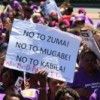
RIGHTS-SOUTH AFRICA: Election Campaign Silent on Violence Against Women
With its emphasis on gender equality, the South African constitution is regarded as a great example for many other developing countries. Yet, despite laws intended to protect the rights of women like the Sexual Abuse Act and the Domestic Violence Act, women in the country still suffer indignities at the hands of police and in court.
ENVIRONMENT-NAMIBIA: Ten Dollars for a 200-Year-Old Tree
Despite the investment of millions of donor dollars, the permit system in Namibia’s Community Forests has failed dismally, say biodiversity experts. Illegal logging in the inland Kavango is more alive than ever.
ENVIRONMENT: 'Capital Shapes the Creation of Waste'
The South African government has been heavily criticised by environmental justice NGO groundWork for failing to produce accurate data on the production of waste in the country.
Q&A: Does SADC require a regional parliament?
The Southern African Development Community (SADC) Parliamentary Forum has set its sights on becoming a regional parliament with law-making powers. The body was established in 1997 to create a platform for the region's legislators to share knowledge and experiences in governance.MEDIA-GHANA: Unusual Bedfellows Push for Change
There has been a clamour to tighten up oversight and regulation of Ghana’s broadcasters from unusual bedfellows - the state-sponsored National Media Commission (NMC) and the Ghana Journalists" Association (GJA). The bodies have, in separate initiatives, slammed attempts to "privatise" the state-owned Ghana Broadcasting Corporation (GBC) and have railed against the practices of commercial radio stations.GUINEA-BISSAU: Live By the Sword…
Violence was a trademark of João Bernardo Vieira’s life: he survived a coup, four attempts on his life and 13 years fighting the Portuguese colonial army in Guinea-Bissau. But the legend died at the hands of the corruption and violence he himself fed.
WATER-NAMIBIA: ‘Decentralisation’: Code for Recovering Costs From the Poor
What if a well-intended programme to democratise water management is really a poverty trap? This is a question a soon to be published study on Namibian rural water supply poses to decision makers.
WATER-NAMIBIA: Policy to Create a Water Scarcity?
Several 20 litre buckets of water are crammed inside the small enclosure around the only tap in Epingiro, a small gathering of kraals in the Kavango woodlands in northern Namibia.BOTSWANA: Media Laws Stir Dissent Within Ruling Party
There is growing dissent in the ruling Botswana Democratic Party (BDP) over laws that enable the government to regulate the media. Member of parliament, Keletso Rakhudu, broke ranks with his party by publicly criticising the Media Practitioner’s Act as an "assault" on the "fundamentals" and "undermining" free and independent media. He claims a number of his colleagues shared his dismay but were fearful of speaking out.UGANDA: In Search of Peace and Justice
Alice Anywar lives in the Pagak resettlement camp in Gulu and at 39 is a multiple victim of the over 20 year-old Lords Resistance Army (LRA) insurgency in northern Uganda. The rebels first attacked her home in Kilak village in 1987 killing both her parents and abducting her 12-year old brother. In 2002 they murdered her husband whom she had met in a refugee camp.BOTSWANA: High Profile Trial Could Open Can of Worms
The high profile trial of former Debswana Managing Director, Louis Goodwill Nchindo, could open a can of worms about the shady activities of senior government officials in Botswana, officially Africa's least corrupt country.POLITICS: Two Kenyas, Two Dreams: Which Do We Want?
Kenya's civil society has rebuffed efforts by its embattled government to restore its tattered image in the wake of waning public confidence in the state. Their major grievance is that the country's problems, including high level graft, are the result of a culture of impunity that has engulfed the nation's top officials and politicians.
Q&A: How to Break the Cycle of ‘‘Endless Philanthropy''
Dr Ramon E Daubon not only believes in democratising development but takes umbrage at the ‘‘cult of tangible results'' in development assistance.ZAMBIA: Corruption in Water Sector Makes Clean Water A Pipedream
In his address to the National Assembly on Jan. 30, Zambia's finance and national planning minister, Situmbeko Musokotwene, allocated additional resources to the water sector, with the specific aim of preventing the spread of waterborne diseases. But Zambians have heard such promises before.POLITICS-SOUTH AFRICA: ‘Media Must Adopt Its Own Agenda’
Electioneering in South Africa is in full swing. Party posters emblazon lampposts and the media has been lapping up the weekly rallies and manifesto launches as parties set out to woo voters. As in previous elections, the focus has been on party political events.ECONOMY-SOUTH AFRICA: 'We Need Interventions'
The markets will be hanging on Trevor Manuel's every word when South Africa's minister of finance delivers his thirteenth Budget Speech on February 11. Expectation is even greater among poor communities, the unemployed and workers as the world's longest serving finance minister signals his government's economic plans in the face of the global economic crisis.
POVERTY: Cash Transfers Transform Lives of Malawi’s Poor
Malawi has taken major strides towards reducing poverty and hunger in the country. Government’s cash transfer scheme has managed to reach many of those usually unable to access grants due to lengthy and complicated bureaucratic processes and assessments.« Previous Page — Next Page »


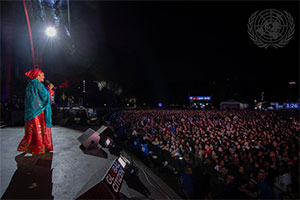 Global Citizen Festival in New York. Credit: UN Photo/Eskinder Debebe
Active citizens are committed to social change because they know that it is achievable. However, major political challenges face active citizens across the world. For example, in authoritarian regimes in Latin America where the hegemonic party has been in power for decades on end, protestors and human rights activists face enormous repression and struggle to materialize their advocacy into concrete results. The same can be said for Africans, where a shift towards elected government in recent decades has yet to translate into an effective voice in decision-making. Now, the Strengthening Citizen Demand for Good Governance, which uses evidence-based approaches – funded by DFID's Governance and Transparency Fund – seeks to raise their voices.
In 2025, the CIVICUS Monitor’s People Power Under Attack report revealed that civic freedoms are severely limited in 122 of 198 countries and territories, and only 7.2% of the global population now lives in countries where civic space is open. Through partnership with the Overseas Development Institute (ODI) and CIVICUS, IPS reporters across the continent will seek to define the extent and limits of state capability, government accountability and the responsiveness of leaders to the needs of citizens.

The Week with IPS

NEXT STOP - SDGs
Tracking global progress towards a sustainable world
Tracking global progress towards a sustainable world
