Languages
Wednesday, November 18, 2026



News and Views from the Global South
Active Citizens

RIGHTS-UGANDA: Women Score Victory Against Gender-Based Violence
Women are celebrating a hard-won victory for gender rights after intense public protests led to today’s re-arrest of the country’s police boss – a self-confessed wife-killer.HEALTH-AFRICA: South Sudan At Risk from Blindness
In the war-devastated South Sudan, a region with a population of over eight million people, Yeneneh Mulugeta is the only permanent ophthalmologist.ZAMBIA: NGO Bill Still Inspires No Confidence
As the Zambian parliament resumes, civil society organisations (CSOs) have come out strongly to oppose the Non-Governmental Organisation (NGO) Bill, which seeks to regulate their operations.MEDIA: African Journalists Reject EU-sponsored Observatory
A project to create a Pan-African Media Observatory (PAMO), sponsored by the European Union in cooperation with the African union, has been rejected by numerous African journalist organisations.RIGHTS-UGANDA: Women Press for Domestic Violence Bill
"Man forces wife to breastfeed puppies," screams one headline. "Police boss shoots wife," shouts another; and a third: "Man batters wife over meat". These are typical headlines in Uganda’s newspapers today. Women daily report surviving different forms of violence in their homes: physical, sexual, emotional or even economic abuse.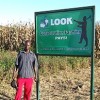
ZAMBIA: Conservation Agriculture Gaining Ground
Not even the least alert of drivers can miss the sign along the busy road 30 kilometres south of Lusaka: "Look, Conservation Farming Pays!"
SIERRA LEONE: Radio Stations Banned
Two Sierra Leonean radio stations have been stripped of their licences. The national regulatory body, the Independent Media Commission (IMC), says the stations failed to comply with the country's media code.
RIGHTS-UGANDA: ‘Our Mission is To End Impunity’ – Moreno Ocampo
On a visit to Uganda, Luis Moreno Ocampo, prosecutor for the International Criminal Court (ICC) has again called for joint action by governments in the region to arrest the top commanders of Ugandan rebel group, the Lord's Resistance Army (LRA).
U.S.-AFRICA: 'Mutual Partnership and Mutual Respect'
"We must start from the simple premise that Africa's future is up to Africans," U.S. president Barack Obama told Ghana's parliament. And the keys to that future, as outlined in his speech, include democratic elections, accountability, good governance and strong institutions.
RIGHTS: No Safe Haven for Ugandan Girls
A year ago, a mother in Kashari County took the law into her own hands and castrated a man she caught raping her seven-year-old daughter.
ENVIRONMENT-TANZANIA: Villagers Fearful After Mine Water Discharged Into River
Water from a storage pond at Barrick Gold's North Mara mine in Tanzania is seeping through containing walls, leading local villagers to fear their water sources are contaminated.
BOTSWANA: Deep Divisions Remain Over Media Law
While the international theme for World Press Freedom Day was "Fostering Dialogue, Mutual Understanding and Reconciliation", the Botswana government and the media seemed to take the opposite route - taking turns to snub each other’s calls for dialogue.RIGHTS-ZIMBABWE: Journalists Spurn Govt Summit on Press Freedom
Media organisations this week dug in their heels over boycotting a national media conference in the resort town of Kariba. State-owned media reported that the much-postponed conference finally opened on May 8, with information minister Webster Shamu lamenting the deep divisions within the media fraternity in Zimbabwe.
RIGHTS-SIERRA LEONE: Child Miners: Legacy of Conflict
Since the end of the civil war seven years ago, the Sierra Leonean authorities and child welfare agencies have been battling to remove children from the diamond-mining fields, a trend which began at the height of the conflict, when children were abducted by rebel forces and coerced to work in the mines.ZIMBABWE: Urban Residents Left Behind by Dollarisation
Cash-strapped residents of Bulawayo, Zimbabwe's second city are digging in their heels and refusing to pay utility bills despite the municipality teetering on the brink of bankruptcy. At the heart of the dispute are dismal service delivery and the conundrum of using multiple currencies in an economy that boasts world record inflation.POLITICS-SOUTH AFRICA: ANC Scores Another Victory: Now Deliver, Voters Say
As results of South Africa's fourth democratic elections held on Apr. 22 come in, the ruling African National Congress (ANC) is poised to return to power in the 400 seat National Assembly. The party is also on course to emerge as the governing party in all but one of the nine provinces. The main opposition party, the Democratic Alliance, is likely to take the Western Cape.
SOUTH AFRICA: Thousands of Traders Might Lose Jobs as Market Turns into Mall
Hundreds of traders at the Early Morning market in Durban fear the municipality’s plans to turn the area into an upscale shopping mall that will cost them their livelihoods. The redevelopment is one of many currently underway in South Africa’s urban centres to upgrade city infrastructure for the 2010 Soccer World Cup.
FINANCE: Guns 'n Nurses in Namibia's Budget
Tax relief for lower income groups in Namibia should not conceal that the 2009/10 budget falls short in addressing structural problems in the economy, civil society organisations have charged.ZAMBIA: Media Resists Calls for State Regulation
After almost a decade of fighting for self-regulation, the Zambian media may finally have its wishes entrenched with constitutional protection.
RIGHTS-SOUTH AFRICA: Women Farmworkers Threaten Election Boycott
Women from South Africa's three Cape provinces have marched to parliament in Cape Town to denounce the country's "slow and unbalanced" land redistribution programme. The protesters said if they are not given greater access to land, they will not vote in the country's Apr. 22 general elections.MINING-AFRICA: Help Yourself, There's Plenty
The African continent is rich in natural resources; but the terms under which multinational companies exploit these resources mean that governments - and Africa’s people - enjoy only a tiny fraction of the benefits.« Previous Page — Next Page »


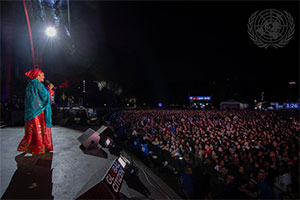 Global Citizen Festival in New York. Credit: UN Photo/Eskinder Debebe
Active citizens are committed to social change because they know that it is achievable. However, major political challenges face active citizens across the world. For example, in authoritarian regimes in Latin America where the hegemonic party has been in power for decades on end, protestors and human rights activists face enormous repression and struggle to materialize their advocacy into concrete results. The same can be said for Africans, where a shift towards elected government in recent decades has yet to translate into an effective voice in decision-making. Now, the Strengthening Citizen Demand for Good Governance, which uses evidence-based approaches – funded by DFID's Governance and Transparency Fund – seeks to raise their voices.
In 2025, the CIVICUS Monitor’s People Power Under Attack report revealed that civic freedoms are severely limited in 122 of 198 countries and territories, and only 7.2% of the global population now lives in countries where civic space is open. Through partnership with the Overseas Development Institute (ODI) and CIVICUS, IPS reporters across the continent will seek to define the extent and limits of state capability, government accountability and the responsiveness of leaders to the needs of citizens.

The Week with IPS

NEXT STOP - SDGs
Tracking global progress towards a sustainable world
Tracking global progress towards a sustainable world
