Languages
Friday, November 20, 2026



News and Views from the Global South
Africa

U.S. Concerned Over Uganda’s “Deteriorating” Human Rights
The U.S. State Department Wednesday released a statement criticising what it said was a "deteriorating" human rights situation in Uganda and the government's increasingly heavy- handed tactics to repress political opposition and silence dissent.
DR CONGO: Rehabilitating Former Child Soldiers Who “Liked” Killing
Murhula’s* life changed forever when he was nine years old. It was the year that he learned to kill, torture and rape.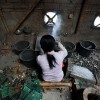
GHANA: Toxic Electronic Waste Contaminates Nearby Areas
Mountains of hazardous waste grow by about 40 million tons every year. This waste, mostly from Europe and North America, is burned in developing countries like Ghana in a hazardous effort to recover valuable metals.
HORN OF AFRICA: Human Trafficking on the Rise Amid Drought and Famine
Amina Shakir (not her real name) fled the drought and famine in Somalia for a better life in Kenya. But she did so illegally, placing her faith in the hands of a criminal network headed by Mukhalis or agents in Swahili. In the end her faith was misplaced as she was "sold" into employment upon finally reaching Kenya.
IBSA: In Conflict with the EU
When the G20 leaders meet for their fifth summit in Cannes, France, on Thursday, they will be confronted with several worsening global economic and trade issues. Among them is how to strengthen the international trading system and how to overcome the developmental deficit that continues to create an uneven playing field for poor countries.
LIBYA: Visitors Could be Saviours
"A crossroads of history, continents and ancient empires; a place where history comes alive through the extraordinary monuments on its shores", reads a well- known tourist guidebook about Libya. It’s all still there, but the tourists aren’t there to see it.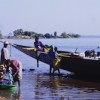
WEST AFRICA: Niger River under Pressure from Dams
Several major new dams are being constructed on the Niger River. It's a positive sign of growing investment in agriculture and energy, but it also has some observers worried.ZIMBABWE: Forcing Parents to Top Up Teachers’ Salaries Cannot Continue
As concerns deepen about the quality of education in Zimbabwe, parents can expect an indefinite extension of subsidising teacher salaries as the cash- strapped government struggles to meet the bloated civil service wage bill.
Libya’s “Other” Victims
Suleyman and Rasool have come to the University of Bani Walid, in western Libya. If they are lucky they might find some chemistry notes and, perhaps, a computer that works. Unfortunately it is not likely, since NATO reduced the campus to rubble.
AFRICA: Regulating the Rush for Land
The adoption of international guidelines to regulate so-called land grabs has been pushed to next year after negotiators failed to agree on conditions for large-scale land investments and enforcement.
DR CONGO: Women Candidates Needed
Women make up just 12 percent of the roughly 18,000 candidates who will stand for election to parliament in the Democratic Republic of Congo's Nov. 28 elections.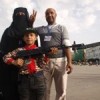
LIBYA: After Gaddafi, Unease Rules
"The war is over and Gaddafi already buried. What else could we possibly ask for?" says Adnan Abdulrafiq at his busy street restaurant in Omar Mukhtar street in downtown Tripoli. But troubles may not have ended with the war.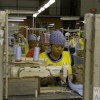
LESOTHO: Government to Turn its Back on Textile Industry
Lesotho’s textile sector – the country’s largest employer - is regarded by many as the only way out of the poverty trap in a tiny kingdom where more than half of the population lives on less than 1.25 dollars a day. But what many do not know is that the government and the World Bank have unofficially turned their backs on the sector and will soon cut important subsidies.
KENYA: “Hold Your Heart” Delayed Justice for Missing Insurgency Victims
Three years after her husband’s disappearance, Phyllis Chamnai Kipkeyo from Mount Elgon, Kenya cannot stop thinking about him. She does not know if he is dead or alive. All she knows is that he was one of the over 300 people said to have disappeared during an insurgency in the region between 2006 and 2008.
OP-ED: China’s Farming History Misapplied in Africa
As sub-Saharan Africa grapples with high food prices in some regions and famine in others, many experts argue that increasing food production through a programme of hybrid seeds and chemical inputs is the way to go.WEST AFRICA: Solar Panels Light Up Remote Villages
Frequent power cuts have led people in rural areas of Burkina Faso, Mali and Senegal to turn to solar energy for electricity.
GHANA: Stigma Surrounding Breast Cancer Stymies Prevention Efforts
Mary Mingle thought she had a boil on her breast, so she bought some medication and tried to treat it at home. Two months later, bothered by persistent pain, she went to the doctor.
African court needs more visibility
 Legal experts say that the African Court on Human and People's rights needs to be more visible on the continent. Zukiswa Zimela reports from the Pan African Parliament in Johannesburg that governments and leaders will also have to give up some power to make the court work.

UNESCO Study Reveals Widening Secondary Education Gap
Arguing that an educated population is a country's greatest wealth, the U.N. Educational, Scientific and Cultural Organisation (UNESCO) says there is no escape from poverty without a vast expansion of secondary education worldwide.
Civil Society Groups Call for Action to Curb Land Grabbing
Civil society organisations are calling on governments in developing countries to stop leasing and selling out land to transnational corporations because it leads to land degradation and food insecurity.
SOUTH SUDAN: Protecting Cattle Saves People
With his bright orange hair, Angelo Waranyang cuts a striking figure as he strides amongst his cattle. His hair colour – dyed with a mixture of cow urine and ash from burnt dung – is symbolic of the close connection that he and the majority of South Sudanese have with their revered animals.« Previous Page — Next Page » *#*

The Week with IPS

NEXT STOP - SDGs
Tracking global progress towards a sustainable world
Tracking global progress towards a sustainable world
