Languages
Saturday, November 21, 2026



News and Views from the Global South
Africa
MOROCCO: Students Seek Training, Not Teaching
Despite 12 years of reform, Morocco's universities continue to fall short of expectations, with students complaining that the training they get does not meet the demands of the job market./UPDATE**/ Libyan Rebel Military Leader Killed
The head of the Libyan rebel's armed forces and two of his aides were killed by gunmen Thursday, the head of the rebel leadership said.Displaced Ivorians ‘Too Afraid to Return’
More than half a million people remain displaced by Ivory Coast's post-election conflict and many are too afraid to return home for fear of ethnic reprisals, Amnesty International says in a report.
SOMALIA: “I Carried Him a Whole Day While He Was Dead, Thinking He Was Alive”
As the first of food aid from the United Nations World Food Programme was airlifted into Mogadishu on Wednesday, it came too late for Qadija Ali's two- year-old son Farah.
ZIMBABWE: Bleak Future for Second-Hand Clothes Traders
It is becoming increasingly difficult for second-hand clothes traders like Susanne Jabavu to do business because of rising costs to import bales of clothing from neighbouring countries.
EAST AFRICA: ‘It’s Not a Heartless Mother Leaving a Child Behind, Just One Who Wants to Survive’
On the road between the Kenyan and Somali border lie the dead bodies of children who have succumbed to the famine and the hardships of making the journey from their drought-stricken villages to Kenya.SOUTH SUDAN: Row Over Exorbitant Fees for Pipeline Use
Less than three weeks after gaining independence, South Sudan is embroiled in a row with Sudan over pipeline fees charged by the latter to export oil.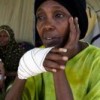
TUNISIA: Migrants Flee to New Traps
As African Union and NATO leaders push for a political solution to the Libyan crisis, many of the thousands of refugees and migrants stranded on the Libyan- Tunisian border say their plight continues to fall on deaf ears.
SWAZILAND: Irrigation Waters the Hopes of a New Village
A transboundary water project is reinforcing the fight against food insecurity and poverty along the Komati River which flows through South Africa, Swaziland and Mozambique.
RWANDA: Women Parliamentarians Outnumber Men, But Gender Budgeting Still Needed
Rwanda is the first country in the world where women outnumber men in parliament, with women occupying 45 out of 80 seats. However, despite this, experts say that the country still needs a gender equality perspective on how national resources and programmes are implemented.Libya Blames NATO for Raid on Food Warehouse
Libyan officials have accused NATO of killing at least eight people in an air raid on a food warehouse and medical clinic in Zlitan, east of Tripoli.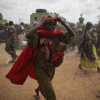
EAST AFRICA: Massive Aid Needed to Stave off Disaster
International donors have given more than one billion dollars to ease the famine in Somalia and elsewhere in the Horn of Africa, but U.N. officials say another billion will be needed to prevent the situation from deteriorating in other areas.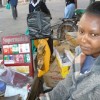
KENYA: Gender Responsive Planning and Budgeting at Work
For the first time ever, the Kenyan finance minister has allocated almost four million dollars, about 3.6 percent of the primary education budget, to provide free sanitary pads to schoolgirls.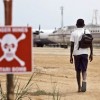
Worrying Dysfunction in DR Congo Airports
Major operational shortcomings are behind the recent spate of crashes at airports around the Democratic Republic of Congo, raising questions about safety for aircraft and passengers in the central African country.SWAZILAND: Economic Crisis Means Short Supply of ARVs
Swaziland’s economic crisis has affected its ability to provide healthcare as the country’s buffer stock of antiretrovirals (ARVs) has fallen below the prescribed three-month supply.
HEALTH-AFRICA: Improving Sanitation, Still a Long Way to Go
When Callixte Munyabikari, a potato farmer from Gakenke in northern Rwanda, was rushed to a regional hospital after he fell ill with diarrhoea, he thought it was just a bad case of food poisoning.
Q&A: Challenge Men To Share Political and Economic Power
Bineta Diop, director of the non-governmental organisation Femmes Africa Solidarité, is at the forefront of the fight for better protection of women in conflict zones and their integration in peace processes.SENEGAL: Fish Farming Breathes New Life Into Rural Economy
July signals the start of three months of intense activity for residents of the seven villages around the small dam at Sébi Ponty. The dam was stocked with tilapia in 2006, and aquaculture is proving to be a vital economic activity for youth in the area.
MALAWI: Fuel Shortages Ignite Violent Nationwide Protests
In light of the recent spate of protests in Malawi, government should rethink its policy to devalue the local currency, economists say.KENYA: Providing ARVs to HIV-Negative People Will Strain Resources
When Lucy Omollo found out that her husband was HIV-positive six years ago, the couple thought the best way to prevent her from becoming infected with the virus was not to have sex.
HORN OF AFRICA: Poor Attention to Forecasts to Blame for Famine in Somalia
The world had an opportunity to save thousands of lives that are being lost in parts of Somalia due to the famine, if only the donor community had paid attention to the early warning systems that predicted it eight months ago.« Previous Page — Next Page » *#*

The Week with IPS

NEXT STOP - SDGs
Tracking global progress towards a sustainable world
Tracking global progress towards a sustainable world
