Languages
Sunday, October 4, 2026



News and Views from the Global South
Aid
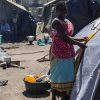
World Poverty: We Have Come So Far… But So Much Further To Go
The United Nations’ first Sustainable Development Goal (SDG) is “No poverty,” the most important because almost half the world, 46%, lives on less than $5.50 a day according to the World Bank. But world attention has turned away from poverty. Why?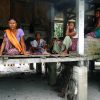
With Poverty & Hunger Skyrocketing, is a Global Economic Rescue Package the Answer?
The United Nations has been relentlessly pursuing a highly-ambitious blueprint for the sustainable future of humanity –harking back to the adoption of a new global economic agenda by the General Assembly back in 2015.
IPS Webinar: Gender Equality Crucial in ‘Building Back Better’ Post-COVID-19
While men are more likely to die from COVID-19, women are facing the full blow of the socio-economic fallout from the ongoing pandemic as well as seeing a reversal in equality gains made over the last two decades, says an all-women panel of international thought leaders, who met virtually during a discussion convened by IPS.
Q&A: How Kazakhstan’s Transgender and Lesbian Women are Being Impacted by COVID-19
The coronavirus lockdown in Kazakhstan, and the resultant limited public oversight and limited publication engagement, has paved the way for the government to propose amendments to the country's laws around gender that could see the exclusion of the rights of the Lesbian, Gay, Bisexual, Transgender, and Queer (LGBTQ) community.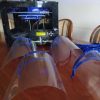
COVID-19 & Why We Care
Among the many compelling points made by Dr. Anthony Fauci in our “Rethinking Health” webinar this week was the absolute essentiality of global collaboration and transparency to contain the pandemic with which we are faced.
COVID-19 Pandemic Could Widen Existing Inequalities for Kenya’s Women in Business
Pauline Akwacha’s popular chain of eateries, famously known as Kakwacha Hangover Hotels and situated at the heart of Kisumu City's lakeside in Kenya, is facing its most daunting challenge yet. Akwacha and other women in business across this East African nation are bracing themselves for the post-COVID-19 economy.
Sudan’s Partners Pledge almost $2Bn but Is it Enough?
This week, when Sudan's Minister of Energy and Mining Adil Ibrahim addressed the country, stating that households will face power-cuts for up to seven hours a day, people had already been sitting on plastic chairs outside their homes, scouring the internet to purchase battery-operated fans. This Northeast African nation has seen temperature highs of up to 41 degrees Celsius recently.
Senegalese Women’s Participation in Energy Sector equals Empowerment
Aïssata Ba, 45-year-old widow and mother of seven children, has been practising market gardening for the past 30 years in Lompoul Sur Mer village in the Niayes area of north-west Senegal. For many women in the village, endowed with fertile soil and favourable climate, it is the primary source of income throughout the year.
E-learning Divide Places World’s Disadvantaged Children at Risk of Dropping Out
The COVID-19 pandemic has brought a new layer of challenges to inclusive education. As many as 40 percent of low and lower-middle income countries having not supported disadvantaged learners during temporary school shutdowns, finds United Nations Educational, Scientific and Cultural Organization’s 2020 Global Education Monitoring Report released today, Jun. 23.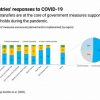
You’ve Got Money: Mobile Payments Help People During the Pandemic
The practical challenge of quickly getting financial support in the hands of people who lost jobs amid the COVID-19 economic crisis has baffled advanced and developing economies alike. Economic lockdowns, physical distancing measures, patchy social protection systems and, especially for low-income countries, the high level of informality, complicate the task. Many governments are leveraging mobile technology to help their citizens.
Helping Bangladesh Recover from COVID-19
One of the most densely populated countries in the world, Bangladesh exemplifies the triple blow that many emerging market countries have suffered from COVID-19: domestic slowdown caused by the disease and the efforts to contain its spread; a sharp decline in exports, particularly in the ready-made garment sector, and a drop in remittances. Its once robust economy has dramatically slowed in recent months.
Food Insecurity Concerns for Latin America and the Caribbean
The multi-dimensional impacts of the coronavirus pandemic in Latin America could lead to a “hunger pandemic” if not addressed with urgency.
We Should Not Aim to Return to Normal
The world before COVID-19 looks very attractive right now. In light of the disease, mass unemployment and social distancing, a return to pre-pandemic normality seems appealing. Yet we should remember what normal was.
Why Rwanda is a Great Green Growth Investment
In its effort to accelerate Rwanda's green growth development initiative, its local businesses encouraged their Italian counterparts to invest in the East Africa region.
African Development Bank COVID-19 response: moving from commitment to action
The African Development Bank has responded swiftly to the needs of its member countries during the ongoing COVID-19 pandemic.
Agroecology Strengthens Farmers’ Resilience But Highly Underfunded in Africa
With just a quarter of an acre of land in Kesses near Kenya’s Eldoret town in the Rift Valley region, Samson Tanui is practising agroecology and his permaculture unit has become the centre of attraction for farmers from near and afar amid food shortages during the current COVID-19 pandemic.
Delivering Humanitarian Assistance in Cox’s Bazar During COVID-19
The novel coronavirus has affected the lives of millions worldwide at its very onset. The situation in Bangladesh is no different. Wearing masks and washing hands frequently have become the new normal. The first laboratory confirmed COVID-19 case was identified in Cox’s Bazar on 23 March. Unforeseen circumstances often lead to unprecedented innovative actions as is exemplified by a Humanitarian Access Project.
Strengthening Economic Institutions for a Resilient Recovery
Exceptional times call for exceptional action. In response to COVID-19, the IMF has moved with unprecedented speed and magnitude of financial assistance to help countries protect lives and livelihoods. Economic stabilization and a sustainable recovery, however, will require more than financial assistance. For recovery to be sustainable, policymakers will need to strengthen economic institutions that enable resilient, inclusive policies.
Malawi’s COVID-19 Cash Transfer Almost Ready But Election Fever may Prevent Lockdown
Malawi remains one of the few nations in the world that has not gone into a coronavirus lockdown as the government rushes to meet the conditions of a court order to implement a cash transfer scheme for the poor before doing so. But as some parts of the world are slowing coming out of their lockdowns, it could be likely this southern African nation won’t go into one as the rerun of the country’s presidential election nears.
Unsung Heroines: Who Cares for the Carers?
Even before Covid-19, the world was facing a care crisis. The plight of often neglected, under-appreciated, under-protected and poorly equipped ‘frontline’ health personnel working to contain the pandemic has drawn attention to the tip of the care crisis iceberg.
The Sahel – ‘in Every Sense of the Word a Crisis’
The combination of rife insecurity, food insecurity and more than 7.5 million people in need of humanitarian assistance has left the Sahel a region in crisis, with the global coronavirus pandemic expected to exacerbate the situation.« Previous Page — Next Page »


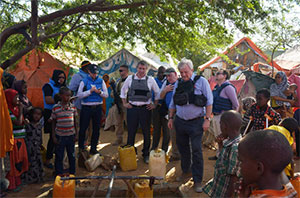 UN Emergency Relief Coordinator Visits Somalia. Credit: UN Photo/Tobin Jones
In recent years, conflicts have broken out across the world with no sign of slowing down or stopping. In times like this, millions of people globally are in dire need of humanitarian aid. Famine, warfare, natural disasters, and economic decline plague a host of nations, including Palestine, Sudan, Chad, Lebanon, and Haiti, to name a few. Humanitarian aid provides millions of people with critical services including healthcare, food, clean drinking water, psychosocial support, housing, and access to education. UN agencies such as the UNDP, UNICEF, the World Food Programme (WFP), UNHCR, UNRWA, and UNEP work with the UN Office for the Coordination of Humanitarian Aid (OCHA) and local organizations to come up with the best possible strategies to support affected communities. At the same time, humanitarian aid and those working on the frontlines are consistently threatened by both actors directly involved in conflict as well as those who are meant to contribute to the international humanitarian regime at large. The near-collapse of United States international aid structures in 2025, including the termination of 83% of USAID’s 6,300 global initiatives, has left millions of people without access to vital humanitarian assistance. 98 million people in 2025, only 65% of people targeted for humanitarian assistance, received the help they needed. In contrast, 123 million people received some form of humanitarian assistance in 2024, and OCHA’s 2026 Global Humanitarian Overview estimates that 239 million people are in need of assistance in 2026. IPS is well-positioned to discuss current initiatives to provide aid and relief through in-depth reporting and opinion content.

The Week with IPS

NEXT STOP - SDGs
Tracking global progress towards a sustainable world
Tracking global progress towards a sustainable world
