Languages
Thursday, October 15, 2026



News and Views from the Global South
Aid

Tomatoes, Limes and Sex-Selective Abortions
When Bimla Chandrasekharan saw that women who gave birth to baby girls were being sent out of the house by their angry husbands and mothers-in-law she realised a basic biology lesson was needed.
“Devastating Consequences” for Women, Girls as U.S. Defunds UN Agency
The U.S. has withdrawn all of its funding to the UN Population Fund (UNFPA), an agency that works on family planning and reproductive health in over 150 countries.
Another Somalian Famine
Last month, the United Nations declared another famine threat in Somalia due to yet another drought in the Horn of Africa. Important lessons must be drawn from the Somalia famine of 2010-2012, which probably killed about 258,000 people, half of whom were under-five. This was the greatest tragedy in terms of famine deaths in the 21st century, and in recent decades since the Ethiopian famine of the late 1980s.
Caribbean Awaits Trump Moves on Climate Funding, Paris Deal
Caribbean leaders worry that with climate change sceptic Donald Trump in the White House, it will be more difficult for small island developing states facing the brunt of climate change to secure the financing necessary to adapt to and mitigate against it.
From El Nino Drought to Floods, Zimbabwe’s Double Trouble
Dairai Churu, 53, sits with his chin cupped in his palms next to mounds of rubble from his destroyed makeshift home in the Caledonia informal settlement approximately 30 kilometers east of Harare, thanks to the floods that have inundated Zimbabwe since the end of last year.
Caribbean Leaders Want Swifter Action on Climate Funding
When Tropical Storm Erika hit the tiny Caribbean island of Dominica on Aug. 27, 2015, it killed more than two dozen people, left nearly 600 homeless and wreaked damages totaling more than a billion dollars.
Unrest Brings North-East Nigeria Next to Starvation
Years of violence and unrest in North-East Nigeria have left millions of people at risk of starving to death. Both the violent up surging of Boko Haram and the government’s harsh military crackdown have left already historically marginalised communities with next to nothing.
South Sudan Declares Famine, Other Countries May Follow Warns UNICEF
South Sudan Monday became the first country to declare famine since 2012, as UNICEF warned that 1.4 million children are at risk of dying from starvation with famine also imminent in Nigeria, Somalia, and Yemen.
Aging, Depression and Disease in South Africa
Old age is often characterised by poor health due to isolation, morbidities and disabilities in carrying out activities of daily living (DADLs) leading to depression.
Worst Drought in Decades Drives Food Price Spike in East Africa
The most severe drought in decades, which has struck parts of Ethiopia and is exacerbated by a particularly strong El Niño effect, has led to successive failed harvests and widespread livestock deaths in some areas, and humanitarian needs have tripled since the beginning of 2015, the United Nations warns.
Ravaging Drought Deepens in Kenya
Experts warn that Kenya is in the grip of the worst drought in recent history as government estimates show the number of people who are acutely food insecure has risen to 2.7 million, up from two million in January.
Supporting Local Organisations: A Syrian Perspective
Just 0.2 percent of humanitarian funding goes directly to local and national NGOs, according to a major UN review of humanitarian financing published ahead of the 2016 World Humanitarian Summit.
Dubai Global Centre of Green Economy in UAE’s Vision 2021
When former UN Secretary-General Ban K-moon was in Abu Dhabi for the World Future Energy Summit last year, he singled out the key role played by the United Arab Emirates (UAE) in “safeguarding the future of our planet” by showcasing clean, sustainable energy --- a centre piece of the UN’s post-2015 development agenda.
We Need a New Social Movement Against Inequality
Oxfam's latest estimate that just eight super-rich people – down from 62 last year and 388 just six years ago - own more wealth than the poorest half of the world population is a clarion call to change the way we think about and try to tackle inequality.
Insecurity Fuelling Food Shortages in Lake Chad Basin: UN Coordinator
Children under five years of age are not surviving due to severe food shortages in some parts of the Lake Chad region, says Toby Lanzer, UN Assistant Secretary-General and Regional Humanitarian Coordinator for the Sahel.
Trump’s Global Gag a Devastating Blow for Women’s Rights
The image of a group of men in suits making decisions about the rights of women is becoming an emblematic sign of the backlash against our human rights, particularly those related to women´s bodily integrity and reproductive and sexual freedoms.
Pacific Islanders Call for U.S. Solidarity on Climate Change
The new political power of business magnate Donald Trump, who will be inaugurated Jan. 20 as the 45th President of the United States, will have ramifications for every global region, including the Pacific Islands.
Threat of Famine Looms in Yemen
Millions of Yemenis could soon face widespread famine if no action is taken to improve food access through humanitarian or trade means, an early warning system has said.
Food Insecurity: An Agent for Violent Conflict
Up to two billion people live in countries affected by violence, conflict and fragility. Often, such political instability goes hand in hand with food insecurity. “Conflicts have pushed over 56 million people either into crisis or emergency levels of food insecurity”, Kimberly Flowers, Director of the Global Food Security Project, said at this years’ John McGovern Lecture held at the Food and Agriculture Organization of the United Nations (FAO). The number continues to grow with the escalation of conflicts and violence in countries like Syria, Yemen or South Sudan.
Resilient People & Institutions: Ecuador’s Post-Earthquake Challenge
No one is really prepared for an emergency until they’ve had to live through one. And the 16 April earthquake in Ecuador put us to the test.
Ending AIDS Needs Both Prevention and a Cure
Eighteen million people, just slightly under half of the people living with HIV and AIDS globally, are now taking life-saving medication, but global efforts to end the disease still largely depend on prevention.« Previous Page — Next Page »





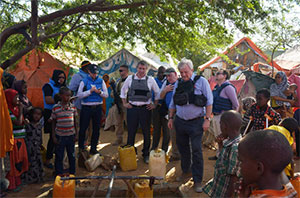 UN Emergency Relief Coordinator Visits Somalia. Credit: UN Photo/Tobin Jones
In recent years, conflicts have broken out across the world with no sign of slowing down or stopping. In times like this, millions of people globally are in dire need of humanitarian aid. Famine, warfare, natural disasters, and economic decline plague a host of nations, including Palestine, Sudan, Chad, Lebanon, and Haiti, to name a few. Humanitarian aid provides millions of people with critical services including healthcare, food, clean drinking water, psychosocial support, housing, and access to education. UN agencies such as the UNDP, UNICEF, the World Food Programme (WFP), UNHCR, UNRWA, and UNEP work with the UN Office for the Coordination of Humanitarian Aid (OCHA) and local organizations to come up with the best possible strategies to support affected communities. At the same time, humanitarian aid and those working on the frontlines are consistently threatened by both actors directly involved in conflict as well as those who are meant to contribute to the international humanitarian regime at large. The near-collapse of United States international aid structures in 2025, including the termination of 83% of USAID’s 6,300 global initiatives, has left millions of people without access to vital humanitarian assistance. 98 million people in 2025, only 65% of people targeted for humanitarian assistance, received the help they needed. In contrast, 123 million people received some form of humanitarian assistance in 2024, and OCHA’s 2026 Global Humanitarian Overview estimates that 239 million people are in need of assistance in 2026. IPS is well-positioned to discuss current initiatives to provide aid and relief through in-depth reporting and opinion content.

The Week with IPS

NEXT STOP - SDGs
Tracking global progress towards a sustainable world
Tracking global progress towards a sustainable world
