Languages
Friday, October 23, 2026



News and Views from the Global South
Armed Conflicts

Trump’s First 100 Days Portend Long-Lasting Damage to Press Freedom
Press freedom is no longer a given in the United States 100 days into President Donald Trump’s second term as journalists and newsrooms face mounting pressures that threaten their ability to report freely and the public’s right to know.
World Immunization Week Highlights the Urgency of Global Vaccine Access
For 2025, the theme of World Health Immunization Week (24-30 April), “Immunization for All is Humanly Possible”, emphasizes the need to eradicate disparities in access to vaccines, particularly for children. By encouraging governments to implement vaccination programs at the local and national levels, the World Health Organization (WHO) seeks t0 ensure worldwide access to life-saving vaccines.
Germany’s Role in International Security: Time to Match Words with Deeds
For the first time ever in its history, the United Nations Peacekeeping Ministerial (PKM) will take place in Berlin from 13 to 14 May. The aim of the meeting is to discuss the future of UN peace missions. These biennial meetings serve as a gauge of the continuing political support for such missions, which are, of course, just one of the tools in the UN’s comprehensive ‘toolkit’ for handling conflict — alongside general conflict prevention, mediation missions and peacebuilding measures.
If the US Nuclear Umbrella Collapses, Will it Trigger a Euro-Bomb?
The Trump administration’s hostile attitude towards Western Europe—and the threat to pullout of the 32-member military alliance, the North Atlantic Treaty Organization (NATO) – signifies the danger of losing the longstanding protection of the US nuclear umbrella over Europe. Jana Puglierin, director of the German office of the European Council on Foreign Relations, was quoted as saying: “Trump may, or may not, want to leave NATO officially, but he has every means to undermine NATO”.
Kashmir Reels After Pahalgam Attack, Fear Long Term Impacts on Livelihoods
Abdul Majeed Mir strolls leisurely among the purple crocus flower rows in Pampore's saffron fields as the morning mist hovers low over them. His family has been growing this valuable spice, called "red gold," for many generations, but now his hands go through the harvest mechanically. There is a noticeable lack of the typical commotion of tourists haggling over saffron packets.
UN Warns of an Imminent Collapse in Haiti
As gang violence in Haiti continues to target civilians and critical infrastructures, humanitarian organizations and the Haitian National Police (HNP) have found it increasingly difficult to manage the growing scale of needs. The United Nations (UN) and its partners fear that Haiti will approach a nationwide collapse due to numerous shortfalls in funding, a widespread lack of essential resources, and rampant insecurity.
A Nation Bleeds While the World Watches: The Tragedy in Sudan Must End
The ongoing civil war in Sudan is tragic, but the greater tragedy is that if the international community sits on its hands and does nothing to stop this horrific war and prevent further escalation of the conflict, it will come at an unfathomable price
US Considering Nuclear Power for Saudi Arabia in Grand Bargain
The Trump administration is reportedly pursuing a deal with Saudi Arabia that would be a pathway to developing a commercial nuclear power industry in the desert kingdom and maybe even lead to the enrichment of uranium on Saudi soil.
Children at the Center
Creativity and innovation are essential to finding extraordinary solutions to abnormal problems. Now more than ever we must continue finding creative solutions to protect the world’s most vulnerable children from the excruciating pain of war, dispossession and destruction of their last hope: a quality education. The current humanitarian and development funding levels are falling. However, with creativity we can prevent further deterioration and instead turn towards an upward direction.
Essential Supplies Run Critically Low in Gaza While Displacement Soars
Since the deterioration of the ceasefire agreement between Israel and Hamas in March, the Israeli Defense Forces (IDF) have issued numerous evacuation orders and bombardments on the Gaza Strip, resulting in exacerbated rates of displacement and a significant amount of civilian casualties. Roughly two million Palestinians within the enclave struggle to stay alive amid repeated blockages of humanitarian aid.
Shaken and Strained: Myanmar’s Earthquake Adding to the Misery of 4 Years of Conflict
As I walked through the streets of Sagaing and Mandalay, the scenes unfolding in the wake of the 7.7 earthquake were hard to comprehend. Tall buildings and hundreds of homes are now lying in rubble. Of those that are still standing, many are lurching at dangerous angles, defying gravity for now, but could collapse at any moment.
Amputated Limbs, Enduring Pain: The Suffering of Syria’s War Wounded
The Syrian war has left countless Syrians with devastating injuries, ranging from limb amputations and burns to the loss of sensory functions. These injuries have profoundly impacted their lives, compounded by the limited attention and support they receive from civil society organizations.
Genocide Prevention & Responsibility to Protect
April marks Genocide Prevention and Awareness Month, a time to reflect on the history, causes and victims of past genocides and to mobilize the necessary resolve to confront risks facing populations around the world today who face the threat of genocide and other mass atrocity crimes not for anything they have done, but for who they are.
Netanyahu Refuses Calls to End the Gaza War as Palestinians Struggle to Survive
Since the breakdown of the ceasefire agreement between Israel and Hamas, the Gaza Strip has been subjected to significant bombardment and blockages of humanitarian aid. With aid deliveries having been halted from entering the Gaza Strip for over one month, roughly two million Palestinians have been relying on dwindling resources, facing heightened risks of malnutrition and disease.
Ceasefire Collapse and Regime Controls Hamper Myanmar Quake Relief
Two weeks after a devastating earthquake hit central Myanmar, the military junta is directing flows of international aid to urban centres it controls while bombing civilians in areas held by resistance forces, breaking a ceasefire.
Rohingya Refugees Are Not Safe in Bangladesh or Myanmar
On April 4, it was confirmed by Myanmar authorities that there were approximately 180,000 Rohingya refugees residing in Bangladesh that are eligible to return. Following numerous cuts in funding as a result of President Donald Trump’s reduction of USAID, as well as the increasingly volatile humanitarian crisis in Myanmar, it is uncertain if repatriation will best serve Rohingya refugee communities.
Myanmar Reels From Its Strongest Earthquake in Over a Century
The 7.7 magnitude earthquake that struck central Myanmar on March 28, marked the strongest earthquake the nation has experienced in over a century and the second deadliest in it’s history. The earthquake caused extensive damage in Myanmar and Thailand, with infrastructures in southern China and Vietnam also having been affected.
How to Agree an Armistice in Ukraine: Lessons from Korea
The armistice agreement that ended the Korean War in 1953 has been mentioned as a possible model for how to end the fighting in Ukraine. This makes sense. The Trump administration, however, seems to opt for a quick deal like the 1973 Paris agreement on Vietnam or the Minsk agreements of 2014–15, combining “ceasefires in place” with vain prospects of subsequently reaching a genuine peace agreement.

Challenging the Taliban’s Violations of Afghan Women’s Rights
The Taliban’s egregious violations of women's rights in Afghanistan, especially banning women from education and even from speaking in public, are beyond the pale. Imposing economic sanctions alone, however, has not changed in any significant way the Taliban’s treatment of women.
Education Cannot Wait Interviews Sigrid Kaag, Chair of the ECW High-Level Steering Group
Sigrid Kaag is the new Chair of Education Cannot Wait’s High-Level Steering Group. Kaag brings a wealth of experience in political, humanitarian and development affairs, as well as in diplomacy. In 2025, she was appointed by United Nations Secretary-General António Guterres as the UN Special Coordinator for the Middle East Peace Process, a.i. Kaag has just concluded her mandate as Senior Humanitarian and Reconstruction Coordinator for Gaza, a role she held since 2024. She served as the first Deputy Prime Minister and first female Minister of Finance in the Dutch government starting in January 2022. Prior to this, she was Dutch Minister for Trade and Development Cooperation from October 2017 until May 2021, and Minister for Foreign Affairs until September 2021.[related_articles]
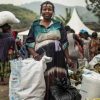
DR Congo: Millions Facing Destitution as Violence Forces People to Flee Multiple Times
The Norwegian Refugee Council (NRC) warns that 100,000s of people in eastern Democratic Republic of Congo (DRC) have been pushed into desperate conditions by the escalation of violent conflict in 2025.« Previous Page — Next Page »





Armed conflicts are a sad constant on daily front pages worldwide. Wars, civil wars, revolts, coups, genocides, ethnic and political violence, and global terrorism capture our attention for the geopolitical landslides, human suffering, food crises and streams of migration that follow in their wake. As in times of natural disaster, man-made crises claim frequent casualties among the poor, women and children. IPS examines emerging and ongoing armed conflicts around the world with an eye on the underlying social and political dynamics, and special focus on the lived experiences of those most affected by armed conflict.

The Week with IPS

NEXT STOP - SDGs
Tracking global progress towards a sustainable world
Tracking global progress towards a sustainable world
