Languages
Friday, November 20, 2026



News and Views from the Global South
Armed Conflicts
Pressure Mounts on N. Korea over Warship Attack
Thursday's formal accusation by South Korea that a North Korean torpedo sunk the warship Cheonan, killing 46 South Korean sailors, has set off a flurry of activity in Washington as politicians and foreign policy experts try to identify an appropriate U.S. response while balancing the need to maintain a stable relationship with China - the North's biggest sponsor.
THAILAND: Media Deaths, Threats Part of the Crisis Story
As big a story as this week's crackdown on anti-government protests in Thailand is the significant number of journalists killed or hurt, and media professionals and organisations threatened during the country's most serious political conflict in years.
MIDEAST: Palestinian Economic Boycott Hits Israeli Settlers
Israeli settlers are beginning to feel the bite of an economic boycott campaign launched by the Palestinian Authority (PA) against goods produced in the illegal Israeli settlements dotting the occupied West Bank.POLITICS: Rising Border Tension Threatens China-Burma Relations
When the military regime in Burma launched a campaign last August to disarm the ethnic rebels in the Kokang region, made up mostly of ethnic Chinese and where a two-decade-long ceasefire had been in place, the push triggered an exodus of more than 37,000 refugees into China’s Yunnan province.
THAILAND: Bangkok Burns after Protest Leaders Surrender
If there were any hopes that Wednesday's surrender by the leaders of Thailand's biggest anti-government protests in decades would instantly ease tensions, these were dashed by the ugly spasms of violence that wracked this capital soon after they turned themselves in.PERU: Military Planning Major Attack on Guerrillas
Peru's armed forces are gearing up for an unprecedented offensive against a surviving faction of the Sendero Luminoso (Shining Path) Maoist guerrilla organisation, which began an armed struggle to seize power in the country 30 years ago.ISRAEL: The Only Democracy in the Middle East?
Noam Chomsky, a fierce espouser of left-wing causes, is widely admired in countries which parade themselves as "democracies". Apparently, the admiration does not extend to Israel.Iranian Nuclear Threat Spurs Mideast Arms Sales
The United States, and most of the Western world, have transformed Iranian President Mahmoud Ahmadinejad into a virtual bogeyman, thereby spreading fear throughout the neighbouring countries of the Gulf Cooperation Council (GCC): Bahrain, Kuwait, Qatar, Oman, Saudi Arabia and the United Arab Emirates (UAE).THAILAND: Mayhem Has Little Room for Rights, Restraint
Amid gunfire and street battles here and heated, divided emotions playing out in Thailand's worst political crisis in decades, there has been little room for discussing human rights, restraint and finding a middle ground.U.S.: Momentum Builds to Ratify Land Mine Treaty
More than two-thirds of U.S. senators have signed a letter calling on President Barack Obama to develop a plan to join a 17-year-old international treaty banning the production, transfer, and use of anti-personnel land mines.
MIDEAST: Chomsky – Latest Jewish Thinker Savaged by Israel
When internationally renowned linguist, philosopher and political analyst Noam Chomsky was barred from entering the West Bank, he joined a chorus of Jewish intellectuals savaged by the Israeli government for outspoken criticism.Bill for Afghan War Could Run into the Trillions
The U.S. Senate is moving forward with a 59-billion-dollar spending bill, of which 33.5 billion dollars would be allocated for the war in Afghanistan.
MIDEAST: Israel, Iran Talking War to Ward Off War?
Suddenly, the Middle East is awash with talk of war this summer. Or, is the talk of war merely meant to keep war at bay?
THAILAND: Violence, Uncertainty Follow Gov’t Crackdown
Burning tyres and buses with plumes of smoke billowing from them. Sniper shots and grenade attacks. Deaths and injuries. No-go zones in the Thai capital.THAILAND: Media Grapple with Questions of Credibility, Bias
Two months into Thailand's anti-government protests and as an army-led blockade is underway to end them, the media are struggling with challenges to their credibility and perceptions of bias in the South-east Asian country's gravest political stalemate in years.
COLOMBIA: “Death Threats Have Become Routine,” Says Jesuit Priest
The death threats against Catholic priest Javier Giraldo painted on walls in the Colombian capital may have come from far-right paramilitaries, the military, drug trafficking gangs or groups with interests in African oil palm plantations.
AFRICA: Military Manoeuvres in the Sahel
Military exercises are under way in the Sahel region as part of the United States-led Trans-Saharan Counter Terrorism Partnership. Participating militaries are enthusiastic, but civil society cautions that force may not be enough to ensure regional security.THAILAND: Lese Majeste Cases Rise, But Public in the Dark
When Wipas Raksakulthai was arrested last month for violating this kingdom’s draconian lese majeste law, he could have consoled himself with the thought that at least his case was readily picked up by the local and foreign media.Iraqi Christians Cling to Their Faith in Jordanian Exile
As the 2003 United States-led invasion of Iraq began, the country’s Christians started streaming across the border into neighbouring Jordan. Today most of them continue to live here in abject poverty with no hope of ever returning to the land of their ancestors.
RiGHTS: Villagers Pay Dearly for India’s War with Maoists
Almost a year on, Dipali Sahu still recalls with horror the day an operation by the policemen and paramilitary troopers began here in June last year to take back control of the vast swathes of eastern India captured by the Maoist rebels.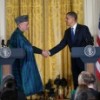
Obama, Karzai Still Split on Peace Talks with Taliban
U.S. President Barack Obama and Afghan President Hamid Karzai sought to portray a united front on the issue of a political settlement with the Taliban in their joint press conference Wednesday. But their comments underlined the deep rift that divides Karzai and the United States over the issue.« Previous Page — Next Page »


Armed conflicts are a sad constant on daily front pages worldwide. Wars, civil wars, revolts, coups, genocides, ethnic and political violence, and global terrorism capture our attention for the geopolitical landslides, human suffering, food crises and streams of migration that follow in their wake. As in times of natural disaster, man-made crises claim frequent casualties among the poor, women and children. IPS examines emerging and ongoing armed conflicts around the world with an eye on the underlying social and political dynamics, and special focus on the lived experiences of those most affected by armed conflict.

The Week with IPS

NEXT STOP - SDGs
Tracking global progress towards a sustainable world
Tracking global progress towards a sustainable world
