Languages
Saturday, November 21, 2026



News and Views from the Global South
Asia-Pacific
Thailand’s Yingluck Announces Coalition
A day after she led Pheu Thai party to a landslide victory in parliamentary elections in Thailand, Yingluck Shinawatra has announced a new five-party coalition government.
NEPAL: Women Grow Carbon Money on Trees
When Bina Tamang was told that she could earn money by not felling trees in the tiny forest that serves as the source of fuel and fodder for 65 families in her area, the 27-year-old was incredulous.
Despite Troop Surge, Taliban Attacks and U.S. Casualties Soared
Data on attacks by armed opposition forces and U.S. combat casualties since the U.S. troop surge in Afghanistan was completed last summer provide clear evidence that the surge and the increase in targeted killings by Special Operations Forces have failed to break the momentum of the Taliban.
INDIA: ‘Seed-Mothers’ Confront Climate Insecurity
In eastern Orissa state’s tribal hinterlands about 200 ‘seed-mothers’ are on mission mode - identifying, collecting and conserving traditional seed varieties and motivating farming families to use them.NORTH KOREA: On Sale, Girls Look for Chinese Husbands
North Koreans have increasingly been crossing into the northern border cities of China, with women outnumbering men. "Women represent about 70 percent of some 200,000 North Koreans who fled from North Korea into China in the past few years," Kim Tae Jin, a North Korean defector who leads a nongovernment organisation to protect the human rights of fellow North Koreans tells IPS.Undisclosed Beheading at Heart of Indonesian, Saudi Row
Indonesia, which has an estimated 1.2 million emigrants in Saudi Arabia, is deeply troubled that Saudi Arabia beheaded one of its citizens in a death penalty sentence without even contacting the government in Jakarta.JAPAN: Renewable Energy Grabs Limelight
After decades of being relegated to the sidelines, Japan’s fledging renewable energy industry is now basking in the limelight as the nation struggles to cope with the Fukushima nuclear accident.Taliban Fighters Attack Landmark Kabul Hotel
An overnight assault by Taliban gunmen and suicide bombers on a major hotel in Kabul has ended with the killing of the attackers by security forces and the deaths of up to 10 other people, according to officials.THAILAND: PM Targets Drug Traffickers Ahead of July Poll
With an eye on the tightly contested Jul. 3 general election, Prime Minister Abhisit Vejjajiva is tapping into the national unease gripping this country over a deadly habit shared by some Thais: drugs.KAZAKHSTAN: Workers Fight Massive Crackdown
Workers striking in what has been described as the biggest organised threat to Kazakhstan’s authoritarian regime in the last decade are being beaten by hired thugs as the government ignores pleas for basic international labour rights to be observed.China Offers a Different Freedom
For a populist premier like China’s Wen Jiabao, the irony of landing in a European capital celebrating the art of one of the Chinese communist party’s most outspoken critics who had been imprisoned by Beijing for months was never lost.
BANGLADESH: Child Smugglers Risk Life for a Few Dollars
Thirteen-year-old Jamal is a Bangladeshi bootlegger who carries goods from Haridaspur town in the Indian state of West Bengal to the border district of Jessore in southwest Bangladesh, playing cat-and-mouse with Indian frontier guards every day.INDIA: With No IT Sector, Kashmir Lags Behind
At a time when information technology has revolutionised life across the globe, Kashmir in north India lags behind the rest of the country, and the world, because it has no IT industry to speak of.
Army Jets ‘Bomb South Sudan Villages’
Civilians in south Sudan say jets from the north are launching attacks on villages close to the border.Nuclear for the Poor, Renewables for the Rich?
In a debate about the future of energy, the global south wants to spend tens of billions of dollars on nuclear plants while the global north looks to spend hundreds of millions on decentralised, renewable energy.Iran Executing Hundreds in “War on Drugs”
Iran is drawing international criticism for its continued mass executions of people convicted of violating its drug laws. The Islamic Republic's judiciary reported that 300 people were on death row as of May 30.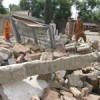
PAKISTAN: Schools Rise From the Rubble
Violence in the tribal areas of northwest Pakistan has kept students away from school, in some areas for at least two years. Now, officials are trying to make up for lost time by holding classes even under tents or trees.Real Estate Boom as Displaced Pakistanis Seek Housing
Real estate prices have shot up in areas adjacent to the tribal districts of northwest Pakistan where violence continues to displace local residents.JAPAN: Workers Bear Brunt of Nuke Clean-up
Twenty-eight-year-old Yushi Sato washes cars for a living, but they are no ordinary cars. Every day, Sato hoses down vehicles contaminated with radiation from the Fukushima Nuclear Power plant that was damaged by the earthquake and tsunami that hit north-east Japan Mar 11.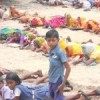
INDIA: Human Barricade Stops India’s Big Ticket Steel Project
Fourteen-year-old Satikanta Sahu loves going to school, but these days, he would rather spend his time manning the barricade and facing down policemen in the sandy coastal village of Govindpur in India’s eastern state of Orissa.Thai Campaign Tempers Use of Antibiotics
Every month, Buddhist monk Phra Patarapong visits this village of mostly wooden houses on stilts and draws crowds, but not just for his regular sermons on spiritualism. People come to see him also for his tips on health, in particular his warnings about the excessive use of antibiotics.« Previous Page — Next Page »


The Week with IPS

NEXT STOP - SDGs
Tracking global progress towards a sustainable world
Tracking global progress towards a sustainable world
