Languages
Saturday, November 21, 2026



News and Views from the Global South
Asia-Pacific
Prescription Drug Abuse on the Rise
Some 13 million people across Europe, Russia, and other parts of the world remain largely dependent on Afghanistan's poppy production to fuel their addiction to heroin, according to a new U.N. report on global use of illicit drugs.
Chinese Dissident Artist Ai Weiwei Freed
Ai Weiwei, the renowned artist who is among the most prominent dissidents detained in China's sweeping recent crackdown on dissent, has been released on bail after confessing to tax evasion.Obama Leaves Door Open to Long-Term U.S. Afghan Combat
President Barack Obama's speech announcing that the 33,000 "surge" troops in Afghanistan will be withdrawn by "summer" 2012 indicates that he has given priority to the interests of the military and the Pentagon over concerns by key officials in his administration over the impact of the war's costs on domestic socioeconomic needs.Chinese Model Showing Cracks
The Chinese Communist Party likes claiming credit for the success of the country’s model of steady rule and economic prosperity. But as it prepares to celebrate its 90th birthday on Jul. 1, the party has seen the attractive China brand lose appeal with once enthusiastic followers abroad and being outright rejected by violent protests at home.Uphill Battle to Save Australians From Execution
Any Australian government efforts to have two of its citizens spared from the death penalty in Indonesia have been made more difficult by past refusals to intervene on behalf of three Indonesian Islamists in the lead-up to their executions in 2008.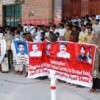
PAKISTAN: ‘Ethnic Cleansing’ Feared in Balochistan
The pain and anger in 25-year-old Rukhsana Langho’s voice could be heard over the telephone line from Quetta, the capital of Balochistan province, 700 kms north of the port city of Karachi. "We hate Pakistan and we want freedom," she says, bitter over the disappearance of her brother more than a year ago.AFGHANISTAN: Obama Takes the Centrist Option on Withdrawal
In a much-anticipated decision, U.S. President Barack Obama announced here Wednesday evening that he will withdraw 10,000 of the 100,000 U.S. troops currently deployed in Afghanistan by the end of this year and a total of 33,000 by some time next summer.Pew Survey Reaffirms Pakistanis Hostility Toward the U.S.
The Pakistani public’s perceptions of the United States have hit their lowest levels since the 2002 invasion of Afghanistan, according to a new survey released here Tuesday by the Pew Global Attitudes Project (GAP).INDIA: Noose Not Mandatory for Drug Crimes, Rules Court
By striking down a law that makes the death penalty mandatory for drug-related offences, the Bombay High Court has raised hopes among rights activists that other countries in the region will follow suit.JAPAN: Anti-Nuke Policy to Bring Severe Economic Fallout
Three months after the devastating Mar. 11 earthquake that caused an accident at the Fukushima power plant, energy experts warn of economic fallout if nuclear energy is snuffed out too quickly, much to the dismay of an increasingly angry and frustrated public.BOOKS-PAKISTAN: Between a Rock and a Hard Country
It is almost obligatory these days to subtitle books on Pakistan with some conjunction of 'failed', 'dangerous', 'lawless', 'deadly', 'frightening' or 'tumultuous'. Pakistan is a 'tinderbox', forever on the brink, in the eye of the storm, or descending into chaos. It is an 'Insh'allah nation' where people passively wait for Allah.
New Arsenal Emerges in Struggle over Iran’s Internet
Millions of Iranians who have lived under an intense level of internet filtering and advanced monitoring systems for years may soon benefit from new technology that sidesteps the censors.
AFRICA: Poor Excluded From Benefits of High Economic Growth
The high economic growth enjoyed by many African states during the 2000s have not led to poverty elimination. This is because the growth did not happen in the sectors where poor people work, as in agriculture, or in the rural areas where poor people live, or simply did not involve labour provided by poor people.Pollution Rising Fast in China’s Seas
Rapid economic growth in China’s coastal regions has resulted in serious levels of ocean pollution, damaging marine life and posing a threat to humans. As much as half of China’s offshore areas are considered polluted.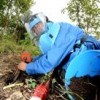
NEPAL: Govt Clears Last Minefield but Threats Remain
Nine years ago, Bhagwati Devi Gautam was a field labourer in Rukum, one of Nepal’s worst insurgency-hit districts. Hurrying to attend a programme on the occasion of International Women’s Day, she was forced to halt at a police checkpoint for the mandatory examination of her handbag.Red Shirts Shift to Village-Based Politics in Thai Heartland
The shimmering green paddy fields across the vast terrain here remain a vivid marker of rural identity. But now, another colour – red – is steadily taking root in the villages dotting this plateau in north-east Thailand that are home to poor farmers.
SRI LANKA: Onset of Rains Tests Anti-Dengue Campaign
With the monsoon season upon it, Sri Lanka’s war against the deadly dengue- carrying mosquito faces its toughest test yet, but early signs show that the mosquitoes are not quite ready to give up.
PAKISTAN: Taliban Use Human Shields Against Army Offensive
Thousands of civilians are virtually being held hostage in the tribal areas of northwest Pakistan, where the outlawed Taliban have been refusing them passage to safer areas ahead of a government plan to intensify army offensives.CHINA: Trains on a Dubious Fast Track
The novelty of the super-fast ride on China’s bullet train never seems to wear off. On board of the inter-city train connecting the capital with the port city of Tianjin 117 km east you can buy an arm-long model of China’s prestige train and more than two years since its launch there are still many enthusiastic takers.Mental Health Work in Humanitarian Crises
When the devastating ‘Boxing Day' tsunami hit Sri Lanka in December 2004, claiming over 35,000 lives and rendering 1.5 million people homeless, the World Health Organization (WHO) was confronted by a second disaster soon after it arrived to begin relief efforts in early January.Africa Becoming More Attractive to Indian and Other Investors
A reduction in red tape and an improvement in political conditions means that sub-Saharan Africa is becoming a more attractive destination for foreign direct investment, especially from India.« Previous Page — Next Page »


The Week with IPS

NEXT STOP - SDGs
Tracking global progress towards a sustainable world
Tracking global progress towards a sustainable world
