Languages
Saturday, October 24, 2026



News and Views from the Global South
Climate Action
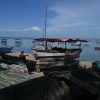
Cuba’s Coastal Dwellers Mitigate the Effects of Climate Change
Every time a hurricane clouds the skies over the city of Manzanillo, in the eastern Cuban province of Granma, the sea pounds the Litoral neighbourhood, forcing many of the 200 families who live there to evacuate inland because of flooding. When the weather is calm, the sea penetrates subtly and constantly, salinizing the water table and eroding the coast, affecting the foundations of houses and artesian wells.
‘Australia Must Turn Its Climate Rhetoric into Action’
CIVICUS discusses the recent Pacific Islands Forum (PIF) meeting in Tonga with Jacynta Fa’amau, Pacific Campaigner at 350.org, a global civil society organisation campaigning for climate action.
COP 29: High Stakes for Small Islands Fighting for Climate Finance
Small Island Developing States (SIDS) are experiencing the most severe impacts of climate change. When leaders of those islands met in Antigua and Barbuda in May, they let the world know that achieving climate justice hinges on comprehensive climate finance.
It’s Time for Rich Polluters to Pay for the Climate Crisis They Created
The world is standing at a critical juncture. Climate change is not just a future threat—it’s here, and it’s already devastating lives. From record-breaking heat waves to floods and landslides, the planet is sending us clear signals that we cannot afford to ignore.
Dying for a Cause: Environmental Defenders in the Firing Line
In 2017, South African activist Nonhle Mbuthuma took a stand against the powerful oil giant Shell, halting their plans to explore the pristine Wild Coast. Despite facing death threats, she refused to back down. As a co-founder of the Amadiba Crisis Committee and a 2024 Goldman Prize winner, Mbuthuma continues to fight for her community’s rights and the environment. Her bravery reflects the countless risks land and environmental defenders face across the globe.
Tanzania’s Maasai Women Adopt Climate-Smart Solutions To Tame Drought
In the scorching sun of Mikese village in Tanzania’s eastern Mvomero district, 31-year-old Maria Naeku tirelessly tends to her small vegetable patch. Each time she pulls a weed, the red soil stains her hands as she guides the trickle of water from a maze of pipes through an elevated bed to nurture her plants. In a drought-stricken area, Naeku's small garden is a lifeline for her family, giving them food and income.
Carbon Emissions from AI and Crypto are Surging– and Tax Policy Can Help
What do crypto assets and artificial intelligence have in common? Both are power hungry. Because of the electricity used by high-powered equipment to “mine” crypto assets, one Bitcoin transaction requires roughly the same amount of electricity as the average person in Ghana or Pakistan consumes in three years. ChatGPT queries require 10 times more electricity than a Google search, due to the electricity consumed by AI data centers.
Net Zero by 2050 Delays Needed Urgent Climate Action
Net zero emissions by 2050 prioritise mitigation for climate stabilisation. Pledges to achieve this still distant target have grown but inadvertently delay urgently needed climate action in the near term.
It Is Time to Save The Deep Sea
This week’s United Nations General Assembly marks nearly 20 years since the body first resolved to restrict bottom trawling on the world’s seamounts, submarine mountains that rise thousands of feet above the sea floor and comprise some of the most biologically rich marine ecosystems on the planet.
Summit of the Future: On the Need for Civil Society to Make Its Voice Count at the UN
In a context of shrinking civic space that threatens civil society participation in an increasing number of countries and all the way to some UN processes, world leaders will gather to discuss the “multilateralism we want” at the Summit of the Future at the United Nations headquarters in New York.
Forest Fires in the Amazon Threaten Earth’s Stability
This year has been the worst for the Amazon rainforest in almost two decades. Although there has been a measured decline in deforestation when compared to 2023, forest fires have ravaged acres of critical ecosystems. For the first eight months of this year, the Amazon has seen routine forest fires, totalling to over 53,000 recorded instances.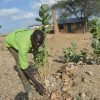
Governments Using Billions of Public Funds to Subsidize Climate-Destructive Industries—Report
A report examining corporate capture of public finance is accusing industries fueling the climate crisis, including fossil fuel ones, of draining public funds in the Global South, singling them out for squeezing out of governments USD 700 billion in public subsidies each year.
Explainer: Why Venezuela Needs To Reduce Its Gas Flaring
The most visible part of gas flaring in Venezuela is the so-called “Monagas illuminated nights.” These are red and orange skies, which are visible from the homes of the locals at night and which show the gas flaring in the oil fields of Monagas, a state located in the east of the Caribbean country and key in its oil production.
How Much is Too Much for Mount Everest? Isn’t it Time For Sagarmatha to Rest
"That’s Mt. Everest!" I overheard this from a trekking guide to his trekkers team. I stopped and asked him—which one! He was not our guide, but I approached. He pointed a finger and showed me Mt. Everest and I cried—I don't know why. I was overwhelmed and humbled to finally witness the world's tallest mountain—it was not from the base camp but from Thyangboche while returning.
Small Glacial Lakes’ Mass Destruction in the Himalayan Community
Small glacial lakes can cause destruction, which may impact the livelihoods of entire communities. Now this is the harsh reality that the community of Thame village in the Mt. Everest region of Nepal now faces as they rebuild after the August 16 disaster.
Rural Survival: Guardians of Mother Earth Saving Mau, Revitalizing Native Lands
The Great Rift Valley is part of an intra-continental ridge system that runs through Kenya from north to south. A breathtaking, diverse mix of natural beauty that includes dramatic escarpments, highland mountains, cliffs and gorges, lakes and savannas. It is also home to one of Africa’s greatest wildlife reserves—the Maasai Mara National Reserve.
Climate Action Greatest Economic Opportunity of this Century, Says UN Climate Chief
With fewer than 100 days to go to COP29, the highest decision-making body on climate issues under the United Nations Framework Convention on Climate Change (UNFCCC), the need for creative and innovative solutions to protect lives and livelihoods is now extremely urgent.
In Tonga the UN Secretary-General Declares a Global Climate Emergency
Three months ahead of the COP29 United Nations (UN) Climate Change Conference, the United Nations Secretary-General, António Guterres, has called for an emergency response from the international community as new data from the World Meteorological Organization (WMO) reveals a critical deterioration in the state of the climate.
Climate Assemblies Seek Citizen Participation in Latin American Solutions
Danilo Barbosa had never taken part in political processes until his name was drawn in a lottery to join the climate assembly of the municipality of Bujaru, in the Amazon region of Brazil.
Signs of Progress on Peace-Positive Climate Adaptation
The consequences of climate change are disproportionately impacting fragile and conflict-affected settings (FCS). Climate shocks can exacerbate security risks in FCS, conflict and instability compromise a region’s ability to adapt to climate change, leaving its population ever more vulnerable to future climate shocks.
UN Efforts for a Resilient Iraq
Climate change and water scarcity pose significant threats to Iraq's stability, prosperity, and the well-being of its people. The environmental challenges facing the nation are complex and interconnected, requiring a comprehensive and coordinated response.« Previous Page — Next Page »





The Week with IPS

NEXT STOP - SDGs
Tracking global progress towards a sustainable world
Tracking global progress towards a sustainable world
