
Saturday, November 14, 2026



News and Views from the Global South
Climate Change

“Migrants Deserve Dignity” says CIVICUS While Trump Pulls out of Proposed Migrant Compact
Continuing his “America First” approach, President Donald Trump has pulled the U.S. out of a proposed United Nations global compact seeking an agreement to protect the safety and rights of migrants and refugees.
“Will Civil Society & Democracy in India Rise to the Existential Challenges They Face?”
A cursory glance at international funding of the social sector in India reveals that it has grown at over 25% annually over the past three years.
Civil Society Week Puts Spotlight on the Pacific
It's a busy week for movers, shakers and policymakers attending a global gathering of civil society activists here in Fiji. For the first time, the International Civil Society Week (ICSW) is holding its sessions in the Pacific. It's a sign of a growing awareness of the problems facing these remote islands – problems they cannot be ignored any longer.
Build Back Better: The Tiny Island of Dominica Faces New Climate Reality
McCarthy Marie has been living in the Fond Cani community, a few kilometres east of the Dominica capital Roseau, for 38 years. The 68-year-old economist moved to the area in 1979 following the decimation of the island by Hurricane David.
Indigenous People, Guardians of Threatened Forests in Brazil
Indigenous peoples, recognised as the best guardians of the world's forests, are losing some battles in Brazil in the face of intensified pressure from the expansion of agriculture, mining and electricity generation.
Are Rising Attacks On Human Rights Defenders The ‘New Normal’?
At CIVICUS, a global civil society alliance working to strengthen citizen participation, we receive bad news of attacks on compatriots every day.
‘Sparks of Hope’ in a Time of Fear
Out of 300 nominations from across the globe, just four have won an innovation award for their commitment to human rights. Now in its 12th year, the Nelson Mandala-Graça Machel Innovation Awards seeks to celebrate and promote diverse individuals and organizations for their excellence and bravery in creating social change.
Q&A: “What Price Do We Put on Our Oceans?”
“Political resolve is the key for succeeding in our fight against oceans pollution,” Erik Solheim, head of UN Environment, who is leading hands-on the organisation’s global campaign to clean up seas and oceans of plastic litter, agricultural run‑off and chemical dumping, told IPS.
Fiji Civil Society Meeting to Focus on Pacific Islands Under Threat
The 57 small island developing states (SIDS), including 20 described as territories which are non-UN members, are some of the world’s most vulnerable – both economically and environmentally.
Should Environmental Refugees be Granted Asylum Status?
The 1951 UN convention on political refugees-- which never foresaw the phenomenon of climate change-- permits refugee status only if one “has a well-founded fear of persecution because of his/her race, religion, nationality, membership in a particular social group or political opinion.”
Combating Climate Change? Combat Land Degradation, Says UNCCD Chief
Land restoration is not a “glamorous subject even when you give all the numbers,” admits Monique Barbut, the Executive Secretary of United Nations Convention to Combat Desertification UNCCD). But she also stresses that by 2050, the world population will reach 10 billion. To feed that extra 2.4 billion, current food production would need to be increased by 75 percent.
A Cop Out at COP23?
Despite a few victories, the UN’s annual climate change conference ended without achieving its goals or injecting a sense of much needed urgency.
Climate-Smart Agriculture in Vanuatu: Learning to Grow
It’s been dry in Isavai on the island of Aniwa for last couple of years – ever since Tropical Cyclone Pam tore through Vanuatu in March 2015, leaving an El Nino-induced drought in its wake. A dry phase is bad news for farmers anywhere, but in Aniwa, where there is no constant water source and the only water supply comes almost exclusively from harvesting rain into tanks, it’s disastrous.
Lobbying & Sponsorships at COP23 Corrupted Climate Talks
The world’s nations got together in Bonn, Germany, for the 23rd annual Conference of the Parties (COP) under the UN Framework Convention on Climate Change (UNFCCC), where nearly 200 countries and some 23, 000 delegates met to discuss and influence the negotiations over the rulebook of the Paris Agreement.
Desperate Need to Halt ‘World’s Largest Killer’ — Pollution
Now that the lights of the UN climate change summit’s meeting rooms have been turned off in Bonn, after a week of intense negotiations and some partial results, another major environmental event is now scheduled in Nairobi, this time to search for ways to halt the world’s major killer – pollution.
At Climate Summit, Two Global Energy Alliances Emerge
As the summit of governments known as COP23 reached its conclusion in Bonn, Germany this week, two clear alliances have emerged in the global energy landscape.
Financing Will Continue to be Key Issue in Battling Climate Change
“The Bonn climate talks were foundational, paving the way to finalize the rules that underpin the Paris Agreement next year and setting the stage for countries to commit to enhance their national climate plans by 2020. On both counts, the climate talks in Bonn were a success. However, negotiators have plenty of homework to do to get there.
Rejoicing in the Other and Celebrating Diversity Are Needed More than Ever to Address the Root-Causes of Intolerance
The Chairman of the Geneva Centre for Human Rights Advancement and Global Dialogue H. E. Dr. Hanif Hassan Ali Al Qassim deplored the rise of xenophobia, bigotry and marginalization - targeting refugees, migrants and internally displaced persons - that is taking effect in many regions of the world.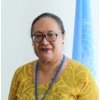
Climate Change: The World’s Poorest Will Judge us by Action
Two years ago, 197 parties came together in Paris and agreed to the historical Paris Framework. Since that December 2015, we all have seen countless pictures of utterly devastating floods, wildfires, hurricanes happening more and more frequently all over our planet mainly affecting the poorest among us.
Coal Pollution Continues to Spread in Latin America
Despite growing global pressure to reduce the use of coal to generate electricity, several countries in Latin America and the Caribbean still have projects underway for expanding this polluting energy source.
Climate Change is Already Upon us & Will Only Worsen in Short Term
It is fitting that this year’s conference of parties (on climate change, COP 23) is led by Fiji, a nation on the frontlines. Last month I visited other small islands facing the impacts of a warming world: Antigua and Barbuda and Dominica. The hurricane damage was beyond belief. The catastrophic effects of climate change are upon us. Floods, fires, extreme storms and drought are growing in intensity and frequency.« Previous Page — Next Page »


As unsustainable human consumption and production systems are driving changes in average temperatures and weather patterns, "abnormal" is increasingly becoming the norm. So far, a lack of financing has been standing in the way of a comprehensive global plan for climate adaptation, and a global financial crisis has contributed to an increasing reliance on public-private partnerships. Our Climate Change page provides you with the latest news about international and local efforts to address what's frequently been called "the challenge of our time", the forces behind the climate change and the impact it has on the world's most vulnerable populations. Along the way, we bring you stories on growing citizen awareness, new scientific data, and emerging climate policies towards sustainable development.

The Week with IPS

Tracking global progress towards a sustainable world

