
Sunday, November 15, 2026



News and Views from the Global South
Climate Change

Vanuatu: Community Farms Helping Small Islands Adapt to Climate Change
Here in Vanuatu, the ocean has been getting warmer and more acidic. Scientists are predicting that cyclone patterns will change, we’ll see heavier rainfalls, a wetter wet season and a drier dry season. We’re already seeing the sea rising six millimeters per year in the capital, Port Vila; higher than the global average.
On Gender Day at Climate Meet, Some Progress, Many Hurdles
“Five years ago, when we first started talking about including gender in the negotiations, the parties asked us, ‘Why gender?’ Today, they are asking, ‘How do we include gender?’ That’s the progress we have seen since Doha,” said Kalyani Raj.
How to Ensure Farming is More Than Just a Footnote in Climate Talks
If change comes from within, then climate action in agriculture must logically start with farmers. They need to find ways to adapt to and mitigate climate change. But when that involves 800 million of the world’s poorest people, they are going to require systematic and dedicated support.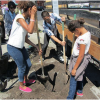
How US Is Taking Climate Action Without Trump
Even after President Trump announced his intention to pull the United States out of the Paris Agreement, much of the country is moving forward with climate action anyway. According to new analysis, more than 2,500 non-federal actors representing more than half the U.S. economy—including cities, counties, states, businesses and more—have pledged their support for the Paris Agreement goals. If these actors were their own country, they’d be the world’s third-largest economy.
Aid Groups Sound Alarm on DRC Crisis
The Democratic Republic of the Congo (DRC) is on the brink of a humanitarian crisis and the international community must step in before it worsens, humanitarian agencies warn.
Economic Development vs. Climate Action: Rebutting Deniers and Wafflers
As negotiators meet in Bonn to put together a deal to implement the Paris Agreement, John Holdren, a professor of environmental policy at the John F. Kennedy School of Government, Harvard University, stressed that economic development and climate change mitigation and adaptation are not ‘either-or’ but must be pursued together.
Climate Change Poses Alarming Threat to Food Security in Pacific Islands
A high-level meeting of political leaders -– hosted by the Food and Agriculture Organisation (FAO) -– sounded an ominous warning: that climate change poses an “alarming threat to food systems and food security in the Pacific islands.”
SLIDESHOW: Two Models of Development in Struggle Coexist in Brazil’s Semi-arid Region
 Irrigated green fields of vineyards and monoculture crops coexist in Brazil’s semiarid Northeast with dry plains dotted with flowering cacti and native crops traditionally planted by the locals. Two models of development in struggle, with very different fruits.

Will Policymakers Listen to Climate Change Science This Time Around?
Climate change is altering the ecosystem of our oceans, a big carbon sink and prime source of protein from fish. This is old news.
Pacific Communities Building Resilience in the Face of Climate Change
In the Pacific, climate change is an ever-present threat, undermining human rights, livelihoods, and security. Pacific Islanders are working with courage and resolve to build the resilience of their communities and to catalyse international actions towards ending global carbon pollution.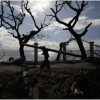
Fighting the Creeping Catastrophe of Climate Change
November 8 marks the fourth anniversary of Haiyan’s landfall in the Philippines. The super typhoon was the strongest ever to make landfall.
4 Reasons for Countries to Enhance Climate Commitments by 2020
The Paris Agreement was widely hailed for drawing all nations together to tackle climate change, based on bottom-up contributions that will be reviewed and strengthened over time. These contributions are aimed at achieving the ambitious but necessary long-term goals of limiting global temperature increase and building resilience to climate impacts.
Fourth Industrial Revolution & Its Dramatic Impact on Society
I am an engineer and, for the time being, I am also Secretary-General of the United Nations and we are all here because we believe in the force of Science, Innovation and Technology.
Climate Change Summit a Step Further, Yes… But Where To?
The UN Climate Change Summit in Bonn is a step further, most experts say. Fine, but towards what?
My Vision for a Pollution-free Planet
For too long, the relationship between prosperity and environment has been seen as a trade-off. Tackling pollution was considered an unwelcome cost on industry and a handicap to economic growth.
Got Climate Questions? Climate Watch Has Answers
Negotiators and stakeholders headed to Bonn, Germany, for next week’s UN climate summit continue to confront a range of questions surrounding one essential query: How do we meet the imperative to lower greenhouse gas emissions now — quickly — to minimize the most severe impacts of climate change?
Widespread Natural Disasters Threaten Development Goals
This year in the Caribbean and on the American mainland, hurricanes have left millions of people in need of assistance.
Women and Malnutrition in Africa
Undernutrition is widespread and a key reason for poor child health in many developing countries. In Sub-Saharan Africa, around 40 percent of children under the age of five suffer from stunted growth, that is, severely reduced height-for-age relative to their growth potential. Stunting is a result of periods of undernutrition in early childhood, and it has been found to have a series of adverse long-term effects in those who survive childhood. It is negatively associated with mental development, human capital accumulation, adult health, and with economic productivity and income levels in adulthood.
Impending Drought? There’s an App for That – Or Should Be
Fostering and harnessing innovative technologies could significantly reduce the negative impacts from climate change, including drought, water scarcity and food insecurity in African countries.
The Roots of Exodus: Why Are People Compelled to Leave their Homes?
Facts are facts, and one of them is that while everybody talks about the growing forced movement of people --be they migrants or refugees—decision-makers haven’t seriously acted on the root causes of why millions of humans are compelled to leave their homes.
Kashmir’s Farmland Plowed Under in Wave of Urbanization
In central Kashmir’s Ganderbal district, 40-year-old Javaid Ahmad Hurra remembers vividly how his small hamlet used to be lush and green when he was a child. It is now subtly turning into a concrete jungle, with cement structures dominating the scenery.« Previous Page — Next Page »


As unsustainable human consumption and production systems are driving changes in average temperatures and weather patterns, "abnormal" is increasingly becoming the norm. So far, a lack of financing has been standing in the way of a comprehensive global plan for climate adaptation, and a global financial crisis has contributed to an increasing reliance on public-private partnerships. Our Climate Change page provides you with the latest news about international and local efforts to address what's frequently been called "the challenge of our time", the forces behind the climate change and the impact it has on the world's most vulnerable populations. Along the way, we bring you stories on growing citizen awareness, new scientific data, and emerging climate policies towards sustainable development.

The Week with IPS

Tracking global progress towards a sustainable world

