
Saturday, November 21, 2026



News and Views from the Global South
Climate Change

CLIMATE CHANGE: Cancun Summit Gives Fossil Fuels a Free Pass
The main cause of climate change is the burning of fossil fuels, so why are billions of dollars being invested to find and produce more oil, coal and natural gas?
CLIMATE CHANGE: Straining Gnats and Swallowing Camels
What some people view as modest but real progress in the climate change talks, now in their second week in this southeastern Mexican resort city, others see as no more than smokescreens or "false solutions."CLIMATE CHANGE: Legislators Seek to Influence Cancun
"And what about after 2012?", when the Kyoto Protocol climate change treaty’s first period of commitments ends, was the question floating around an international meeting of legislators held over the weekend in the Mexican capital.CLIMATE CHANGE: Recyclers Tout Benefits of Their Trade at Cancun Summit
Ezequiel Estay began collecting glass bottles in 1991 after losing his job with the Chilean media conglomerate Copesa. Now, years later, he heads Chile's National Movement of Recyclers and is a leader of the Latin American Recyclers' Network, which is questioning the climate benefits of the Clean Development Mechanism (CDM).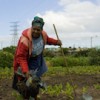
CLIMATE CHANGE: Turning Agriculture From Problem to Solution
Global agriculture contributes in the region of 17 percent to the greenhouse gas emissions that cause climate change, but according to the World Bank, climate smart agriculture techniques can both reduce emissions and meet the challenge of producing enough food for a growing world population.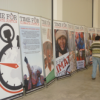
CLIMATE CHANGE: Rumours and Pessimism Reign Midway Through Cancun Summit
At the end of the first week of climate negotiations under way in this Mexican Caribbean resort city, it seems a distant possibility that the nearly 200 national delegations will agree on renewing the Kyoto Protocol, which expires in 2012.
CLIMATE CHANGE: REDD at Cancun Causes Angst in India
Forest rights advocates and indigenous community organisations from India are adding their voices to what promises to become the newest division in the climate talks here: the inclusion of Reducing Emissions from Deforestation and Degradation + in developing countries, or REDD+, as an agreement.INDIA: Brakes Applied to SUVs – ‘Socially Useless Vehicles’
Indian owners of sports utility vehicles (SUVs) and luxury cars, who have been benefiting from subsidies on diesel meant to help farmers, may soon have to pay real prices for their fuel.
Southern Africa Collectively Gearing Up For REDD
The Southern African Development Community (SADC) is moving to support its member countries to tap into benefits from the reducing emissions from deforestation and forest degradation (REDD) framework.
CLIMATE CHANGE: New Forest Agreement – REDD Hot Issue at Cancun
A large number of social organisations are not pleased with the international convention on Reducing Emissions from Deforestation and Forest Degradation (REDD) being negotiated at the COP16 climate summit.
CLIMATE CHANGE: Lost in Cancun
"The hurricane season officially ended on Nov. 30," a local shopkeeper told this journalist reassuringly as she entered his store with her hair blown in every direction by the wind on a drizzly, cloudy day.
Quantifying Latin American Cattle Emissions a Vital Climate Tool
Some of Latin America's major cattle-producing countries will begin working as a team in 2011 to quantify the greenhouse-effect gas emissions from their bovine industry -- and to come up with options for reducing them.EUROPE: Talking Green, ‘Lending Unclean’
The European Bank for Reconstruction and Development is reneging on pledges to support low-carbon economic models in Eastern Europe, and is instead ramping up its lending for fossil-fuel energy projects, critics say.COLOMBIA: Climate Science Reaching Out for Traditional Farmers’ Wisdom
The wide-ranging knowledge about climate variation possessed by native people and other small farmers, such as the people in one region of Colombia, is almost a perfect match to scientific measurements recorded on high-tech instruments.
AFRICA: Food Versus Biofuels Debate Continues
"We’re going to Cancún no better off than we were in Copenhagen," said Thuli Makama, the director of Friends of the Earth Swaziland, as she prepared to leave for the climate negotiations in Mexico.
Japan Under Fire for Abandoning Kyoto Pact
Japanese NGOs feel that Prime Minister Naoto Kan's categorical statement in parliament on Monday that his government would not under any circumstances be party to a continuation of the Kyoto Protocol, which was signed in that historic city in 1997, went "beyond irony".In the End, U.S. Gets (Partial) Offshore Drilling Ban
As negotiators meet in Cancún to discuss how to mitigate the worst effects of climate change, the impacts of the oil spill disaster that unfolded earlier this year on the other side of the Gulf of Mexico are still rippling through Washington.
UGANDA: Carbon Finance May Not Benefit Forest Communities
Uganda has lost more than two million hectares of forest since 1990, mostly converted to farmland by a growing population of smallholders. Carbon finance through the REDD programme is often presented as one way to arrest this destruction, but only if the benefits clearly translate to the grassroots.
CLIMATE CHANGE: Will Year of Extremes End with a Whimper?
This year will likely be the warmest ever recorded, with soaring ocean temperatures resulting in a near record die-off of tropical corals, extreme heat and drought in Russia and massive flooding in Pakistan - all signs that climate change has taken hold.CLIMATE CHANGE-INDIA: Scientists Warn, Gov’t Must Act
India’s first-ever major scientific assessment of its climate change scenario by the 2030s, released in November, has the report’s scientists rooting for the government to take concrete action.
CLIMATE CHANGE: Don’t Look to South Africa for Leadership
South Africa is Africa’s largest economy and the continent's biggest emitter of greenhouse gases. The country’s emissions per capita are on par with those of the United Kingdom, and more than twice as high as China’s emissions by the same measure.« Previous Page — Next Page »


As unsustainable human consumption and production systems are driving changes in average temperatures and weather patterns, "abnormal" is increasingly becoming the norm. So far, a lack of financing has been standing in the way of a comprehensive global plan for climate adaptation, and a global financial crisis has contributed to an increasing reliance on public-private partnerships. Our Climate Change page provides you with the latest news about international and local efforts to address what's frequently been called "the challenge of our time", the forces behind the climate change and the impact it has on the world's most vulnerable populations. Along the way, we bring you stories on growing citizen awareness, new scientific data, and emerging climate policies towards sustainable development.

The Week with IPS

Tracking global progress towards a sustainable world

