Languages
Wednesday, November 11, 2026



News and Views from the Global South
Crime & Justice

Myths Fuel Xenophobic Sentiment in South Africa
Around the world, from Syria to Libya, from Bangladesh to Ukraine, millions have become refugees in foreign lands due to war, famine, or political and economic instability in their countries.
Sri Lankan Beggar’s Opera
When Ceylon- now Sri Lanka- gained independence from Britain in 1948 after almost 450 years of colonial rule under three western powers, it was one Asia’s most stable and prosperous democracies.
International Criminal Court at 20: Renewing the Promise of Justice for the Gravest Crimes
On 1 July 2022, the International Criminal Court (ICC) turns 20. The entry into force on 1 July 2002 of the ICC’s founding treaty, the Rome Statute, officially created the Court and marked the start of its work towards building a more just world.
UN’s “No-Fly List” on Sexual Harassment Falls Short, Complains Rights Group
The United Nations has continued to crackdown on sexual harassment system-wide since 2017 while its “whistle blower protection policy” has provided “protective status” for nearly 68 UN staffers who reported wrong doing. But Equality Now, an international human rights organization, is accusing the UN of faltering on its longstanding “zero-tolerance” policy.
Jobs Will Not Empower Young Women Until We Address Sexual Harassment
What does empowerment for young women look like? For many, the answer would include jobs. But the belief that jobs bring empowerment through income, greater autonomy, and bargaining power within the family fail to recognise that these potential gains for young women are undermined by widespread sexual harassment.
Taliban: The Return of Misogynistic Gynophobes in Afghanistan
 Gynophobia is defined as an intense and irrational fear of women or hatred of women, it may be characterized as a form of specific phobias, which involves a fear that is centered on a specific trigger or situation, which in the case of gynophobia is women.

War & Peace 2.0: Ukraine Showing the World How to Fight Back
It has been over 100 days since Russia first invaded Ukraine on 24 February 2022, turning the country into a slaughterhouse. The United Nations (UN) in this report says that, as of 1 June, 2022, more than 6.9 million refugees have left Ukraine and 2.1 million have returned, while eight million people are displaced inside Ukraine itself. War in Ukraine has caused the fastest growing refugee crisis since World War II.

US Leads Sanctions Killing Millions to No End
Food crises, economic stagnation and price increases are worsening unevenly, almost everywhere, following the Ukraine war. Sanctions against Russia have especially hurt those relying on wheat and fertilizer imports. Unilateral sanctions illegal Unilateral sanctions – not approved by the UN Security Council – are illegal under international law. Besides contravening the UN Charter, unilateral sanctions inflict much human loss. Countless civilians – many far from target countries – are at risk, depriving them of much, even life itself.
Has the UN Transformed itself into a Vast Humanitarian Relief Organization?
The United Nations, which has failed to help resolve some of the world’s ongoing and longstanding civil wars and military conflicts—including Palestine, Afghanistan, Yemen, Western Sahara, Myanmar, Syria, and most recently, Ukraine—was rightfully challenged by Ukrainian President Volodymyr Zelenskyy during his riveting address to the Security Council last April.
Animal Farm, Ukrainian Resistance and Russian Propaganda
Warfare and misinformation are intimately connected. The 29th of May was globally observed as The Day of Communication and due to the ongoing war in Ukraine it was difficult to avoid thinking of affiliated propaganda campaigns, carried out by warring factions and far from indifferent bystanders.
Over Two Decades of Impunity for Environmental and Health Disaster in Peruvian Village
"We are not asking for money, but for our health, for a dignified life," is the cry of the people of Choropampa, which lawyer Milagros Pérez continually hears 22 years after the environmental disaster that occurred in this town in the department of Cajamarca, in Peru´s northern Andes highlands, on the afternoon of Jun. 2, 2000.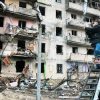
So, Germany’s to Blame for Putin. Really?
Putin’s brutal invasion of Ukraine has sparked a new introspection in the West. A number of commentators, most of them writing from the US and the UK, have come up with their latest scapegoat: Germany’s to blame, they say, with its decades-long policy of appeasing Russia. Really?
One Hundred Years On, Argentine State Acknowledges Indigenous Massacre in Trial
It’s a strange trial, with no defendants. The purpose is not to hand down a conviction, but to bring visibility to an atrocious event that occurred almost a hundred years ago in northern Argentina and was concealed by the State for decades with singular success: the massacre by security forces of hundreds of indigenous people who were protesting labor mistreatment and discrimination.
Mining Destroys the Lives of Indigenous People in Venezuela
The voracious search for gold in southern Venezuela, practiced by thousands of illegal miners under the protection of various armed groups, represents the greatest threat today to the lives of indigenous peoples, their habitat and their cultures, according to their organizations and human rights defenders.
War and Famines – Warnings of Potential Outcomes of the War in Ukraine
An entirely unnecessary and all too tangible nightmare continues to scourge Ukraine. Without doubt, one catastrophe after another still awaits. Much of Ukraine’s harvest, of paramount importance to global food supply, is at risk of being lost due to Vladimir Putin’s and the Russian army’s belligerent actions. Last year, Ukraine harvested a record of 106 million tonnes of grain – 25, or even 50 percent of this amount is currently feared to be lost during this year while most experts add that “this is an optimistic forecast.”
UN Secretary-General Must be Non-Risk Averse, & Play a More Pivotal and Active Role
Mr. Vladimir Putin’s illegal War of Aggression in Ukraine, launched on February 24, 2022, brought into stark relief the fractured state of Global Peace and Security. Militarized conflicts, civilian deaths and forced migration in the tens of millions have been ongoing for decades, with little or no relief to the beleaguered victims.
In Sri Lanka, Things Fall Apart
When I ended last month’s column hoping that April would not prove to be hapless Sri Lanka’s ‘cruellest month’ (in the words TS Eliot), I hardly anticipated the current turn of events.
UN Continues Financial Ties with a Vilified Russia Isolated by the International Community
The Russian Federation, which invaded Ukraine last February killing scores of civilians and destroying entire cities, has been condemned, vilified and ostracized by the international community. UN Secretary-General Antonio Guterres was emphatic last month when he remarked: “The use of force by one country against another is the repudiation of the principles that every country has committed to uphold. This applies to the present military offensive. It is wrong. It is against the Charter. It is unacceptable”.
Out of Africa: Rich Continent, Poor People
Capital flight from the global South is immense, with widespread adverse effects. A new book proposes measures to curb, even reverse capital flight from Africa. It also offers pragmatic lessons for many developing countries.
Politics in Pakistan: The Captain’s Crisis!
The ship has weather’d every rack, the prize we sought is won,
The port is near, the bells I hear, the people all exulting,
While follow eyes the steady keel, the vessel grim and daring….”
Walt Whitman

World Press Freedom Day 2022
Reporters Without Borders (RSF) issues an annual report evaluating press freedom globally.
This year’s index focused on 180 countries across the world.
« Previous Page — Next Page »





Issues of crime and justice are as pertinent to development as they have ever been. The struggle for abolition of the death penalty is not over, and penal reform is desperately needed in many countries around the world. From violence to religious persecution, white-collar crime to police brutality, we keep you updated with reports from around the world. IPS correspondents focus on the causes of crime, attempts to prevent it, and the process of bringing those who commit crimes to justice. We also cover the campaign against capital punishment, and for legal and prison reforms that would give prisoners the right to life, and also to justice and decency.

The Week with IPS

NEXT STOP - SDGs
Tracking global progress towards a sustainable world
Tracking global progress towards a sustainable world
