Languages
Tuesday, October 6, 2026



News and Views from the Global South
Democracy
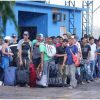
The Crucial Role of the Military in the Venezuelan Crisis
In January 2019 Venezuela’s opposition-led National Assembly swore in congressman Juan Guaidó as the country’s interim president. Guaidó’s claim to power is a severe blow against the already weakened government of Nicolás Maduro, whose re-election as president in May 2018 was widely rejected by the international community and deemed illegitimate by over 50 foreign governments.
“They’re like those bad football fans”
It’s been called the most important election in decades. The coming elections to the European Parliament will take place in May, and some believe it will be a springboard for the parties on the far right. But what would the consequences of that be for the labour markets in the European Union’s member states?
An Indigenous Nation Battles for Land and Justice in Bolivia
The ancient Qhara Qhara nation began a battle against the State of Bolivia in defence of its rich ancestral lands, in an open challenge to a government that came to power in 2006 on a platform founded on respect for the values and rights of indigenous peoples.
Sierra Leone: Bio Government’s First Year
If the government of Sierra Leone’s President Julius Maada Bio were to be graded on their first year’s performance in office, it is likely that their report card would read, “promising start, which they must surpass in the years ahead”.
Q&A: “The Knowledge of Local Challenges Can Only Come from Working with People”
The remarkable story of an Adivasi lawyer and social activist who has led peoples’ movements against state development policies, and sought redress for human rights violations of his people in conflict-ridden regions of Maharashtra.
How Many Journalists are Jailed in China? Censorship Means We Don’t Know
Reporting on China's harassment of journalists has never been easy. Lately it's been getting much harder, which suggests that conditions for the press could be worsening.
International Trade Unions Condemn Recognition of Guaidó
More than 60 countries have recognized Juan Guaidó as legitimate interim president. But among international trade unions, support for Venezuelan self-determination is resolute.
The Crisis in Venezuela
My mission to Venezuela in November/December 2017 was the first by a UN rapporteur in 21 years. It was intended to open the door to the visit of other rapporteurs and to explore ways how to help the Venezuelan people overcome the protracted economic and institutional crisis.
Millions of Venezuelans in Need of Protection
The international community must extend protections for Venezuelans in light of a growing humanitarian crisis with no end in sight. Human Rights Watch has urged governments in the Americas to provide temporary protection to the millions of Venezuelans fleeing a severe humanitarian crisis.
Will ‘People Power’, or Powerful People, Change the World?
When I was a little girl, I wanted to be a hero. While my friends dressed up as princesses, I wore a home-made Joan of Arc costume. Where others read romance novels, I read about fighting dragons. I didn’t want to be a princess, I wanted to save them.
Protecting Women’s Space in Politics
Women human rights defenders around the globe are facing heightened threats of violence and repression. Sometimes they are targeted for being activists, and sometimes just for being women. World leaders should do much more to secure space for women’s safe participation in public life.
Violence Fuels Mobilisation by Women against Brazil’s Anti-Gender Equality Government
Crime, a key issue in far-right President Jair Bolsonaro's election in Brazil, has a dimension that is gaining in visibility and could turn against his government: gender violence.
We Are the Invisible. We Are the Invincible. We Will Overcome.
(Tricontinental) – The mood in Caracas (Venezuela) is sombre. It appears that the attempted coup against the government that began on 23 January is now substantially over (as the Venezuelan Foreign Minister Jorge Arreaza tells me). The Lima Cartel is divided. The Europeans have cold feet. On the one-month anniversary of that attempt, a massive crowd of the poor gathered in the centre of Caracas to demonstrate their support for the Bolivarian Revolution. An elderly couple carried a sign which captured the mood – Somos los Invisibles. Somos los Invensibles. Venceremos (We are the Invisible. We are the Invincible. We will Overcome).
Mauritius Scores Win over Britain in Diego Garcia Decolonisation
Mauritius has scored a victory over Britain at the International Court of Justice (ICJ) in a case involving the decolonisation of the strategically important island of Diego Garcia that is home to a United States military base.
“A Year of Shame” for Middle East and North Africa
Human rights violations are at an all-time high in the Middle East and North Africa, and global indifference is only making it worse.
Repression Stands in the Way of Political Solution to Crisis in Venezuela
The violent repression that prevented food and medical aid from crossing into Venezuela, which left at least four people dead and 58 with gunshot wounds, has distanced solutions to what is today Latin America's biggest political crisis, although 10 countries in the hemisphere are stepping up the pressure while at the same time ruling out the use of force.
The Wall: Thirty Years Ago European Walls Were Destroyed, but Others Are Being Built
On January 25, 2017, the Trump administration signed Executive Order 13767, instructing the Government to begin new constructions and replacements of walls between the US and Mexico. From December 22, 2018 to January 25, 2019, the federal government was partially shut down due to President Trump's declared intention to veto any spending bill that did not include $5 billion in funding for a border wall. It was with good reason the Congress withheld such an enormous sum of money. As the European experience indicates, building walls between countries has proven to be both obsolete and disastrous.
The President of the United States Is More the President of My Country Than the President of My Country
(Tricontinental) – As the United States and its allies put pressure on Venezuela, a poem by the Salvadoran radical Roque Dalton (1935-1975) clarifies the structure of politics in Latin America. Dalton came from one of Latin America’s smallest countries, El Salvador, which he used to call the little finger (pulgarcito). A deeply compassionate poet, Dalton was also a militant of the People’s Revolutionary Army, whose internal struggles claimed his short life. El Salvador, like so many other Latin American states, struggles to carve out its sovereignty from the tentacles of US power. That hideous Monroe Doctrine (1823) seemed to give the US the presumption that it has power over the entire hemisphere; ‘our backyard’ being the colloquial phrase. People like Dalton fought to end that assumption. They wanted their countries to be governed by and for their own people – an elementary part of the idea of democracy. It has been a hard struggle.
Maldives Reiterates Commitment to ‘Free, Open Indo-Pacific Region’ & Democracy
Maldives Foreign Minister Abdulla Shahid has reiterated his nation's commitment to a “free and open” Indo-Pacific region and to democracy. During his meeting with Secretary of State Michael Pompeo in Washington Feb 20, Shahid “underscored the importance of his government's reform efforts to (ensure) the vitality of Maldives' democracy,” the department's Deputy Spokesperson Robert Palladino said.
International Aid Feeds Hope and Fuels Confrontation in Venezuela
The international food and medical aid awaiting entry into Venezuela from neighboring Colombia, Brazil and Curacao is at the crux of the struggle for power between President Nicolás Maduro and opposition leader Juan Guaidó, recognised as "legitimate president" by 50 governments.
Billions of Swedish Krona Supported the Struggle against Apartheid
Between 1982 and 1988 Birgitta Karlström Dorph was on a secret mission in South Africa. "Why didn't they stop us? Probably they were not aware of the scope of the operation. The money was transferred through so many different channels. We were clever, " Karlström Dorph says.« Previous Page — Next Page »





The Week with IPS

NEXT STOP - SDGs
Tracking global progress towards a sustainable world
Tracking global progress towards a sustainable world
