Languages
Friday, October 16, 2026



News and Views from the Global South
Development & Aid

Social Business – It’s Time
June 27-28 is the 16th Social Business Day, observed in Savar (Dhaka) Bangladesh. In June 2024 at the Western Sydney University’s graduation ceremony where I was conferred Emeritus Professor status, I urged the new business graduates to:- • purge the world of the… obnoxious Friedmanite idea that is destroying our planet and tearing our communities apart;
• look instead to the “Social Business Model” of Bangladesh’s Nobel Laureate Muhammad Yunus; and
• work on the right side of history; stand up for justice and liberation; spread the “moral violence” for peace; and put people and the planet before profit.

New GEF Project Raises Hope for Change in India’s Indigenous Lake Community
At dawn, when the waters of Dumboor Lake lie still under a pale grey sky, Santo Chakma, 63, nudges his narrow wooden boat into a reservoir that swallowed his childhood.
WORLD CUP: ‘FIFA Has Placed Itself on the Side of the Polluters, Not the Rest of the Planet’
CIVICUS speaks about the climate impacts of the 2026 World Cup with Frank Huisingh, founder of Fossil Free Football, a fan-led group that campaigns to end fossil fuel sponsorship in football and make the game more sustainable.

Of 40 Million People Living with HIV today, 32.1 Million are now on Treatment, Living Long & Healthy
I am honoured to address this High-Level Meeting. I thank very much the President of the General Assembly for her leadership, our Co-Facilitators, and all the Member States for the extraordinary effort that brought us here now.
‘The World Knows What Must Be Done’: New SDG Report Urges End to Wars and Greater Investment in People
As the world enters the final years before the 2030 deadline for achieving the Sustainable Development Goals (SDGs), a latest United Nations report has revealed that economic uncertainty, climate change, conflict and growing geopolitical tensions are causing hurdles for the countries to meet the targets.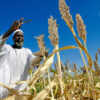
Armed Conflict, Funding Cuts and Supply Chain Pressures Deepen Global Hunger Risks
Armed conflict, economic shocks, and climate pressures are driving worsening food insecurity across many of the world's most vulnerable regions, according to the latest Hunger Hotspots report outlook for June-November 2026, jointly released by the World Food Programme (WFP) and the Food and Agriculture Organization (FAO).
AI is Already Rewriting Reality for Billions of People– But It is Getting Women Wrong
A study of 133 AI systems found that 44 per cent demonstrated gender bias and 26 per cent demonstrated both gender and racial bias. Yet only 51 per cent of marketers currently use human oversight to test AI-generated creative before release. Ahead of the United Nations Global Dialogue on Artificial Intelligence Governance from 6 – 7 July and AI for Good Global Summit in Geneva, Switzerland from 7-10 July, UN Women sets out what is at stake – and what must change – to build a gender-equal digital future.
Our Ocean Conference: After Mombasa – Will Africa and the World Make Ocean Promises Real?
« James Alix Michel warns that without real finance and precaution, ocean pledges risk remaining only on paper. » Now that the lights have dimmed in Mombasa and the delegations have gone home, a simple but necessary question remains: did the first Our Ocean Conference on African soil truly move the world from promises to protection? The conference was indeed the first held in Africa, under the theme “Our Ocean, Our Heritage, Our Future,” with a stated focus on culture, communities, livelihoods, marine protection, climate resilience and sustainable blue economies.
Dwindling Humanitarian Aid Devastates the Rohingyas in the World’s Largest Refugee Camp
Nearly nine years after the violent persecution of the Rohingya minority population in Myanmar and the following mass exodus of refugees, over 1.2 million Rohingya currently reside in neighbouring Bangladesh, where they face immense challenges. With the United Nations (UN) recording significant shortfalls in global humanitarian funding, alongside Bangladesh’s diminishing ability to support these populations, experts warn of a deepening humanitarian crisis.
Global South Leaders Redesigning International Cooperation
The fallout from the sudden collapse of the old system of financing international cooperation has been disastrous, unleashing a wave of harm and leaving the world more vulnerable to shocks and less able to respond to them. The wreckage is plain to see. The issue is what to do next.
In 2025, Government Forces were the Greatest Perpetrators of Violence Against Children in Armed Conflicts
A record number of children were subject to grave violations by parties to armed conflicts, the highest since the UN mandate for children and armed conflict (CAAC) was established in 1996.
A UN Secretary-General who Defied the US – and Suffered a Backlash
When Egypt’s onetime Foreign Minister Boutros Boutros-Ghali was running for the post of U.N. Secretary-General in late 1991, he had to contend with the rival candidacy of Bernard Chidzero, then foreign minister of Zimbabwe.
‘We Came for Action, Not Promises’: Developing Nations Voice Frustration as Bonn Talks Conclude
The United Nations June Climate Meetings (SB64) ended in Bonn with sharp disagreements between developed and developing countries over climate finance, adaptation support and emissions reductions, leaving negotiators with significant unresolved issues ahead of the COP31 climate summit in Antalya, Türkiye.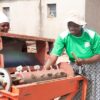
How AgricTech Cuts Labour for Zimbabwe’s Female Farmers
Long burdened by the labour-intensive nature of agriculture, Zimbabwe's female farmers are finding relief in new agritechnologies that significantly reduce the time they spend in the field.
RightsCon’s Cancellation Signals a Growing Threat to Human Rights and Digital Freedoms
RightsCon, the world’s leading summit on human rights in the digital age, has served for over a decade as a vital global gathering, bringing together civil society, academics, technologists, policymakers, and the private sector in cross-border collaboration. The abrupt cancellation of RightsCon 2026, following intervention by Zambia’s government just days before the convening was due to commence in Lusaka, should concern us all.
Trump’s World Stagflation Also Undermines Dollar Hegemony
US President Trump’s policies are supposed to make America great again (MAGA), which means different things to various parties. Some of its consequences are inadvertent, including undermining dollar dominance and inducing stagflation worldwide.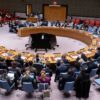
Will US Opposition to UN’s Socio-Economic Goals Play a Decisive Role in the Vote for Next Secretary-General?
As the campaign for a new UN secretary-general gathers momentum, will the US exercise the decisive vote -- or the veto-- in the final selection?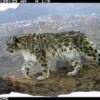
In Sikkim, Snow Leopards and Communities Share the High Mountains
The tea arrives before the conversation starts. Jayanta Mukhia sets two cups on the wooden table and pulls up a chair across from the couple who arrived that afternoon with trekking poles and rucksacks. They have come to walk the Goechala trail into the heart of Khangchendzonga National Park in India. They will leave in two days. Before they go, she has something to tell them.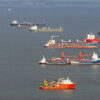
Global Economy Endures War Shock—So Far
More than three months into the war in the Middle East, the global economy appears to be holding up. Commodity prices, inflation and expectations for it, and financial conditions have all been impacted—but not yet in ways that signal a global slowdown. And we have seen strong economic momentum in the world’s biggest economies, the United States and China.
GLOBAL TAX TREATY: ‘Without Sustained Pressure from Organised Movements, the Political Space to Win Simply Doesn’t Open’
CIVICUS discusses a proposed United Nations (UN) tax treaty with Jenny Ricks, General Secretary of Fight Inequality Alliance, a global movement that organises to counter the concentration of power and wealth in the hands of a small elite.

New Caledonia’s Election to Set the Stage for New Talks With France on Its Political Future
The French overseas territory of New Caledonia in the Pacific will hold elections on 28 June in the wake of the latest agreement on its political status with France being rejected. The representatives elected in the three provincial assemblies and territorial congress will then determine a new round of negotiations as the mission of achieving consensus on New Caledonia’s future continues.« Previous Page — Next Page »





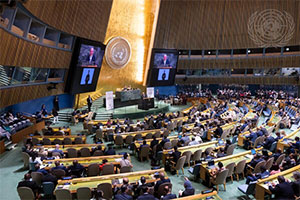 2026 High-level Political Forum on Sustainable Development. Credit: UN Photo/Eskinder Debebe
In 2015, the United Nations and its Member States adopted the Sustainable Development Goals (SDGs) in an effort to make the world a more sustainable and peaceful place for future generations. Progress on the 17 SDGs has been uneven, and inequality persists across the globe. 10 years after adoption, the 2025 UN SDGs Report revealed that only 35% of the SDG targets are on track, with more than half moving too slowly, and 18% moving backwards from the 2015 baseline. Poverty remains one of the world’s most pressing issues, with hunger, violence, and inequality impeding the opportunities for all people to achieve success. In September 2024, the United Nations Summit of the Future introduced a new goal: to eradicate global poverty by 2030, ensure universal rights to basic services, and increase the overall standard of living in terms of industrialization, economic well-being, citizen health, and literacy. Furthermore, recent shifts in United States foreign aid policy – notably, major budget cuts to USAID and the termination of thousands of development programmes– have severely threatened vital lifelines of financial aid to impoverished communities around the world. Additionally, the United States’ withdrawal from the Paris Climate Agreement has undercut international efforts at sustainable development. With the upcoming 2030 deadline, the UN Secretary-General has called for urgent multilateralism across six priority areas: food systems, energy, digital connectivity, education, jobs and social protection, and climate and biodiversity. IPS sheds light on marginalized communities that struggle on a daily basis to survive and have their stories heard and respected.
Updated by Yilan Batista and Shuli Wong August 2026

The Week with IPS

NEXT STOP - SDGs
Tracking global progress towards a sustainable world
Tracking global progress towards a sustainable world
