Languages
Wednesday, November 18, 2026



News and Views from the Global South
Development & Aid

The Importance of Being Listed: Why Politics Threaten the Protection of Children in Armed Conflict
Frontline workers who document and respond to violations against children have faced a particularly challenging last year, from the impact of Covid-19 on operations and child protection to the record levels of displacement worldwide to the ever-worsening threats from militaries and non-state armed groups.
Three Million in Three Years: Jamaica’s Tree-Planting to Tackle Climate Change
By the time he is finished, Dr. Satyanarayana Parvataneni expects he will be responsible for planting over 200,000 tree seedlings in Jamaica. It is an effort driven by a desire to preserve the planet for the next generation, as well as the one of the largest contributions to date to a national effort to plant three million trees in three years.
Boldly Finance Recovery to Build Forward Better
COVID-19 has become a “developing country pandemic”, retreating from the North’s mass vaccination. With developing countries heavily handicapped, the International Monetary Fund (IMF) warns of a “dangerous [new] divergence”.
Sowing Water: A Cuban Farm’s Bid for Sustainability
Cuban farmer José Antonio Casimiro found in the ageold technique of sowing water an opportunity to meet his farm's water needs and mitigate the increasingly visible effects of climate change.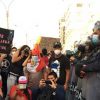
The Dictator’s Daughter or the Farmer’s Son?
Peru’s first round of elections on 11 April saw voters choosing between 18 presidential candidates with no one candidate leading by an impressive margin.
Education Cannot Wait for Refugee Children in Crisis, says Yasmine Sherif
With financing, the number of out-of-school refugees could be reduced to zero, Yasmine Sherif, Director of Education Cannot Wait (ECW) says, as the world commemorates World Refugee Day.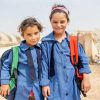
World Refugee Day
"Education will prepare refugee children and youth for the world of today and of tomorrow. In turn, it will make the world more resilient, sustainable and peaceful." ~ Filippo Grandi, UN High Commissioner for Refugees
To Fund Grand Inga Using Green Hydrogen, Equity and Ethics Matter
Visions of Grand Inga, a proposed massive hydropower plant in the Democratic Republic of Congo (DRC) powering much of Africa, have excited energy experts, investors, and governments for decades. The announcements this week by the Australian company, Fortescue Metals Group, and its chairman, billionaire Andrew Forrest, of their plans to develop Inga for green hydrogen exports brings this vision a little closer to reality.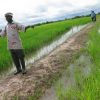
Africa Can Be Self-Sufficient in Rice Production
Every year, people in Sub-Saharan Africa consume 34 million tons of milled rice, of which 43 percent is imported. But the COVID-19 pandemic has greatly hampered supply chains, making it difficult for imported rice to reach the continent. Indeed, if immediate action is not taken, the supply shortfall will further strain the region’s food systems which are already impacted by the pandemic.
The Energy Revolution Is Here: How to Be Part of It
The industrial revolution took 100 years. The digital revolution, two decades. The next global revolution, the energy revolution, has already begun. But how fairly and how fast it happens is the biggest challenge of our time.
For People with Disabilities, COVID-19 Lays Bare the Weaknesses in Social Safety Nets
People with disabilities were particularly hard hit by the social and economic impacts of efforts to control COVID-19.
Apocalypse Now? Christian Fundamentalists and COVID-19

To Reverse Food Insecurity Build a Climate Resilient Agricultural Sector
The number of people facing acute food insecurity has hit a five-year high, according to a recently released annual report by the Global Network Against Food Crises (GNAFC) - an international alliance of the United Nations, the European Union, governmental and non-governmental agencies working to tackle food crises. In addition, the report noted that 28 million people were one step away from starvation. This was attributed to conflict, economic shocks due to COVID-19 and climate change associated weather events.
Central Sahel: Ground Zero in Tackling Climate Change Through Education
The climate crisis is amplifying the effects of instability and violence in the world’s poorest countries. Nowhere is this more visible than in Africa’s Central Sahel region, where increasing temperature, floods, droughts and other climate change-induced disasters are triggering conflicts, displacement, and pushing girls and boys into the shadows.
Betting on Green Hydrogen in Chile, a Road Fraught with Obstacles
Chile is in a privileged position in the world to produce green hydrogen and boost the development of the new fuel thanks to the country’s optimal conditions for generating solar and wind energy, but the large investment required and the scarcity of water are two of the biggest obstacles to overcome.
Developing Country Health Professionals Sidelined in Canadian Healthcare
In Canada, we are fortunate to have many talented newcomers eager to contribute to the country, including thousands of doctors from Africa, Asia and the Middle East who meet Canadian standards but are blocked from becoming practicing physicians. These doctors are Canadian citizens and permanent residents with recognized training and experience.
The Marginalisation of Africa
Is Africa marginalised in contemporary economics and politics, and in contemporary economic and political research? Impressions gathered over the years and a bit of evidence (much more could be assembled) indicate that it is. I would distinguish three types of marginalisation: objective, objectified and subjective marginalisation.
Powerful States Push Tax Race to the Bottom
Last week, the largest rich countries, home to most major transnational corporations (TNCs), agreed to a global minimum corporate income tax (GMCIT) rate. But the low rate proposed and other features will deprive developing countries of their just due yet again.
Charcoal Production Risks Future of Zimbabwe’s Native Forests
Once a week a tonnage of fresh charcoal is dropped off at Sibangani Tshobe's rugged, pit-stop stall by a hired, battered old Bedford lorry. Small, makeshift trolleys — nicknamed Scania's — quickly cart off small loads and disappear into Old Pumula, the oldest suburb in the country’s second-largest city of Bulawayo.
Letter from Rome – Italy at the Crossroads
Italy, as other countries, has been struggling to balance the health and economic challenges posed by COVID-19. Controlling the spread of the virus implied restrictions on economic activity, on school and college attendance, and on personal movement. It also had to deal with the economic and social implications of a fall of almost 10% in GDP. This has been hard for a country which, even before the pandemic, was one of the slowest growing economies in Europe, with unemployment, especially among young people in the South of the country, at alarming levels.
The Real Price of Marriage in South Sudan
August of this year will mark the one-year anniversary of the end of South Sudan’s civil war, yet recent surges of violence suggest that peace is far from being realized. These attacks by armed groups include instances of sexual violence against women and girls.« Previous Page — Next Page »


 2026 High-level Political Forum on Sustainable Development. Credit: UN Photo/Eskinder Debebe
In 2015, the United Nations and its Member States adopted the Sustainable Development Goals (SDGs) in an effort to make the world a more sustainable and peaceful place for future generations. Progress on the 17 SDGs has been uneven, and inequality persists across the globe. 10 years after adoption, the 2025 UN SDGs Report revealed that only 35% of the SDG targets are on track, with more than half moving too slowly, and 18% moving backwards from the 2015 baseline. Poverty remains one of the world’s most pressing issues, with hunger, violence, and inequality impeding the opportunities for all people to achieve success. In September 2024, the United Nations Summit of the Future introduced a new goal: to eradicate global poverty by 2030, ensure universal rights to basic services, and increase the overall standard of living in terms of industrialization, economic well-being, citizen health, and literacy. Furthermore, recent shifts in United States foreign aid policy – notably, major budget cuts to USAID and the termination of thousands of development programmes– have severely threatened vital lifelines of financial aid to impoverished communities around the world. Additionally, the United States’ withdrawal from the Paris Climate Agreement has undercut international efforts at sustainable development. With the upcoming 2030 deadline, the UN Secretary-General has called for urgent multilateralism across six priority areas: food systems, energy, digital connectivity, education, jobs and social protection, and climate and biodiversity. IPS sheds light on marginalized communities that struggle on a daily basis to survive and have their stories heard and respected.
Updated by Yilan Batista and Shuli Wong August 2026

The Week with IPS

NEXT STOP - SDGs
Tracking global progress towards a sustainable world
Tracking global progress towards a sustainable world
