Languages
Thursday, November 19, 2026



News and Views from the Global South
Development & Aid

Achieving Gender Equality for Women’s Re-entry to the Labour Force Post COVID-19
During the height of the COVID-19 lockdowns, while many sought safety being at home, women in the healthcare, child care, aged care, teaching and services fields — who hold the majority of jobs in those occupations — went to work everyday.
A Global South Organization – a Sine Qua Non for Developing Nations’ Influence in World Arena
I observed the Group of 77 (G77) shortly after the 1964 Geneva Conference on Trade and Development (UNCTAD), the 1968 UNCTAD 2 in New Delhi and the 1972 UNCTAD 3 in Santiago. The Group was influential at the time, benefiting from several factors helpful for its functioning which are no longer present, namely:
‘Living Hell’ – Concerns Mount over Dramatic Deterioration in Yemen Conflict
The United Nations Special Envoy for Yemen has warned that the world’s worst humanitarian crisis, is rapidly deteriorating as Yemenis, including women and children, face hunger, injury and death.
Failing to Collect Data About Women is no Trivial Offence
Women get freezing cold in trains and in big city offices because the air conditioning is set for men’s sensitivity to the cold. They spend the whole theatre interval (when visits to the theatre were still possible) in the queue because there are too few toilets.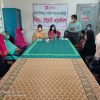
Five Steps to Combat Gender-Based Violence Globally
The 410 Legal Aid Centers that I manage in Bangladesh for BRAC’s Human Rights and Legal Aid Services received approximately 35,900 requests for assistance in 2020. Almost all of them involve gender-based violence against women and girls.
Inequality, COVID-19 and the Plight of the Young
Inequality characterizes the world we live in, predisposing how we act and think. We perceive our existence as composed of dichotomies – men and women, young and old, black or white, as well as a difference between those who have and those who do not have access to wealth, health, education and influence. Dichotomies are also born out of comparisons, about how things are now and how they could have been, how they were before and how they are now.
Sustainable Development Goals Can Guide Asia-Pacific to Build Back Better
The COVID-19 crisis poses an unprecedented threat to development in the Asia-Pacific region that could reverse much of the hard-earned progress made in recent years. The good news is we know how to tackle this challenge. Recovery from the pandemic and our global efforts to deliver the United Nations Sustainable Development Goals (SDGs) by 2030 must go hand-in-hand. The Goals provide a compass to navigate this crisis, faster and greener, everywhere and for everyone.
COP26 and India’s NDCs
Climate change is one of the most pressing issues that the world is collectively facing at the moment. It is contended that strengthening the global response is pertinent to combat the threat of climate change.
Policy Inconsistencies and Poor Research Slow Young Farmers in Africa
It is not everyday that a young farmer registers success in his enterprise and vows this is what he will do for the rest of his life. Yet this is the story of Lihle Moyo, a 27-year-old farmer from Gwanda, about 160km south of Bulawayo, Zimbabwe's second-largest city.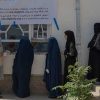
How to Achieve Peace in Afghanistan
There is much expectation about US President Joe Biden's Afghanistan strategy to end the United States' longest war effectively. So far, he continues to rely on Ambassador Zalmai Khalilzad, the Special Envoy for Afghanistan, appointed by Mr. Trump.
International Women’s Day, 2021
More Women Leaders Make Better Societies
This year it will be 128 years since the right of women to vote was first recognized, with New Zealand becoming the first nation to allow the participation of women in its general election in 1893.
From the suffragettes - to today’s feminists, both men and women have fought to increase women’s political participation and representation. It has been a slow, sometimes bitter and occasionally even dangerous struggle. Yet global progress remains slow and uneven – as it does in Samoa. As we approach the 2021 General Election on 9 April, it is important to remember that women’s full and effective participation in all areas of life drives progress for everyone.

The Ongoing Fight for Gender Parity in Lebanon
The fight for equality around the globe has taken a few steps forward in some countries which provides a glimmer of hope for future generations for increased female participation and representation. However, that particular fight is taking new shapes and forms in multiple corners of the world, where women are still persecuted, silenced, threatened, killed, harassed, and stripped off their basic human rights on a daily basis. The question today is, when will the world become a safer place for women and girls?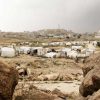
Peace & Security in Armed Conflicts Mean Presence of Food & Absence of Gunfire
In 1941, the people of Greece were facing a horrific winter. The Axis powers had plundered local supplies and introduced an extortionate tax on Greek citizens. Allied forces imposed a cruel blockade, cutting off imports. Prices skyrocketed. Hundreds of thousands of civilians perished.
Only Small Percentage of COVID-19 Recovery Allocated to Green Initiatives
Last year, only $368 billion of a $14.6tn budget geared towards COVID-19 recovery measures across the world’s largest 50 countries took into account green recovery initiatives, according to a report launched yesterday, Mar. 10.COVID-19 Education Response: Education Cannot Wait and Partners Reach over 9 Million Vulnerable Children and Youth
As the world marks the one-year anniversary of the COVID-19 pandemic on 11 March 2021, initial progress reports on Education Cannot Wait’s (ECW) COVID-19 emergency responses to date show that the Fund and its partners have already reached over 9 million vulnerable girls and boys in the midst of the worst education crisis of our lifetime.
More ‘Can & Must be Done’ to Eradicate Caste-Based Discrimination, Says UN Rights Chief
There is hardly a better way to promote human rights in Nepal than celebrating Muskan Khatun for being one of the winners of the prestigious International Women of Courage (IWOC) Award, released on the International Women’s Day by the Government of the United States of America.
Extent of Violence Against Women During Pandemic Exposed
COVID-19 restrictions exposed women and girls to heightened abuse – revealing the conditions in which gender-based violence became the shadow pandemic on the continent, a recent webinar attended by parliamentarians from Africa and Asia heard.
Death of an Ambassador and the Congolese Slaughter
On the morning of 22nd February a jeep from the World Food Programme (WFP), followed by another one with the Italian ambassador, Luca Anastasio, was driving along Route Nationale 2 passing by The Virunga National Park, an UNESCO Congolese World Heritage Site famous for its dwindling population of unique mountain gorillas.
ECW Interviews Youth Refugee Advocate Nujeen Mustafa
Nujeen Mustafa is a Syrian refugee, youth advocate and champion for children with disabilities for the UN Refugee Agency. At just sixteen years old, Nujeen Mustafa made the 3,500-mile journey from Syria to Germany in a steel wheelchair. Nujeen was born with cerebral palsy and spent the majority of her life confined to her apartment in Aleppo, Syria, where she taught herself English watching shows on TV.
Malawian Youth Wipe Away Unemployment Tears with Agribusiness
After getting tired of searching for employment for seven years, Feston Zale from Chileka area in Malawi’s Southern Region decided to venture into agribusiness.
Can Free Phones Close the Digital Gender Divide?
The gender gap in mobile phone ownership is well-documented. For years now, the financial inclusion community has been trying to get phones into the hands of more women at the last mile — spurred on by mounting evidence that mobile money can increase women’s financial resilience, expand their economic opportunities and improve their intra-household bargaining power.« Previous Page — Next Page »


 2026 High-level Political Forum on Sustainable Development. Credit: UN Photo/Eskinder Debebe
In 2015, the United Nations and its Member States adopted the Sustainable Development Goals (SDGs) in an effort to make the world a more sustainable and peaceful place for future generations. Progress on the 17 SDGs has been uneven, and inequality persists across the globe. 10 years after adoption, the 2025 UN SDGs Report revealed that only 35% of the SDG targets are on track, with more than half moving too slowly, and 18% moving backwards from the 2015 baseline. Poverty remains one of the world’s most pressing issues, with hunger, violence, and inequality impeding the opportunities for all people to achieve success. In September 2024, the United Nations Summit of the Future introduced a new goal: to eradicate global poverty by 2030, ensure universal rights to basic services, and increase the overall standard of living in terms of industrialization, economic well-being, citizen health, and literacy. Furthermore, recent shifts in United States foreign aid policy – notably, major budget cuts to USAID and the termination of thousands of development programmes– have severely threatened vital lifelines of financial aid to impoverished communities around the world. Additionally, the United States’ withdrawal from the Paris Climate Agreement has undercut international efforts at sustainable development. With the upcoming 2030 deadline, the UN Secretary-General has called for urgent multilateralism across six priority areas: food systems, energy, digital connectivity, education, jobs and social protection, and climate and biodiversity. IPS sheds light on marginalized communities that struggle on a daily basis to survive and have their stories heard and respected.
Updated by Yilan Batista and Shuli Wong August 2026

The Week with IPS

NEXT STOP - SDGs
Tracking global progress towards a sustainable world
Tracking global progress towards a sustainable world
