Languages
Thursday, November 19, 2026



News and Views from the Global South
Development & Aid
Women Leadership Is Key to Successful Post-COVID-19 Era, Says Cherie Blair
The impact of COVID-19 lockdowns falls heavily on the shoulders of women even in the global north. Women take the brunt of housework and caretaking duties, homes schooling, working from home and perhaps looking after elderly parents, says Cherie Blair.
COVID-19 has Further Marginalised Persons with Disabilities
Since the beginning of the year, more than 200 nations across the globe have been affected by COVID-19. Many are still reeling under the devastating effects of the pandemic, with both public health and the global economy having taken a major blow.
Tanzania: Postharvest innovations key to raising youth involvement in horticulture
Horticulture is a field of agriculture that involves a short growing season averaging three months and offers quick yields and returns on investments despite the high rate of postharvest losses.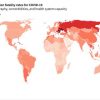
Predicting COVID-19 Infection Fatality Rates Around the World
The world saw more new confirmed COVID-19 cases last week than any week to date. And as the pandemic grows, its epicenter is moving from advanced economies to more developing countries, including Brazil, India, and South Africa.
Reviving the Economy, Creating the ‘new Normal’
The Covid-19 pandemic has significantly impacted most economies in the world. Its full impacts will not be felt, let alone measured, until it runs its course. Many countries are still struggling to contain contagion, while the costs on both lives and livelihoods will undoubtedly have long-term repercussions.
Delaying Death Amid the Coronavirus Pandemic
While the end of life remains the inescapable fate of every man, woman and child, death can be delayed as has been demonstrated repeatedly throughout human history. Amid the current coronavirus pandemic, a paramount objective is delaying death from Covid-19 for many millions of people across the globe.
Human and Societal Behaviour: How Pandemics Have Shaped Them
The departing German envoy in Singapore, Ambassador Ulrich Sante, in a recent published article in the Straits Times shared some of his thoughts with the readership including on the impact on the community of the COVID-19 Pandemic. Among other things he has noted that it has implanted in us what in German is called Lebensangst, literally meaning ‘fear of life’ but in a broader sense, the loss of trust in resilience, and coldness. He has impassionedly argued: “We need to regain trust in each other again, to show warmth and affection and not treat everyone as potential messengers of death. Social distancing serves its purpose, but it cannot be a recipe for all time. It has the power to lead to social division, perhaps the most serious danger our societies face these days”. He is right. There is nothing to replace a light touch or a gentle caress to bring humans closer together. The handshake and the embrace were tools devised as humanity progressed towards civilized conduct, as these acts were performed to demonstrate that those hands carried no weapons.
African Development Bank COVID-19 response: moving from commitment to action
The African Development Bank has responded swiftly to the needs of its member countries during the ongoing COVID-19 pandemic.
Agroecology Strengthens Farmers’ Resilience But Highly Underfunded in Africa
With just a quarter of an acre of land in Kesses near Kenya’s Eldoret town in the Rift Valley region, Samson Tanui is practising agroecology and his permaculture unit has become the centre of attraction for farmers from near and afar amid food shortages during the current COVID-19 pandemic.
Delivering Humanitarian Assistance in Cox’s Bazar During COVID-19
The novel coronavirus has affected the lives of millions worldwide at its very onset. The situation in Bangladesh is no different. Wearing masks and washing hands frequently have become the new normal. The first laboratory confirmed COVID-19 case was identified in Cox’s Bazar on 23 March. Unforeseen circumstances often lead to unprecedented innovative actions as is exemplified by a Humanitarian Access Project.
Racism and Dominance
The #MeToo movement triggered worldwide protests that hopefully was instrumental in making people better aware of a continuous and often hidden mistreatment of women. Maybe can the current I can’t breathe movement make people realize that institutional racism is far from extinct.
Impact of COVID-19 on Women in South Asia
Prior to the onset of the coronavirus crisis South Asian women participated only sparingly in the labor market. Even though South Asia was and still has the potential to become one of the fastest growing regions in the world (post COVID19) female labor force participation rates were low at 23.6% compared to 80% for men (World Bank figures).
Target Boys to Break Menstruation Taboos
An all-male panel assembled to discuss menstrual health on International Menstrual Hygiene Day sparked outrage on social media and a flurry of memes of all-female panels discussing male issues.
Q&A: Global Poverty Expected to Move to Middle Income Developing Nations in Asia
Global poverty, which is increasing because of the economic impact of the coronavirus crisis and ensuing worldwide lockdowns, is shifting and a dramatic increase in middle-income developing countries in Asia is expected.
How Cities Can Turn COVID-19 Crisis into an Opportunity to Build Better
From shocking death tolls to widespread job losses, there is no understating the severity of the COVID-19 pandemic’s impact on the world’s cities. Health care systems, economies, and social lives have been upended by a virus for which the world was totally unprepared.China’s “Two Sessions”, and the Hiccups in Hong Kong
The eyes of much of the world were focused on Beijing during the last week of May. That was because China had scheduled for that time-perod what is generally collectively termed “Two Sessions” or Lianghui in Mandarin. These are back-to-back annual parliamentary meetings of the Chinese People’s Political Consultative Conference (CPPCC) and the National People’s Congress (NPC). The event usually take place in March, but this year had to be pushed back to May because of the COVID virus. Again, ordinarily, these last ten days, but this year, for the same reason, the period was compressed to a week.
Strengthening Economic Institutions for a Resilient Recovery
Exceptional times call for exceptional action. In response to COVID-19, the IMF has moved with unprecedented speed and magnitude of financial assistance to help countries protect lives and livelihoods. Economic stabilization and a sustainable recovery, however, will require more than financial assistance. For recovery to be sustainable, policymakers will need to strengthen economic institutions that enable resilient, inclusive policies.
Covid-19 has increased children’s exposure to traffickers
With Covid-19 bringing economic activities across nations to a halt, more and more people are being pushed into poverty. Job losses, business losses and farming losses, leading to economic stress, are pushing many to the fringes of poverty. And as families are being rendered helpless, the worst sufferers are invariably the children.
From farm to fork: The women championing agricultural transformation in Africa
From Sudan to Mali, Senegal to Mozambique, and Zambia to Mauritania, women are changing the face of agriculture, adapting and innovating to tackle the challenges of climate change, and feeding the continent’s growing population.
Malawi’s COVID-19 Cash Transfer Almost Ready But Election Fever may Prevent Lockdown
Malawi remains one of the few nations in the world that has not gone into a coronavirus lockdown as the government rushes to meet the conditions of a court order to implement a cash transfer scheme for the poor before doing so. But as some parts of the world are slowing coming out of their lockdowns, it could be likely this southern African nation won’t go into one as the rerun of the country’s presidential election nears.
COVID-19 & its Impact on Textile & Garment Supply Chains in Developing Nations
In the first quarter of 2020, the coronavirus pandemic led to a 3% drop in global trade values. COVID-19 could trigger the biggest economic contraction since World War II, affecting all industries from finance to hospitality.« Previous Page — Next Page »


 2026 High-level Political Forum on Sustainable Development. Credit: UN Photo/Eskinder Debebe
In 2015, the United Nations and its Member States adopted the Sustainable Development Goals (SDGs) in an effort to make the world a more sustainable and peaceful place for future generations. Progress on the 17 SDGs has been uneven, and inequality persists across the globe. 10 years after adoption, the 2025 UN SDGs Report revealed that only 35% of the SDG targets are on track, with more than half moving too slowly, and 18% moving backwards from the 2015 baseline. Poverty remains one of the world’s most pressing issues, with hunger, violence, and inequality impeding the opportunities for all people to achieve success. In September 2024, the United Nations Summit of the Future introduced a new goal: to eradicate global poverty by 2030, ensure universal rights to basic services, and increase the overall standard of living in terms of industrialization, economic well-being, citizen health, and literacy. Furthermore, recent shifts in United States foreign aid policy – notably, major budget cuts to USAID and the termination of thousands of development programmes– have severely threatened vital lifelines of financial aid to impoverished communities around the world. Additionally, the United States’ withdrawal from the Paris Climate Agreement has undercut international efforts at sustainable development. With the upcoming 2030 deadline, the UN Secretary-General has called for urgent multilateralism across six priority areas: food systems, energy, digital connectivity, education, jobs and social protection, and climate and biodiversity. IPS sheds light on marginalized communities that struggle on a daily basis to survive and have their stories heard and respected.
Updated by Yilan Batista and Shuli Wong August 2026

The Week with IPS

NEXT STOP - SDGs
Tracking global progress towards a sustainable world
Tracking global progress towards a sustainable world
