Languages
Friday, November 20, 2026



News and Views from the Global South
Development & Aid

2019 – A Devastating Year in Review
By any measure this has been a devastating year: fires across the Amazon, the Arctic and beyond; floods and drought in Africa; rising temperatures, carbon emissions and sea levels; accelerating loss of species, and mass forced migrations of people.
Four Lessons to Reverse Inequity in the Global Health Workforce
Recently, Madhukar Pai, the Director of McGill University Global Health Program wrote about the inequity in global health research. He observed that researches are skewed in favor of the global north. We agree that this inequity exists. However, we also have found that global fellowships such as the Atlantic Fellowship, of which we are both Senior Fellows, are platforms to reverse this inequity, foster international partnerships and amplify voices of development practitioners from the global south.
2019: A Year in Review
 2019 will be remembered as the year the climate crisis shook us all. Hopefully, it will also be remembered for the fight back manifested in the spread of mass protests and civic movements against governments and industries failing to respond.
Industrial Energy Efficiency is a Climate Solution
At a time when the world is battling unprecedented drought, bushfires, rising sea levels and water shortages, reducing energy use across industry is one powerful way to fight climate change in the immediate term.
AUDIO: If We Are to Achieve Zero-leprosy by 2030, This Is the Best Time and Opportunity
Dr Rahat Chawdhury is the Deputy Program Manager at the National Leprosy Program of Bangladesh. His is the umbrella organization of hundreds of doctors, technical experts, counsellors, strategists, health advocates, field workers and thousands of leprosy-affected people as the beneficiaries.

AUDIO: “We Cannot Achieve Zero-Leprosy by 2030 Without a Vaccine” – WHO Team Leader
 Dr Erwin Cooreman is the Team Leader of WHO's Global Leprosy Programme. This week, he is in Dhaka to attend the National Conference on Leprosy, which was inaugurated by the prime minister of Bangladesh Sheikh Hasina. In her speech, she reiterated her commitment to make the country Zero-Leprosy by 2030.

Haiti’s Cry for Help as Climate Change is Compared to an Act of Violence against the Island Nation
Haiti’s Environment Minister Joseph Jouthe has compared the climate emergency to a violent act and appealed to the international community for help to fight climate change.
How Climate Change is Fuelling Insurgency of Nigeria’s Militant Boko Haram
Experts say climate change is a key factor fuelling the insurgency of the armed group Boko Haram. The insurgency, which is aimed at creating an Islamic State in North East Nigeria, is responsible for one of the worst humanitarian crisis in the world.

Mainstreaming Leprosy-affected People a Big Challenge in Bangladesh
When Feroza Begum was first diagnosed with leprosy in 2006, it felt as though she had been struck by a thunderbolt due to the deep-seated prejudice in her society that the disease is a curse from Allah (God).
Fighting for a Leprosy-Free World
The Chairman of The Nippon Foundation, Yohei Sasakawa is passionate about ensuring the world does not forget Leprosy and reminding us of the discrimination that people living with Leprosy still face. Sasakawa who is also a WHO Goodwill Ambassador is in Bangladesh where his Foundation held the first-ever meeting of organizations working in the leprosy field. 
The Ignoble Fall of a Nobel Peace Prize Winner
Appearing before 17 judges of the International Court of Justice (ICJ) in The Hague, Aung San Suu Kyi, the de facto civilian leader of Myanmar, became a public apologist for the military government of Myanmar which has long been accused of genocide and forcing over 730,000 Rohingya Muslims to flee to neighboring Bangladesh since a 2017 crackdown.
Commonwealth: Commit to Limit Global Warming or Face Irreversible Impacts
Commonwealth countries, including those in the Caribbean, continue to push for more ambition, following reports that a few very influential parties have stymied efforts to respond to the climate emergency.
Sasakawa Vows to Continue Support for Fighting Leprosy in Bangladesh
Chairman of The Nippon Foundation, Yohei Sasakawa, has assured Bangladesh of continuing support for the Zero Leprosy Initiative announced by the country's Prime Minister, Sheikh Hasina, aimed at eliminating leprosy by 2030.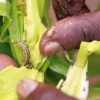
Coordinated Global Action Is the Best Way to Control the Fall Armyworm Pest
Dealing with transboundary pests is tricky at the best of times. Standards, practices, capacity levels and engagement vary across countries and regions, and responses are often ad hoc and ineffective. However, matters become even more complex when the pest in question flies over borders, threatens the food security and livelihoods of millions, and causes severe environmental and economic damage along the way. Fall Armyworm is such a pest.
Taking Bangladesh to Zero-Leprosy, One New Case at a Time
Sandhya Mandal has never felt so vindicated. For the past four years, the 36-year-old community health worker from Meherpur – a rural district bordering India – has been traveling 50 km every day along dusty roads on an old motorbike, searching for leprosy patients who needed urgent treatment. But in her community, instead of compliments, neighbours and relatives raised questions about her work and her character. “They ask why I come home so late and what is this ‘work’ that I really do. Some even imply that I might be doing something like prostitution,” Mandal tells IPS.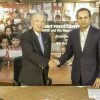
Nippon Foundation Announces US$ 2m Support for the Education of Rohingya Children in Bangladesh
In the light of limited access to education for displaced Rohingya children, the Nippon Foundation has announced US$ 2 million support to BRAC to launch a project to ensure educational facilities to both Rohingya and local community children.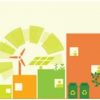
Climate Financing Being Undermined by Rich Nations, NGOs Charge
The successful battle against climate change – which has triggered a rash of natural disasters, including floods, droughts and rising sea levels— will be predicated largely on the availability of financing.
Bangladesh Can Be Leprosy-Free by 2030 Says Leprosy Activist
Despite its efforts to eliminate leprosy as a public health threat, Bangladesh's leprosy burden ranks fourth-highest in the world. Four thousand new cases are detected annually – an average of 11 to 12 cases per day over the last 10 years.

Bangladesh Can Be Leprosy-Free Before 2030 Prime Minister Tells National Zero Leprosy Conference
Leprosy is not a curse but should be detected and treated early, Bangladeshi Prime Minister, Sheikh Hasina, has told delegates at a gathering in her country's capital to discuss the elimination of the disease.
Why Africa is Seeking Special Considerations on Climate Finance
As the 25th session of climate negotiations draw to an end this week, the African Group of Negotiators (AGN) have been calling on the world to consider the continent as a special case in terms of implementation of the Paris Agreement and climate finance.
Accelerating SDG Progress in Asia – Pacific
“The 2030 Agenda is coming to life”, declared the Secretary General at the opening of the first SDG Summit, a quadrennial event for the follow up and review of the 2030 Agenda for Sustainable Development. As leaders from Asia – Pacific took the floor, they highlighted country progress of SDG implementation and reaffirmed commitment to achieve the 2030 Agenda. Statements reflected different approaches across the region. Yet all converged on one priority: accelerated actions and transformative pathways.« Previous Page — Next Page »


 2026 High-level Political Forum on Sustainable Development. Credit: UN Photo/Eskinder Debebe
In 2015, the United Nations and its Member States adopted the Sustainable Development Goals (SDGs) in an effort to make the world a more sustainable and peaceful place for future generations. Progress on the 17 SDGs has been uneven, and inequality persists across the globe. 10 years after adoption, the 2025 UN SDGs Report revealed that only 35% of the SDG targets are on track, with more than half moving too slowly, and 18% moving backwards from the 2015 baseline. Poverty remains one of the world’s most pressing issues, with hunger, violence, and inequality impeding the opportunities for all people to achieve success. In September 2024, the United Nations Summit of the Future introduced a new goal: to eradicate global poverty by 2030, ensure universal rights to basic services, and increase the overall standard of living in terms of industrialization, economic well-being, citizen health, and literacy. Furthermore, recent shifts in United States foreign aid policy – notably, major budget cuts to USAID and the termination of thousands of development programmes– have severely threatened vital lifelines of financial aid to impoverished communities around the world. Additionally, the United States’ withdrawal from the Paris Climate Agreement has undercut international efforts at sustainable development. With the upcoming 2030 deadline, the UN Secretary-General has called for urgent multilateralism across six priority areas: food systems, energy, digital connectivity, education, jobs and social protection, and climate and biodiversity. IPS sheds light on marginalized communities that struggle on a daily basis to survive and have their stories heard and respected.
Updated by Yilan Batista and Shuli Wong August 2026

The Week with IPS

NEXT STOP - SDGs
Tracking global progress towards a sustainable world
Tracking global progress towards a sustainable world
