Languages
Saturday, November 21, 2026



News and Views from the Global South
Development & Aid

Optimal Use of Water Works Miracles in Brazil’s Semi-Arid Region
Cattle ranching has been severely affected by drought in Brazi's Northeast region, but it has not only survived but has made a comeback in the Jacuípe river basin thanks to an optimal use of water.
Economies Flourish and Traffickers Profit from the Struggles of Low-Skilled Migrants
I was 14-years-old the first time I came face to face with a human trafficker. The Lord’s Resistance Army (LRA) raided my home. Ruthless, they demanded virgins and young girls. In a horrifying escape, I endured a treacherous, long journey that ended in an internally displaced people’s camp. I was lucky. Many Ugandan children were not. By the end of the nineteen years’ civil war, UNICEF estimated that the LRA had abducted some 20,000 children.
Belt and Road Initiative Vows Green Infrastructure with Connectivity
"My son in primary school did not attend a birthday celebration because it was cancelled due to bad air -- and we live in Seoul, a great place to live," said Dr. Frank Rijsberman, director-general of the Global Green Growth Institute (GGGI).
The Role of Voting in Reviving Democratic Practice
Since the beginning of the year the world has witnessed 24 national elections in which nearly 100 million people cast their votes. All together in 2018, there will be a total of 68 planned electoral processes in 45 countries ranging from presidential and legislative to local elections. Elections remain one of the key democratic processes through which people express their opinion on the way their country and communities are managed.
Economic and Social Survey for Asia and the Pacific 2018 – Mobilizing finance for sustained, inclusive and sustainable economic growth.
Asia and the Pacific remains the engine of the global economy. It continues to power trade, investment and jobs the world over. Two thirds of the region’s economies grew faster in 2017 than the previous year and the trend is expected to continue in 2018. The region’s challenge is now to ensure this growth is robust, sustainable and mobilised to provide more financing for development. It is certainly an opportunity to accelerate progress towards achieving the 2030 Agenda for Sustainable Development.
Despite Setbacks, Africa Viewed as Continent of Hope, Promise & Vast Potential
Africa has long been one of the world’s most beleaguered continents – singled out mostly for its conflicts, political and economic instability, rising poverty and hunger, inequalities and its environmental challenges. And in international circles, it is described as “Afro-pessimism.”
From the Syrian War to Argentina – Or How to Start a New Life
Fares al Badwan moved to Buenos Aires alone, from Syria, in 2011. He was 17 years old then and the armed conflict in his country had just broken out. Since then he has managed to bring over his whole family and today he cannot imagine living outside of Argentina. "I like the people here. No one makes you feel like a foreigner," he said.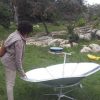
Low Awareness Restrains Growth of Solar Technologies
Every year, Amos Chandiringa, 43, a farmer in Nemaire village in Makoni district in northeastern Zimbabwe, laboriously waters his tobacco nursery with a watering can. The toil of the job often leaves him without the energy or time to do other household chores.
Protests, Strikes, Solidarity – France Revisits May ‘68
“It’s good to be in Paris on a sunny May day and see many universities occupied … and the strikes against neo-liberalism,” declared British Pakistani writer and activist Tariq Ali at an event in the Paris suburb of Nanterre on May 3. “That’s very pleasing.”
Time to Get Serious About Peace & Development
Four months ago UN Secretary-General Antonio Guterres issued a “red alert”, noting that instead of progressing towards greater peace, the world had moved in reverse towards deepening conflicts and new dangers: “Global anxieties about nuclear weapons are the highest since the Cold War.
To Sustain Peace: Heed the Warnings & Prevent the Next War
New York and Washington DC may be three hours apart geographically, but in global affairs, they are worlds apart. With the wars in Syria, Yemen and elsewhere unabating, at the UN in New York, terms like ‘conflict prevention’ and ‘sustaining peace’ are back in vogue, with world leaders attending a major summit. Meanwhile in Washington while the talks with North Korea took center stage behind the scenes the drum roll of war against Iran is revving up.
Protecting the Health & Rights of People on the Move
A staggering 258 million people migrated internationally in 2017. While many of these migrants chose to leave their home countries in search of jobs, education, or to reunite with family, many others had no choice but to leave--to escape poverty, violence or a dearth of opportunities for a better life.
FAO Releases Alarming Report on Soil Pollution
Soil pollution is posing a serious threat to our environment, to our sources of food and ultimately to our health. The Food and Agriculture Organization of the United Nations (FAO) warns that there is still a lack of awareness about the scale and severity of this threat.
In South Sudan, Denial of Humanitarian Aid is a War Tactic
When I visited South Sudan last year, I heard story after story about health professionals and humanitarian workers being prevented from doing critical work. Government officials regularly increased fees for nonprofits trying to alleviate the effects of conflict, stopped humanitarian convoys from delivering life-saving supplies, and erected bureaucratic obstacles designed to impede access to civilians in need.
Central Americans Demand to be Consulted About Mining Projects
Rosa Dávila is busy cooking ears of corn, to be eaten by the men and women who have set up a checkpoint on the side of the road to block the passage of supplies sent to a mining company that operates in the area.
Leading from the Front: Zambia Launches Plant a Million Trees Initiative
As global climate experts meet in Bonn this week to discuss how to take climate action forward, Zambia counts itself amongst the leaders as President Edgar Lungu officially launches the Plant a Million (PAM) trees Initiative.
Mounting Debt Threatens UN’s Sustainable Development Goals
In 2015, 193 countries adopted the 17 Sustainable Development Goals (SDGs) as an overarching policy roadmap through 2030. These goals are predicated on the idea that for a sustainable future, economic growth must go hand-in-hand with social inclusion and protection of the environment.
Wider Views for More Equal Societies
Inequalities are on the rise. Since 1980, 1% of the richest people have received double income than the 50% of the poorest. After several years of decline, hunger is also on the rise. The report on the State of Food Security and Nutrition in the World estimates that the number of chronically undernourished people in the world increased from 777 million in 2015 to 815 million in 2016. If we go deeper into the analysis we observe that three-quarters of the world’s extremely poor and food-insecure people live in rural areas.
Human Trafficking for Organs: Ending abuse of the Poorest
Organ transplantation is one of the most incredible medical achievements of the past century. Since the first successful transplants, which took place in the 1950s, organ transplantation has saved the lives of hundreds of thousands of people worldwide.
Blending Finance Not SDG Financing Silver Bullet
After largely failing to provide 0.7 per cent of their Gross National Income (GNI) in aid to developing countries for almost half a century since making the commitment, donor countries have recently promoted blended finance (BF) as a solution to the financing for development challenge. Blending refers to combining public development funds (in the form of grants, technical assistance or interest indemnification) with loans from private lenders.
Why Does Rural Poverty Equal Invisibility?
If an estimated 500 million smallholder farmers at a conservative estimate, produce 70 percent of the food we eat, why are they still so invisible in many countries? Governments, development agencies, non-governmental organizations and the private sector have been working for decades on rural development in developing countries but still rural areas lag far behind cities and outlying areas in terms of infrastructure, services, social and economic development, notwithstanding the contribution that rural producers make to supplying us with food.« Previous Page — Next Page »


 2026 High-level Political Forum on Sustainable Development. Credit: UN Photo/Eskinder Debebe
In 2015, the United Nations and its Member States adopted the Sustainable Development Goals (SDGs) in an effort to make the world a more sustainable and peaceful place for future generations. Progress on the 17 SDGs has been uneven, and inequality persists across the globe. 10 years after adoption, the 2025 UN SDGs Report revealed that only 35% of the SDG targets are on track, with more than half moving too slowly, and 18% moving backwards from the 2015 baseline. Poverty remains one of the world’s most pressing issues, with hunger, violence, and inequality impeding the opportunities for all people to achieve success. In September 2024, the United Nations Summit of the Future introduced a new goal: to eradicate global poverty by 2030, ensure universal rights to basic services, and increase the overall standard of living in terms of industrialization, economic well-being, citizen health, and literacy. Furthermore, recent shifts in United States foreign aid policy – notably, major budget cuts to USAID and the termination of thousands of development programmes– have severely threatened vital lifelines of financial aid to impoverished communities around the world. Additionally, the United States’ withdrawal from the Paris Climate Agreement has undercut international efforts at sustainable development. With the upcoming 2030 deadline, the UN Secretary-General has called for urgent multilateralism across six priority areas: food systems, energy, digital connectivity, education, jobs and social protection, and climate and biodiversity. IPS sheds light on marginalized communities that struggle on a daily basis to survive and have their stories heard and respected.
Updated by Yilan Batista and Shuli Wong August 2026

The Week with IPS

NEXT STOP - SDGs
Tracking global progress towards a sustainable world
Tracking global progress towards a sustainable world
