Languages
Sunday, November 22, 2026



News and Views from the Global South
Development & Aid

Climate and Terrorism
The media are increasingly reporting events in a basic manner, and have by and large abandoned the process of deep analysis. Now is the moment to focus our attention on terrorism. This topic be will remain a pressing issue for quite some time. We now know that terrorism has many causes, which can be rooted in religion to feelings of social exclusion and from a desire for glory to the actions of a damaged psyche.
Lessons from Germany for Latin America’s Energy Transition
Germany has been undergoing an energy transition for over 20 years, and it can offer valuable lessons to Latin America with regard to promoting renewable energy and moving towards a low-carbon economy.
There Is No Substitute
To observe the World Breastfeeding Week, which is marked around the world from August 1-7 since 1992, the World Alliance for Breastfeeding Action (WABA) has declared this year's theme to be "Breastfeeding: a key to sustainable development" August 1-7.
Small Win for NGOs as UN Members Try to Exclude Critical Voices
An UN Committee responsible for giving non-government organisations (NGOs) UN accreditation has had one of its decisions overturned by other UN member states as it seems to be restricting NGOs which are perceived to be critical of governments.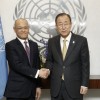
Q&A: Representing Developing Countries at the United Nations in New York
IPS spoke with the Virachai Plasai, Ambassador and Permanent Representative of the Kingdom of Thailand to the United Nations and Chair of the Group of 77 about what it’s like to represent 134 developing countries, including China, at UN meetings in New York. Plasai spoke about some of the group’s priorities for 2016, including the selection of the ninth UN Secretary-General, the 2030 Development Agenda, including the 17 Sustainable Development Goals, and the implementation of the Paris Climate Change Agreement.
Newly Empowered Black Farmers Ruined by South Africa’s Drought
Almost half a decade of drought across most of South Africa has led to small towns in crisis and food imports for the first time in over 20 years, as well as severely hampering the government’s planned land redistribution programme.
UN Trade and Development Conference a “Big Win” for Multilateralism
The UN Conference on Trade and Development (UNCTAD) concluded its five-day meeting in Nairobi on a positive note—the launch of a new e-trade initiative and a multi-donor trust fund on trade and productive capacity.
Feed the Children
Hunger still stalks many of our countrymen. It is particularly destructive with our children who, because of poverty, do not get enough to eat, become vulnerable to disease and exploitation and end up unhealthy, uneducated and unhappy. Uneducated because the need to eat superimposes itself over everything, so that all their waking hours are spent looking to satisfy hunger, eschewing going to school. Unhappy because in the long run, without education, there will be a long, hard climb to get a job; most of all, a job that will provide a decent livelihood.
Colombia Includes Gender Focus for a Stable, Lasting Peace
The novel inclusion of a gender perspective in the peace talks that led to a historic ceasefire between the Colombian government and left-wing guerrillas is a landmark and an inspiration for efforts to solve other armed conflicts in the world, according to the director of U.N.-Women in Colombia, Belén Sanz.
Chronic Hunger Lingers in the Midst of Plenty
In a fraught global economic environment, exacerbated by climate change and shrinking resources, ensuring food and nutrition security is a daunting challenge for many nations. India, Asia's third largest economy and the world's second most populous nation after China with 1.3 billion people, is no exception.
Urban Land – a Key Building Block to Full Rights
Now that the wind no longer blows her roof off and her house belongs to her, Cristina López feels safe in the shantytown where she lives on the outskirts of the Argentine capital. But she and her neighbours still need to win respect for many more rights they have been denied.
No Medals for Sanitation at Rio Olympics
The biggest frustration at the Olympic Games, to be inaugurated in the Brazilian city of Rio de Janeiro on August 5, is the failure to meet environmental sanitation targets and promises in the city’s beaches, rivers, lakes and lagoons.
African Leaders Driving Push for Industrialisation: UN Official
Industrialisation in Africa is being driven by African leaders who realise that industries as diverse as horticulture and leather production can help add value to the primary resources they currently export.List of Acts President Must Do for Disaster Risk Reduction and Management
President Rody Dutuerte’s SONA could not possibly give details about every important program of his administration. But a SONA does mark for the people which activities a president thinks should be given top priority.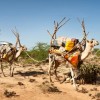
Climate Victims – Every Second, One Person Is Displaced by Disaster
Climate change and related extreme weather events have devastated the lives and livelihoods of tens of millions of most vulnerable people worldwide-- by far exceeding the total of all the unfortunate and unjustifiable victims of all terrorist attacks combined. However, the unstoppable climate crisis receives just a tiny fraction of mainstream media attention. See these dramatic facts.
Narrow National Interests Threaten Historic Refugee Agreement
Narrow national interests are threatening to derail an upcoming UN summit which aims to bring countries together to find a more humane and coordinated approach to large movements of refugees and migrants.
Climate Migrants Lead Mass Migration to India’s Cities
Deepa Kumari, a 36-year-old farmer from Pithoragarh district in the Himalayan state of Uttarakhand, lives in a one-room tenement in south Delhi's Mongolpuri slum with her three children. Fleeing devastating floods which killed her husband last year, the widow landed up in the national capital city last week after selling off her farm and two cows at cut-rate prices.
Forests and Crops Make Friendly Neighbors in Costa Rica
While Latin America keeps expanding its agricultural frontier by converting large areas of forest, one country, Costa Rica, has taken a different path and is now a role model for a peaceful coexistence between food production and sustainable forestry.
How Did We Arrive at This Chaos?
A Chinese curse is “May you live in interesting times”. That meant that too many events would disrupt the essential elements of harmony, on which the Chinese pantheon is based. We certainly live in very interesting times where every day dramatic events pile on us, from terrorism to coup d’etat, from climate disaster to the decline of institutions and ever increasing social turmoil. It would be important, even if very difficult, to look in a nutshell why we are in this situation now - "lack of harmony" . So here goes a dramatically compressed explanation.
400 Million People Live with Hepatitis But They Do Not Know
With some 400 million people around the world infected with hepatitis B or C, mostly without being aware, the United Nations top health agency encourages countries to boost testing and access to services and medicines for people in need to combat the 'ignored perils' of this disease.
Fertilizer Access Grows Farmers, Food and Finance
Brightly coloured cans, bags of fertilizer and packets containing all types of seeds catch the eye upon entering Nancy Khorommbi’s agro dealer shop tucked at the corner of a roadside service station.« Previous Page — Next Page »


 2026 High-level Political Forum on Sustainable Development. Credit: UN Photo/Eskinder Debebe
In 2015, the United Nations and its Member States adopted the Sustainable Development Goals (SDGs) in an effort to make the world a more sustainable and peaceful place for future generations. Progress on the 17 SDGs has been uneven, and inequality persists across the globe. 10 years after adoption, the 2025 UN SDGs Report revealed that only 35% of the SDG targets are on track, with more than half moving too slowly, and 18% moving backwards from the 2015 baseline. Poverty remains one of the world’s most pressing issues, with hunger, violence, and inequality impeding the opportunities for all people to achieve success. In September 2024, the United Nations Summit of the Future introduced a new goal: to eradicate global poverty by 2030, ensure universal rights to basic services, and increase the overall standard of living in terms of industrialization, economic well-being, citizen health, and literacy. Furthermore, recent shifts in United States foreign aid policy – notably, major budget cuts to USAID and the termination of thousands of development programmes– have severely threatened vital lifelines of financial aid to impoverished communities around the world. Additionally, the United States’ withdrawal from the Paris Climate Agreement has undercut international efforts at sustainable development. With the upcoming 2030 deadline, the UN Secretary-General has called for urgent multilateralism across six priority areas: food systems, energy, digital connectivity, education, jobs and social protection, and climate and biodiversity. IPS sheds light on marginalized communities that struggle on a daily basis to survive and have their stories heard and respected.
Updated by Yilan Batista and Shuli Wong August 2026

The Week with IPS

NEXT STOP - SDGs
Tracking global progress towards a sustainable world
Tracking global progress towards a sustainable world
