Languages
Saturday, November 21, 2026



News and Views from the Global South
Economy & Trade

Latin America’s Challenge of Financing Energy Recovery
Hit by the pandemic's socioeconomic and health impacts, Latin America is facing the challenge of financing an economic recovery based on a sustainable energy sector and a transition to clean sources of energy.
– Why Experts are Saying It’s a ‘Make or Break’ Moment for Forests –
On the occasion of World Environment Day, 5 June 2021, drawing from IPS’s bank of features and opinion editorials published this year, we are re-publishing one article a day, for the next two weeks. The original article was published on April 28 2021

Wards Without Water
Malawian healthcare workers are facing challenges from all sides. More than half of healthcare facilities in Malawi are without handwashing facilities, almost two thirds have no decent toilets and almost one fifth do not have clean water on site.
Developing Countries Desperately Need COVID-19 Financing
Failure to sufficiently accelerate comprehensive efforts to contain COVID-19 contagion has greatly worsened the catastrophe in developing countries. Grossly inadequate financing of relief, recovery and reform efforts has also further set back progress, including sustainable development.
– The Global Insecurity of Climate Change –
On the occasion of World Environment Day, 5 June 2021, drawing from IPS’s bank of features and opinion editorials published this year, we are re-publishing one article a day, for the next two weeks. The original article was published on February 24 2021
– UN Blueprint that Could Urgently Solve Earth’s Triple Climate Emergencies –
On the occasion of World Environment Day, 5 June 2021, drawing from IPS’s bank of features and opinion editorials published this year, we are re-publishing one article a day, for the next two weeks. The original article was published on February 19 2021
– Successful Crop Innovation Is Mitigating Climate Crisis Impact in Africa –
On the occasion of World Environment Day, 5 June 2021, drawing from IPS’s bank of features and opinion editorials published this year, we are re-publishing one article a day, for the next two weeks. The original article was published on February 17 2021
– Jamaica Failing to Cope with Plastic Waste –
On the occasion of World Environment Day, 5 June 2021, drawing from IPS’s bank of features and opinion editorials published this year, we are re-publishing one article a day, for the next two weeks. The original article was published on January 20 2021

Put People Before Profits for Progress
Millions of people are expected to die due to delayed and unaffordable access to COVID-19 tests, treatment, personal protective equipment and vaccines. Urgent cooperation is desperately needed to save lives and livelihoods for all.
– Mining giant Rio Tinto Face Environmental, Human Rights Complaint in Papua New Guinea –
On the occasion of World Environment Day, 5 June 2021, drawing from IPS’s bank of features and opinion editorials published this year, we are re-publishing one article a day, for the next two weeks. The original article was published on January 4 2021

Where are the Women? How Pandemic Decisions are Ingraining Global Gender Bias
There are teams of experts around the world right now tackling the coronavirus pandemic, providing pathways to put an end to this deadly global scourge and charting the course for recovery.
India Under Siege From Covid-19: The Worst Yet to Come
The Coronavirus infections and deaths in India recorded a daily high on Monday, 10 May, with 366,161 new infections and 3,754 deaths as reported by the Indian health ministry, taking India's total tally to 22.66 million with 246,116 deaths. Experts have raised a flag stating India's actual figures could be far higher than what is currently being reported.
Pakistanis in Italy: Against All Odds
We met 22-year old Ali B. in a park in Rome’s city center on a rather cold and windy April evening. We could not share a meal, or even a coffee, as all restaurants were shut due to continuing COVID-19 restrictions. He had travelled down from Cerveteri (a small town about 50km north of Rome) where he works for an old couple. They provide boarding and lodging as well as a decent salary and social security benefits. In return, he has to cook for them and look after the kitchen.
Bridging the Digital Divide Will Save Our Planet
Data, analysis and information are essential building blocks in our race to save humanity from the clear and present risks posed by the climate crisis.
CORRECTED VERSION: Struggle for the Future of Food
Producers and consumers seem helpless as food all over the world comes under fast growing corporate control. Such changes have also been worsening environmental collapse, social dislocation and the human condition.
Latin America Bets Heavily on Hydrogen
Several Latin American countries are stepping up the pace to generate hydrogen for various uses in transportation and industry, but they must first resolve several questions.
The Illusion of Digital Inclusion in the Post-COVID World
We are living through a decisive moment. The COVID-19 pandemic’s devasting impact is reaching every corner of the world. As we look back at this period, we will see history divided into a pre-COVID and a post-COVID world.
Africa Goes Digital
In rebuilding after COVID-19, policymakers must invest in innovative technology to leapfrog obstacles to inclusive development. Africa has enjoyed strong economic growth for most of the 21st century, mainly because of robust global demand for primary commodities.
Coping with the USA-China Conflict – Strategic Procrastination
For several years, a fast growing and assertive China has been challenging the USA’s global dominance. China’s GDP, taking into account differences in purchasing power, is now greater than that of the USA; its military spending has been expanding rapidly and exceeds by wide margins that of other countries except the USA with which it is catching up; it is the manufacturing power house of the world; it is quickly moving up the technological ladder; and it is the key trading partner for an increasing number of countries. All this is creating tensions with the USA and its key allies.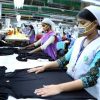
The Garment Industry Needs More Women Leaders
If you enter a garment factory in India, or any part of the world for that matter, you will see that the workforce is starkly female. The Indian textile and garment industry employs 45 million people, out of which more than 60 percent are women. This makes it the biggest formal employer of women in a country where 80 percent of them are not engaged in paid work. While that might paint a rosy picture of women’s empowerment at the first glance, a closer look reveals something different.
UN Banks on Water as the ‘Game Changer’ in Food Production and Consumption
As the United Nations prepares for its solutions-based Global Food Systems Summit in September, officials say resolving issues around water scarcity, pollution and wastage is crucial transforming food production and consumption.« Previous Page — Next Page »


 UN Commission on International Trade Law Holds Colloquium on Harmonizing Law in Age of Digital Trade and Finance. Credit: UN Photo/Manuel Elías
Trade has historically been a geopolitical tool that can both be used to propel development as well as entrench inequalities. In various nations in East Asia and Latin America, increased trade, as often seen in export booms, has allowed them to achieve influential standings within the global economy. On the other hand, many low-income countries in Sub-Saharan Africa, Asia, and Latin America struggle to maintain a robust trade performance, and oftentimes are subjugated to exploitative trade dynamics through intense extraction of their natural resources. In recent decades, international trade has reached a new era as emerging economies across the world are rising in economic preeminence. Stable international trade is crucial to world peace as global interconnectedness facilitates reliable diplomacy. Nevertheless, significant challenges are on the rise. Notably, a major wave of United States tariff escalations in January 2025 lifted US import taxes to their highest level since the 1930s, changing market dynamics and forcing renegotiations with global trading partners.These articles are aimed at informing readers about the complexities of trade and its varying effects on development, with a special focus on the consequences of the global economic crisis, the potential of fair trade and the gender implications of trade policies.
Updated by Yilan Batista and Shuli Wong August 2026

The Week with IPS

NEXT STOP - SDGs
Tracking global progress towards a sustainable world
Tracking global progress towards a sustainable world
