Languages
Tuesday, November 24, 2026



News and Views from the Global South
Economy & Trade
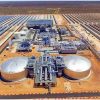
Is UAE Leading the Way for Concentrated Solar Power in GCC?
In April 2019, the International Renewable Energy Agency (IRENA) published a report on a “roadmap to 2050” in terms of renewable energy.
Neoliberal Reforms Strengthening Monopoly Power and Abuses
Over the last four decades, growing concentration of market power in the hands of oligopolies, if not monopolies, has been greatly enabled by ostensibly neo-liberal reforms, worsening wealth concentration and gross inequalities in the world.
Building a More Energy-Efficient Neighbourhood in Dubai
Dubai is an Emirate in the United Arab Emirates (UAE) with a population of about 3 million. The discovery of oil in the 1960’s transformed Dubai from a sleepy port town to a global metropolis. The recent shift to address environmental sustainability in Dubai draws attention to energy issues in the city.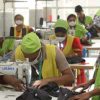
Buyers more concerned about prices than factory conditions
(The Daily Star) - Most of the western buyers are more concerned about the prices of garment items than the working conditions in the factories they source from, according to a new study by the Human Rights Watch.
4 Revolutionary Tips to Stop Aquaculture and Fisheries Ignoring, Resisting or Eroding Gender Equality
In my years in fisheries research in Australia, few researchers were women, all fishers were assumed to be men, "girly" calendars were occasionally pinned on the office, lab or tea room wall at work and the workplace rules of engagement for women were still being worked out by trial and error. I vividly remember when my colleague, “Jessie”, the only woman technician in our research agency, was assigned to go into the field for a week to support a fish tagging project run by men scientists. The men took umbrage and went to the Union to protest this affront to their work conditions. The Union warned them that they could be sacked for discriminating against a woman. So change was at hand - or so it seemed.
Are Migrant Workers Humans or Commodities?
The United Nations has estimated a hefty $466 billion as remittances from migrant workers worldwide in 2017—and perhaps even higher last year.
Rewriting the Rules on #MeToo Globally
I have been working to protect the rights of women workers for 25 years, and whether I speak to domestic workers, election workers, farmers, or activists, their experience of sexual harassment and violence has been a common thread. The other commonality? The almost complete absence of redress in any of those cases, spanning Asia, Africa, the Middle East, and the United States.
Benin’s Agriculture Has a Good Season, But it Wasn’t Easy
Théophile Houssou, a maize farmer from Cotonou, has spent sleepless nights lying awake worrying about the various disasters that could befall any farmer, often wondering, “What if it rains heavily and all my crops are washed away?” or “What if the armyworms invade my farm and eat up all the crops and I’m left with nothing?”
“In Venezuela, Union Organising is Illegal”
Maduro or Guaidó? Neither, according to José Bodas. He is the former General Secretary of the FUTPV, Venezuela’s main oil workers trade union, and according to him, neither the president nor the challenger from the opposition has the people’s best interests in mind.
Coping With World Bank-Led Financialization
The World Bank has successfully promoted its ‘Maximizing Finance for Development’ (MFD) strategy by embracing the United Nations’ Sustainable Development Goals, internationally endorsed in September 2015. It has also secured support from the G20 of twenty biggest economies, and effectively pre-empted alternative approaches at the third UN Financing for Development summit in Addis Ababa in mid-2015.
Kenya and Ethiopia Cross-Border Initiative: A Move Towards Sustainable Peace
Many years of internecine conflict is being replaced by a new narrative of peace along the Kenya-Ethiopia border. Communities that once fought each other are now dreaming of a joint journey towards a better future.
Renewables to Become the Norm for the Caribbean
Jamaica and other Small Island Developing States (SIDS) are embracing renewable energy as part of their plans to become decarbonised in the coming decades.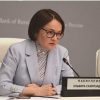
Russia’s First Female Central Bank Governor in a Challenging Job
Within a few short months after taking up her post as governor of the Central Bank of Russia in 2013, Elvira Nabiullina faced a growing economic crisis brought on by plunging oil prices, geopolitical tensions, and sanctions.
Against All Odds, Indigenous Villages Generate Their Own Energy in Guatemala
In the stifling heat, Diego Matom takes the bread trays out of the oven and carefully places them on wooden shelves, happy that his business has prospered since his village in northwest Guatemala began to generate its own electricity.
Why Climate Action Plans are not Good Enough to Deliver a Low-Carbon Future in Cities
Though climate policies aim to reduce GHG emissions, they miss out on emphasizing the importance of urban planning policies Cities that have ratified the Paris Agreement and pledged to reduce carbon emissions are adopting climate action plans aimed at reducing greenhouse gas (GHG) emissions.
Privatization Promotes Collusion and Corruption
At the risk of reiterating what should be obvious, the question of private or public ownership is distinct from the issue of competition or market forces. Despite the misleading claim that privatization promotes competition, it is competition policy, not privatization, that promotes competition.
Lost in the Cyberworld? The Enigmatic Mr Assange
Trump´s electoral success was preceded by a rise of chauvinistic politics in most of Europe, paired with electoral triumphs of far-right candidates in several other countries. A development accompanied by revelations of corrupt leaders laundering and transferring illegally obtained money, aided by financial institutions finding the means to do so. The world seems to move away from a rule-based order to a state of affairs dominated by might and wealth. World leaders´ private business dealings thrive within a global environment where laws intended to protect human rights are becoming increasingly ineffective. Foreign policies appear to be adapted to private gains and personal vendettas. Global financial systems seem to be crafted to facilitate kleptocracy and money laundering, while repression and violence smite whistle-blowers and daring journalists. Endeavours supported by propaganda and smear campaigns orchestrated by political/financial consultants and private investigation firms. All this is made possible through complicated schemes using the internet.
Global Energy Consumption is Up — So Are Emissions
Our acceptance of climate change doesn’t keep pace with our energy consumption reduction. However, the latest International Energy Agency’s (IEA’S) Global Energy and CO2 Status Report for 2018 has some good news.
CORRECTED VERSION: World Bank Dispossessing Rural Poor
The World Bank’s Enabling the Business of Agriculture (EBA) project, launched in 2013, has sought agricultural reforms favouring the corporate sector. EBA was initially established to support the New Alliance for Food Security and Nutrition, initiated by the G8 to promote private agricultural development in Africa.
“A Question of Life or Death”
The mining industry is one of the world's most dangerous industries. Globally, the death toll is at least 14,000 workers per year. But how many lives are actually lost is something that neither trade unions, national governments or the United Nations know.
Climbing the Coconut Value Chain in the Pacific
In the Pacific, coconut is king. Known as the ‘tree of life’, locals make use of every part of the tree to survive – the fruit for eating, husks for fuelling fires, fronds for making multiuse baskets, and the trunk for building houses.« Previous Page — Next Page »


 UN Commission on International Trade Law Holds Colloquium on Harmonizing Law in Age of Digital Trade and Finance. Credit: UN Photo/Manuel Elías
Trade has historically been a geopolitical tool that can both be used to propel development as well as entrench inequalities. In various nations in East Asia and Latin America, increased trade, as often seen in export booms, has allowed them to achieve influential standings within the global economy. On the other hand, many low-income countries in Sub-Saharan Africa, Asia, and Latin America struggle to maintain a robust trade performance, and oftentimes are subjugated to exploitative trade dynamics through intense extraction of their natural resources. In recent decades, international trade has reached a new era as emerging economies across the world are rising in economic preeminence. Stable international trade is crucial to world peace as global interconnectedness facilitates reliable diplomacy. Nevertheless, significant challenges are on the rise. Notably, a major wave of United States tariff escalations in January 2025 lifted US import taxes to their highest level since the 1930s, changing market dynamics and forcing renegotiations with global trading partners.These articles are aimed at informing readers about the complexities of trade and its varying effects on development, with a special focus on the consequences of the global economic crisis, the potential of fair trade and the gender implications of trade policies.
Updated by Yilan Batista and Shuli Wong August 2026

The Week with IPS

NEXT STOP - SDGs
Tracking global progress towards a sustainable world
