Languages
Saturday, September 19, 2026



News and Views from the Global South
Economy & Trade

Women’s Land Rights in Farming Need Further Recognition
In the developing world, land rights for women remain tenuous in the agricultural sector. But if women farmers are recognized as landowners in their own right, it can lead to greater economic empowerment and be a positive step towards eradicating poverty. This formed part of the wider discussions that are being hosted during the 68th session of the Commission for the Status of Women (CSW68) in New York. The leading theme of CSW68 and its side events is the effort to accelerate gender equality by addressing poverty and strengthening institutions.
Unpaid Caregivers, a Symbol of Inequality in Chile
In Chile, as in the rest of Latin America, the task of caring for people with disabilities, the elderly and children falls to women who, as a result, do not have access to paid jobs or time for themselves.
Industrial Policy, East or West, for Development or War?
Developing countries wanting to pursue industrial policy were severely reprimanded by advocates of the ‘neoliberal’ Washington Consensus. Now, it is being deployed as a weapon in the new Cold War.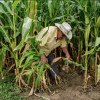
The Ups and Downs of Control of Transgenic Crops in Mexico
Mexico has taken important steps to protect native corn, even standing up to its largest trading partner, the United States, to do so. But the lack of a comprehensive legal framework in its policy towards genetically modified crops allows authorizations for other transgenic crops.
Brazil’s Biofuel Potential Set to Expand Thanks to Sustainable Aviation Fuel
Brazil is counting on biofuels to assert itself as an energy powerhouse in the near future, as a decisive supplier of low-carbon jet fuel, a requirement of the climate crisis. The electrification of automobiles has tended to curb the strong ethanol and biodiesel agribusiness developed in the country since the 1970s. But demand for sustainable aviation fuel (SAF) now offers the possibility of significant new expansion for many decades to come.
Global South Stagnating under Heavier Debt Burden
Much higher interest rates – due to Western central banks – are suffocating developing nations, especially the poorest, causing prolonged debt distress and economic stagnation.
It’s Africa’s Time To Shine, says UN Under Secretary Claver Gatete
With 20 percent of the global population and vast untapped natural resources, not forgetting its human capital, it is time Africa had its rightful seat at the global table, the United Nations Under Secretary and Executive Secretary of the Economic Commission for Africa (ECA), Claver Gatete, has called.
International Women’s Day, 2024
Inside Women Dominated Seaweed Farms in Kenya’s Indian Ocean Waters
Nearly two kilometers into the Indian Ocean from the Mwazaro beach coastline in Lunga Lunga Sub-County, Kwale County, women can be spotted seated in the shallow ocean waters or tying strings to erected poles parallel to the waves. It is a captivating sight to see rows of seaweed farms in the Indian Ocean. 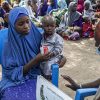
Unveiling Blind Spots & Critical Insights to Fight Poverty Effectively
Poverty is multidimensional. If we think of classical thinkers, Adam Smith referred to the basis of self-respect and the importance of being able to “appear in public without shame,” while John Rawls wrote about “primary goods,” which included rights and liberties as well as income and wealth.
New Attempts to Reduce Gender Inequality in Brazil
Brazil is beginning to test the effectiveness of a gender pay equality law passed in July 2023, a new attempt to reduce inequality for women in the world of work.
International Women’s Day, 2024

On March 8th, we celebrate International Women’s Day. A day to honour the resilience, achievements, and potential of women worldwide. The world faces crises—geopolitical conflicts, poverty, and climate change.
Building Popular National Economic Alternatives*
Viable, popular national economic alternatives require conditions to help build and sustain them. An independent, accountable government can ensure supportive institutions, including laws.
Salvadoran Poultry Farms Produce Biogas, Easing Socio-environmental Conflicts
In a win-win relationship, a segment of El Salvador's agribusiness industry is taking steps to ease the tension of the historic socio-environmental conflict caused by poultry and pig farms, whose waste has caused concern and anger in nearby communities.
Africa’s Debt Crisis Needs a Bold New Approach– & a Way Forward
It hasn’t been easy for African states to finance their developmental and environmental policy objectives over the past few years. Recent events suggest that the situation may be improving. For the first time in two years, three African states have been able to access international financial markets, albeit at high interest rates. Kenya, for example, is now paying over 10% compared to about 7% in 2014.
Hapless New Year for Global South
As dire economic predictions for 2023 did not materialise, pundits began 2024 far more optimistically. But policy ghosts from the last half-century will likely undermine such wishful thinking.
No God but Greed: Slavery and Indifference
At Statens Museum for Kunst in Copenhagen there is a great painting made in 1797 by the Danish Golden Age painter Jens Juel. It depicts one of Denmark’s richest merchants at the time – Niels Ryberg, his newlywed son Johan Christian, and the son’s bride, Engelke. Johan Christian makes a gesture as though to show off the family estate. There is a strong feeling of harmony between the people and the countryside in which they are placed. The picture reflects the new interest in nature that emerged all over Europe towards the end of the 18th century. It also demonstrates how Denmark’s new, rich bourgeois wished to carry themselves in the style of the aristocracy, a social class which dominance they were infringing. Ryberg and his son appear just as distinguished as the aristocrats that used to be portrayed by Jens Juel.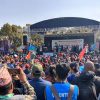
The World Social Forum: The counterweight to the World Economic Forum
This week the 2024 annual meeting of the World Social Forum (WSF) was held in Nepal. There were fifty thousand participants from over 90 countries, exchanging strategies to address the multiple global crises, from climate catastrophes to unfettered capitalism, inequality, social injustice, wars and conflict.
Pakistan’s Election Outcomes Leave Many Unhappy
Pakistan’s 8 February election has resulted in an uneasy compromise that few wanted or expected. There’s little indication the outcome is going to reverse recent regression in civic freedoms.
Coastal Indigenous and Minority Women Driving Kenya’s Blue Forest Conservation Efforts
Tsunza Peninsula is a natural wonder that sits just inside the many inlets of Mombasa Island on the border between Mombasa and Kwale Counties—a little-known spectacle of lagoons, islands, and thick mangroves in Kinango Sub-County, Kwale County, on Kenya’s coastal region.
Inside Kenya’s Seed Control Battle: Why Smallholder Farmers Want to Share Indigenous Seeds
A group of 15 smallholder farmers in Kenya petitioned the country’s High Court, seeking to compel the government to review sections of a law that bans the sharing and exchange of uncertified and unregistered seeds.
Snowless Winter and a Climate Crisis: Kashmir’s ‘Unprecedented’ Weather
Abdul Gani Malik, a 75-year-old goldsmith living in Kashmir’s capital, Srinagar, has witnessed eras of tranquility and turbulence in the Himalayan region. What he has not seen, however, is a snowless Kashmir during the winter.« Previous Page — Next Page »


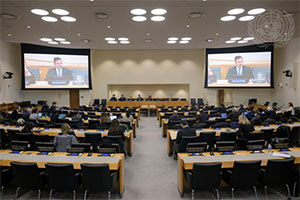 UN Commission on International Trade Law Holds Colloquium on Harmonizing Law in Age of Digital Trade and Finance. Credit: UN Photo/Manuel Elías
Trade has historically been a geopolitical tool that can both be used to propel development as well as entrench inequalities. In various nations in East Asia and Latin America, increased trade, as often seen in export booms, has allowed them to achieve influential standings within the global economy. On the other hand, many low-income countries in Sub-Saharan Africa, Asia, and Latin America struggle to maintain a robust trade performance, and oftentimes are subjugated to exploitative trade dynamics through intense extraction of their natural resources. In recent decades, international trade has reached a new era as emerging economies across the world are rising in economic preeminence. Stable international trade is crucial to world peace as global interconnectedness facilitates reliable diplomacy. Nevertheless, significant challenges are on the rise. Notably, a major wave of United States tariff escalations in January 2025 lifted US import taxes to their highest level since the 1930s, changing market dynamics and forcing renegotiations with global trading partners.These articles are aimed at informing readers about the complexities of trade and its varying effects on development, with a special focus on the consequences of the global economic crisis, the potential of fair trade and the gender implications of trade policies.
Updated by Yilan Batista and Shuli Wong August 2026

The Week with IPS

NEXT STOP - SDGs
Tracking global progress towards a sustainable world
Tracking global progress towards a sustainable world
