Languages
Sunday, September 27, 2026



News and Views from the Global South
Editors' Choice

Gender-Based Violence: Why Victims Do Not Leave
In almost every conversation I’ve had about gender-based violence (GBV), the question “why don’t they leave?” inevitably comes up. After many years of working in this space, I have learned that the answer is not as simple as we think. The nature of GBV is quite complex. Numerous layers and factors affect individuals both internally and externally.
Women Suffer Harassment and Discrimination on Chile’s Public Transport
Sexual harassment and discrimination are daily realities for women on public transport in Chile and also an obstacle for plans to expand mass transit in order to reduce pollution in several cities in this South American country.
When the President of the General Assembly Was Given a Seat at a Summit— a Back Row Seat
When the United Nations commemorated ‘International Day of Women in Diplomacy’ last week, the President of the General Assembly (PGA) Csaba Kőrösi rightly pointed out the woeful absence of women to hold that position in the UN hierarchy. “Women have played a central role in the history of the United Nations ever since the signing of the UN Charter,” he said, “but out of the 78 people elected to my role, President of the General Assembly, only four have been women.”
South Sudan President, Education Cannot Wait Jointly Announce Extended Multi-Year Education Response for Crises-Impacted Sudanese Children
South Sudan is experiencing one of the most severe crises in the world today, causing fragility, instability, and economic stagnation. While a peace agreement was reached in 2018, sporadic intercommunal violence and climate-induced disasters continue to spur displacement. More than 2.2 million people are internally displaced. Another 2.3 million have fled to neighboring countries as refugees.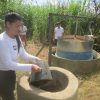
Biodigesters Boost Family Farming in Brazil
"The biodigester really gives a huge boost to those who have the courage to do things," said Maria das Dores Alves da Silva, based on her own experience as a 63-year-old small farmer.
Medical Abortion Expands Women’s Rights in Argentina
Viviana Mazur is a doctor at the Santojanni Hospital in Mataderos, a working-class neighborhood in Buenos Aires. She has witnessed the advances in women's rights in Argentina, where until 2020 abortion was only allowed on two grounds, while it is now available on demand up to 14 weeks of pregnancy.
Ukraine: Environmental Crisis Compounds Humanitarian Disaster Following Dam Destruction
As well as creating a humanitarian crisis, the destruction of the Nova Kakhovka dam in Ukraine has wrought enormous environmental damage which may never be undone, ecologists have said. The collapse of the dam in the Kherson region on June 6 put more than 40,000 people in immediate danger from flooding and left hundreds of thousands without access to drinking water, according to Ukrainian officials.
Global Community Celebrates Medical Innovations and Milestones Since Defining Leprosy Discovery 150 Years Ago
The 1873 discovery of Mycobacterium leprae, the causative agent of leprosy by Norwegian doctor Gerhard Armauer Hansen, remains one of the greatest paradigm shifts in medical history, a true revolution.
Mexico Needs to Step Up Treatment and Reuse of Water to Address Crisis
At the entrance to the coastal city of Ensenada in the northwestern Mexican state of Baja California a sign reads: “Every drop matters to us. Take care of the water." The message is important, as the city faces shortages due to hoarding by agricultural producers and builders, as well as the drought that has become more severe because of the effects of the climate emergency.
Innovative Approach to Sustainable Development Policy and Investment for Public, Private Sectors
Oil palm has brought significant benefits and prosperity to Liberia. The export of crude palm oil is a major source of foreign exchange earnings for the government. The palm oil crop covers more than 1 million hectares, hundreds of thousands are employed in the palm oil sector, and at least 21 percent of the farming households produce palm oil.
Human Rights Defenders in Exile Safety Imperiled by Host Countries’ Declining Civil Rights
While leaving one’s country and becoming a refugee is a last resort, it is a decision that many, like Steve Kitsa, have had to make. As conflict becomes increasingly protracted in many African countries, many others will take this step.
Central America Fails to Acknowledge or Legislate in Favor of LGBTI Community
There is still a long way to go before the LGBTI population in Central America stops being discriminated against and begins to make progress in gaining recognition of their full rights, including the possibility of changing their name to match their gender identity, in the case of trans people.
Negotiations Must Accelerate Climate Action and Save Vulnerable Countries
Vulnerable countries, banking on robust climate negotiations, want an inclusive funding package to help them with the devastating impacts of climate change. The poor progress at the 2023 Bonn Climate Change Conference, known as the 58th session of the Subsidiary Bodies of the United Nations Framework Convention on Climate Change (UNFCCC), has dampened hopes for successful climate negotiations at COP 28.
Making the Impossible Possible, Chronicles of an Ambassador’s Lifelong Frontline Battle to End Leprosy
In 1974, Yohei Sasakawa accompanied his father to a leprosy hospital he had funded. He saw leprosy patients inside the hospital still and expressionless. The smell of leprosy filled the air, the smell of pus from open sores.
Bolivia’s Natural Gas Dreams Are Fading
One of the largest natural gas reservoirs in South America is showing signs of decline and the hopeful expectations that emerged in 2006, to turn Bolivia into a regional energy leader, are waning.
Kenya’s Hits and Misses on Journey to Eliminating Plastic Waste
Plastic bags were a part and parcel of life in Kenya. More than 100 million plastic bags were used annually in Kenyan supermarkets alone, with at least 24 million plastic bags discarded every month. Kenya was choking under the weight of plastic bags.
Healthy Homes – A Right of Rural Families in Peru
Adopting a “healthy housing” approach is improving the living conditions of rural Peruvian women like Martina Santa Cruz, a 34-year-old farmer who lives with her husband and two children in the village of Sacllo, 2,959 meters above sea level in the Andes highlands municipality of Calca.
‘News Deserts’ Are Rampant in Latin America
Without the means to receive information about what is happening around them, millions of Latin Americans who live in poor remote rural or impoverished urban areas inhabit veritable news deserts, according to an increasing number of studies conducted by journalistic organizations in the region.
Food Insecurity Fears as Pakistan Faces Cyclone, Monsoon Season
A warning by the UN that Pakistan may face acute food insecurity in the coming months should serve as a wake-up call for the government to focus on the flood-hit areas where the people still live without shelter, medication, and proper food, analysts say.
Transforming Food Systems through Conscious, Mindful Practices
Deep in the Egyptian desert, the SEKEM community celebrates its first wheat crop – grown to alleviate shortages and price increases caused by the war in Ukraine, and the latest crop in a 46-year history of regenerative development, which has effectively made the desert bloom. On another continent, a consumer who buys acai collected and produced by the Yawanawá in Brazil helps protect 200,000 acres of land.
A 1904 Massacre Could Help Save the Future of Indigenous Peoples in Brazil
Children were thrown into the air and stabbed and cut with knives and machetes. The attackers first opened fire on the victims of the massacre before finishing them off with knives so that none of the 244 indigenous people of the village would survive. The 1904 massacre permanently marked the Xokleng people and may play a decisive role in the future of the native peoples of Brazil.« Previous Page — Next Page »


The Week with IPS

NEXT STOP - SDGs
Tracking global progress towards a sustainable world
Tracking global progress towards a sustainable world
