Languages
Friday, October 16, 2026



News and Views from the Global South
Energy
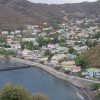
Views from the Caribbean ahead of COP21, the December 2015 Climate Change Summit in Paris – Building Resilience to Disaster: Adaptation
 From constructing barriers against rising sea levels to rehabilitating mangroves and providing agrometeorology services, the Caribbean isn’t waiting for a new international agreement on climate change to start implementing adaptation measures. But funding to roll out such projects on the necessary scale remains a key issue, and many communities remain desperately vulnerable to storms and flooding.
CTBTO, the Nuclear Watchdog That Never Sleeps
The world’s nuclear powers may succeed in thwarting sanctions by the Security Council or avoiding condemnation by the General Assembly, but they cannot escape the scrutiny of a key international watchdog body: the Comprehensive Nuclear-Test-Ban Treaty Organization (CTBTO).
Cities Will Be Decisive in Fight for Sustainable Development
With cities increasingly in the spotlight on the international stage, urban planning and development has become a critical issue in the Sustainable Development Goals (SDGs).
Opinion: We Have a Moral Imperative to Act on Climate Change
My country, the Philippines, is one of the most vulnerable to the impacts of climate change. Even though we are among those countries that hardly contributed emissions and benefited least from burning fossil fuels, we find ourselves at the frontline of the climate crisis.
Opinion: What the Philippines Can Learn from Morocco, Peru and Ethiopia
(Last week, Australian Climate Activist offered an apology to the Philippines for his country’s lack of action. Today, he partners up with climate tracker from the Philippines Jed Alegado to talk about what the Philippines can do to show its leadership in tackling climate change.)
Climate Justice: Trial by Public Opinion for World’s Polluters
The United Nations, which is tasked with the protection of the global environment, has asserted that climate change affects people everywhere - with no exceptions.
Adaptation Funding a Key Issue for Caribbean at Climate Talks
With less than six months to go before the next full United Nations Conference of the Parties also known as COP 21 – widely regarded as a make-or-break moment for an agreement on global action on climate change – Caribbean nations are still hammering out the best approach to the talks.
World’s Nuke Arsenal Declines Haltingly While Modernisation Rises Rapidly
The world’s stockpile of nuclear weapons, held by nine states, just got a little smaller.
Peru a Shining Example for South America’s Climate Action Plans
This week, Peru became the first South American nation to publicly announce its Climate Action Plan, or INDC. In doing so, it may have set the scene for a new wave of highly transparent and ambitious INDC submissions from the continent.
Infrastructure Investments in Emerging Economies Hit Record Levels – but at What Cost?
According to new data released by the World Bank Tuesday, investments in infrastructure in 139 emerging economies shot up to 107.5 billion dollars in 2014, with just five countries – Brazil, Colombia, India, Peru and Turkey – accounting for 73 percent of the total.
Small Victories at Bonn Climate Talks
As climate talks wind down in Bonn, Germany, observers of the negotiations say that despite some progress on a draft text, key issues remain unresolved and will carry over at least until the next round in August.Africa on Threshold of Triple Energy Win for People, Power and Planet
Renewable energy is at the forefront of the changes sweeping Africa, and a “triple win” is within the region’s grasp to increase agricultural productivity, improve resilience to climate change, and contribute to long-term reductions in dangerous carbon emissions.
Opinion: G7 Makes Commitment on Climate … to Climate Chaos
One of the promises made by the leaders of the world's seven richest nations when they met at Schloss Elmau in Germany earlier this week was an energy transition over the next decades, aiming to gradually phase out fossil fuel emissions this century to avoid the worst of climate change.
India Confronts Water Woes as it Transitions from MDGs to SDGs
 As the United Nations closes its chapter on the Millennium Development Goals (MDGs) and charts a new plan of action under the framework of 17 Sustainable Development Goals (SDGs), India – a country of 1.2 billion people – is confronting its resource challenges.
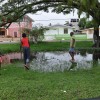
A Regional Foodbasket Plans for the Worst
Despite its highly variable climate, Guyana is the only Caribbean Community (CARICOM) country that enjoys food security. But rapid climate change could pose a challenge not only for Guyana, but for its Caribbean neigbours who depend on the South American country for much of their produce.
U.N. Chief Backs New Int’l Decade for Water for Sustainable Development
As the United Nations continues its negotiations to both define and refine a new set of Sustainable Development Goals (SDGs) before a summit meeting of world leaders in September, Secretary-General Ban Ki-moon has expressed support for a new “International Decade for Water for Sustainable Development.”
G7’s Coal Addiction Behind Hunger
As heads of state and government of the G7 states prepare for their Jun. 7-8 summit in Germany, Oxfam has released a new report titled Let Them Eat Coal which they may find hard to digest.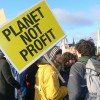
Opinion: For a New Generation of Climate Activists, It’s Too Late to Wait
I remember pretending not to be so excited. There was this nervous energy that kicked up my heels as I prowled through the U.N. negotiations that afternoon. You could feel it all around. Circling our meeting point like sharks quietly rounding our prey. If you knew what to look for, you would know exactly what was about to happen.
Climate Fund Rolls Out Amid Hopes It Stays “Green”
After a difficult infancy, the Green Climate Fund is finally getting some legs. The big question now is what direction it will toddle off in.
Native Communities in Mexico Demand to be Consulted on Wind Farms
“It hurts us that our land is affected, and the environmental impacts are not even measured. Wind farm projects affect streams and hurt the flora,” said Zapotec Indian Isabel Jiménez, who is taking part in the struggle against the installation of a wind park in southern Mexico.
Opinion: Why the US-Iran Nuclear Deal May Still Fail
The euphoria that spread though the world after the Iran nuclear agreement reached in Lausanne in April this year with the United States, Russia, China, France, United Kingdom and Germany, plus the European Union, is proving short-lived.« Previous Page — Next Page »





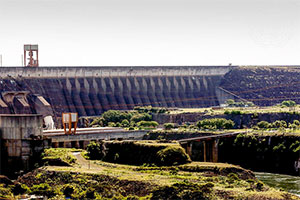 UN Power Plant, Paraguay. Credit: UN Photo/Evan Schneider
Energy has posed a great challenge for economies around the world. As global energy consumption skyrockets throughout the years, so does the need for sustainable solutions. The Sustainable Development Goals are essential in providing people with access to safe, affordable, and sustainable energy sources that minimize harm on the planet. Progress towards these goals opens the door for an advancement in modernization for communities on a global level and allows for a potential mitigation of tensions between nations.
The UN’s Summit of the Future in 2024 offered new initiatives that are being taken to achieve these goals, including a decreased reliance on fossil fuels, a switch to renewable energy sources, and improved climate financing.
IPS is well positioned to provide relevant, insightful, and compelling analysis of recent updates and measures being taken around the world to achieve a cleaner future.

The Week with IPS

NEXT STOP - SDGs
Tracking global progress towards a sustainable world
Tracking global progress towards a sustainable world
