Languages
Friday, October 16, 2026



News and Views from the Global South
Energy
Groups Slam Green Climate Fund Approval of Firms Tied to Dirty Energy
Civil society representatives attending the board meeting of the Green Climate Fund (GCF) in Songdo, South Korea expressed strong disappointment Thursday with the board's decision to accredit Deutsche Bank - one of the world’s largest financiers of coal - to receive and distribute GCF funds.
Opinion: ASEAN Must Unite Against Climate Change
The Association of Southeast Asian Nations (ASEAN) started as a cooperation bloc in 1968. Founded by five countries - Thailand, Singapore, Malaysia, Indonesia and the Philippines - ASEAN has since evolved into a regional force which is slowly changing the landscape in global politics.
Opinion: SDGs, FfD and Every Single Dollar in the World
Ethiopia will host an important meeting on Financing for Development (FfD) Conference next week. One of the most-asked questions is: How much will it cost us to achieve the Sustainable Development Goals (SDGs)?
Climate Commission Issues Blueprint for Low-Carbon Economy
Up to 96 percent of the emissions reductions needed by 2030 to keep global warming below a critical threshold of two degrees C could be achieved through a series of 10 steps, says a new report released by the Global Commission on the Economy and the Climate.
U.N. Swears by Hefty 100 Billion Dollar Target to Fight Climate Change
The most devastating impact of climate change – including rising sea levels, floods, cyclones and both droughts and heavy monsoons – will be felt mostly by the world’s poorest nations.
Sustainable Use of Biodiversity Could Fill Gap When Belo Monte Dam Is Finished
Some argue that the sustainable use of biodiversity is the best alternative for local development in the area surrounding the enormous Belo Monte hydroelectric dam, now that the construction project is entering its final phase on the Xingú River in Brazil’s Amazon jungle.
Opinion: If You’re Against Coal Mining, Walk In and Stop It
“If you’re against coal mining, why don’t you just walk into a coal mine and stop the excavators?”A New Climate for Peace
U.N. officials, government leaders and civil society actors gathered Tuesday at the German House for a panel discussion on climate change as a “threat-multiplier”.
Perfecting Detection of the Bomb
An international conference has highlighted advances made in detecting nuclear explosions,tracking storms or clouds of volcanic ash, locating epicentres of earthquakes, monitoring the drift of huge icebergs, observing the movements of marine mammals, and detecting plane crashes.
China Hailed as Leader for New Climate Plan
Environmental groups are praising China following the formal submission of Beijing’s highly-anticipated climate change strategy to the United Nations Tuesday.

U.N. Chief Seeks Equity in Paris Climate Change Pact
When the 193-member General Assembly hosted a high level meeting on climate change Monday, Secretary-General Ban Ki-moon warned that any proposed agreement at an upcoming international conference in Paris in December must uphold the principle of equity.
U.S. Supreme Court Deals Blow to Obama’s Emissions Cuts
In a setback to the Barack Obama administration's clean energy plans just five months ahead of a critical climate change summit in Paris this December, the U.S. Supreme Court on Monday blocked an initiative to limit emissions of mercury and other toxic pollutants from coal-fired power plants.
Fracking Expands Under the Radar on Mexican Lands
“People don’t know what ‘fracking’ is and there is little concern about the issue because it’s not visible yet,” said Gabino Vicente, a delegate of one of the municipalities in southern Mexico where exploration for unconventional gas is forging ahead.
Heat Wave Picking Off Pakistan’s Urban Poor
Over 950 people have perished in just five days. The morgues, already filled to capacity, are piling up with bodies, and in over-crowded hospitals the threat of further deaths hangs in the air.
Grenada Rebuilds Barrier Reefs
The Eastern Caribbean nation of Grenada is following the example of its bigger neighbours Belize and Jamaica in taking action to restore coral reefs, which serve as frontline barriers against storm waves.
Bougainville Election Intensifies Hopes for Independence
A referendum on independence within the next five years dominated campaigning in the recent general election held in Bougainville, an autonomous region of 300,000 people in the east of Papua New Guinea (PNG), which emerged from a decade-long civil war 15 years ago.
Views from the Caribbean ahead of COP21, the December 2015 Climate Change Summit in Paris – Building Resilience to Disaster: Mitigation
 Despite being a relatively small source of greenhouse gas emissions, the Caribbean region has been taking steps to introduce renewable energy sources like wind, solar and geothermal, which also reduce its dependence on expensive oil imports.

Opinion: Pope Francis’ Timely Call to Action on Climate Change
On June 18, Pope Francis issued Laudato Si, the first ever encyclical about ecology, which promises to be a highly influential document for years to come. The encyclical, which is the most authoritative teaching document a Pope can issue, delivered a strong message addressing the moral dimension of the severe ecological crisis we have caused with our “throwaway culture” and general disregard for our common home, the Earth.
Opinion: The Oceans Need the Spotlight Now
The international community must focus its energies immediately on addressing the grave challenges confronting the oceans. With implications for global order and peace, the oceans are also becoming another arena for national rivalry.
Amazon Dam also Brings Health Infrastructure for Local Population
Extensive public health infrastructure and the eradication of malaria will be the most important legacy of the construction of the Belo Monte hydropower dam in Brazil’s Amazon jungle for the population affected by the megaproject.
Pope Could Upstage World Leaders at U.N. Summit in September
Judging by his recent public pronouncements - including on reproductive health, biodiversity, the creation of a Palestinian state, the political legitimacy of Cuba and now climate change – Pope Francis may upstage more than 150 world leaders when he addresses the United Nations, come September.« Previous Page — Next Page »





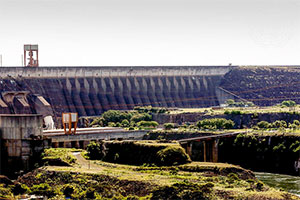 UN Power Plant, Paraguay. Credit: UN Photo/Evan Schneider
Energy has posed a great challenge for economies around the world. As global energy consumption skyrockets throughout the years, so does the need for sustainable solutions. The Sustainable Development Goals are essential in providing people with access to safe, affordable, and sustainable energy sources that minimize harm on the planet. Progress towards these goals opens the door for an advancement in modernization for communities on a global level and allows for a potential mitigation of tensions between nations.
The UN’s Summit of the Future in 2024 offered new initiatives that are being taken to achieve these goals, including a decreased reliance on fossil fuels, a switch to renewable energy sources, and improved climate financing.
IPS is well positioned to provide relevant, insightful, and compelling analysis of recent updates and measures being taken around the world to achieve a cleaner future.

The Week with IPS

NEXT STOP - SDGs
Tracking global progress towards a sustainable world
Tracking global progress towards a sustainable world
