
Sunday, November 15, 2026



News and Views from the Global South
Environment
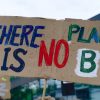
What Will It Take to Prioritise Climate Change?
India ranks third in terms of absolute levels of carbon emissions after China and the United States. In a business as usual scenario, by 2030, emission levels are predicted to reach more than 4.4 gigatonnes of carbon dioxide (GTCO2) equivalent of greenhouse gas—up from 3 GTCO2 today—overtaking the United States as the second-largest emitting country.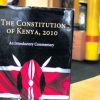
Katiba at 10: A Landmark Constitution and a Blueprint for Deepening Democracy
On 27 August 2020, we mark the tenth anniversary of the New Constitution of Kenya – a landmark social contract inspired by citizens’ desire for a country characterised by participatory governance, inclusive development, human rights and the rule of law.
The Recent Mauritius Oil Spill in Policy and Historical Context
On July 25 2020 the Japanese bulk carrier MV Wakashio with 3,894 tonnes of fuel aboard ran aground off the cost of Mauritius. By 9 August over 1000 tonnes of oil had seeped into the pristine waters off the coast of this beautiful island haven. This spill was so large that it was even visible from space https://www.livescience.com/mauritius-oil-spill-from-space.html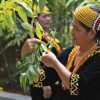
Covid-19 Pandemic Another Threat to Indigenous Communities
The voices of indigenous people worldwide are being silenced and their lives made invisible. Stewards of the earth, they are left at the fringes of public discourse in countries around the globe. Indigenous people are not “extinct”, they exist, and they are building innovative networks and solutions, that could be the key to many of our world’s problems.
Mayan Train Threatens to Alter the Environment and Communities in Mexico
Mayan anthropologist Ezer May fears that the tourism development and real estate construction boom that will be unleashed by the Mayan Train, the main infrastructure project of Mexican President Andrés Manuel López Obrador, will disrupt his community.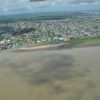
A Not-To-Do List for Guyana’s New Administration When It Comes to Oil
Just over five years ago, a major oil discovery occurred on the northeastern coast of South America. There have been a series of additional discoveries ever since. But this time it was not Venezuela. It was Guyana.
Fueling Pacific Economic Engines with Open Data in Times of Covid-19
Throughout my career, I have always championed the value of open data, especially geospatial and earth observation data for the social, environmental and economic growth that it brings. Access to timely and accurate data is critical to maximizing the efficiency of development programmes and is a critical economic as well as scientific imperative for our region.
Mauritius Oil Spill Puts Spotlight on Ship Pollution
Small island nations face an existential and developmental threat from ship-source pollution endangering their vulnerable marine ecosystems and ocean economies. An effective international legal regime can help.
Indigenous Best Amazon Stewards, but Only When Property Rights Assured: Study
“The xapiri [shamanic spirits] have defended the forest since it first came into being. Our ancestors have never devastated it because they kept the spirits by their side,” declares Davi Kopenawa Yanomami, who belongs to the 27,000-strong Yanomami people living in the very north of Brazil.
Crisis Management 101: Treating the Climate Crisis Like a Pandemic
On 23 February 2020, the South Korean government raised the national Crisis Alert Level to the highest tier in response to the Covid-19 pandemic. Since then, we have witnessed what our society is capable of when faced with a crisis.
Understanding the Benefits of local Wetland Encourages Eswatini Community to Save it
Sibonisiwe Hlanze, from Lawuba in Eswatini’s Shiselweni Region, lights up as she shows off her sleeping mat which she made from what she described as “the highest quality indigenous fibre”.
Where Do We Come From? What Are We? Where Are We Going?
COVID-19 has become a scourge affecting all levels of human society – morals, behaviour, human interaction, economy and politics. The pandemic has wrecked havoc on our way of being and its impact will remain huge and all-encompassing. It is not only affecting our globally shared existence, it is also changing what has been called ”the little life”, i.e. our own way of thinking and being, our personal life situation and the one of those close to us; people we love and depend upon – our friends and family.
Warming Temperatures & Decades of Oil Spills Cause Irreversible Damage to the Persian Gulf
The Persian Gulf is one of the most strategic waterways in the world and is also one of the most polluted. According to estimates by experts, pollution levels in the Persian Gulf are 47 times higher than the world’s average and are steadily increasing.
Biodiversity Loss Could be Making Us Sick – Here’s Why
By 2050, 70% of the world’s population is expected to live in towns and cities. Urban living brings many benefits, but city dwellers worldwide are seeing a rapid increase in noncommunicable health problems, such as asthma and inflammatory bowel disease.
Bangladesh Deals with Triple Disasters of Flooding, Coronavirus and Lost Livelihoods
With nearly 5.5 million people people across Bangladesh affected by severe flooding -- the worst in two decades -- humanitarian experts are concerned that millions of people, already badly impacted by COVID-19, will be pushed further into poverty.
Clean Cooking Transition: Pathways as Seen by Kenyan Villagers
The Sustainable Development goals on energy speak clear: universal access energy and clean cooking by 2030 (SDG7). But the current efforts are still lagging several steps behind the specific needs of the communities and are not enough to achieve energy access for all, especially clean cooking solutions.
Kashmir Now Hotspot of Illegal Riverbed Mining
Going against its own orders, the government in the Indian Union Territory of Jammu and Kashmir has ordered the fast-tracking of environmental clearances despite manifest evidence of illegal sand mining.
The COVID-19 Plastic Pandemic
The coronavirus pandemic was a respite for nature everywhere. The air was cleaner, trekking trails were pristine, the summit of Mt Everest was deserted, and worldwide carbon emission dipped by -26%.
Reflections on the Charter of the United Nations on its 75th Anniversary
This year we celebrate the 75th anniversary of the Charter of the United Nations, written and signed during a period of great global change. Today, the world is again shifting beneath our feet. Yet, the Charter remains a firm foundation for our joint efforts.
Solar Energy Expands in Brazil Despite the Pandemic
Solar energy has continued to expand in Brazil during the COVID-19 pandemic and should contribute to the economic recovery in the wake of the health crisis.
Trinidad Skilfully Handles COVID-19 but Falls Short with Wildlife
Most of the countries in the Caribbean have done a great job of containing the COVID-19 pandemic, with a few notable exceptions, namely, Haiti and the Dominican Republic. A University of Oxford study highlighted Trinidad and Tobago as being among the most successful. However, management of wildlife and illegal hunting in that country remains ineffective.« Previous Page — Next Page »


Through our global network of local writers, we are continuing our award-winning coverage of global and local environmental challenges, with a focus on the people for whom the ecosphere matters in a direct way: rural dwellers who have little means to protect themselves against adverse conditions; communities that need to switch to sustainable development in order to survive; poor women and children, who are the most vulnerable in natural disasters. Sponsored by the United Nations Environment Program (UNEP), the United Nations Development Program (UNDP) and The World Bank (WB), IPS also maintains the award-winning Tierramérica, a specialised information service on environment and development.

The Week with IPS

Tracking global progress towards a sustainable world


