
Tuesday, November 17, 2026



News and Views from the Global South
Environment
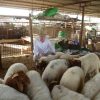
Global Challenges for the ‘NextGen’
Success has many parents – so the saying goes. In the case of the massive successes of international agricultural research, no one person can claim parentage. There are heroes along the way such as Norman Borlaug and his early cereal breeding, and the team that eliminated the cattle disease Rinderpest from the world – smallpox is the only other disease that has been totally eradicated. Another is the founder of The Crawford Fund, Derek Tribe, who was also instrumental in the creation of what is now the International Livestock Research Institute (ILRI), which I chair. However, it would be more correct to highlight the thousands of scientists who have contributed to the world’s greatest feat of feeding an extra three billion people when pundits said it was impossible.
The IPCC’s Special Report on Oceans and Cryosphere – What it means for Africa’s coastal cities
The latest Intergovernmental Panel on Climate Change (IPCC) Special Report on Oceans and Cryosphere in a Changing Climate highlights the urgency of prioritising ambitious and coordinated actions to address the unprecedented and continuing changes that are taking place in the ocean and cryosphere (Earth’s frozen lands).
How the Oceans and the Cryosphere are Under Threat and What it Means for Africa- IPCC Author Explains
 “Special reports come to address issues that need deeper understanding and deeper research,” Dr James Kairo, one of the lead authors of the ‘Special Report on the Ocean and Cryosphere in a Changing Climate,’ a special report by the Intergovernmental Panel on Climate Change (IPCC), told IPS.
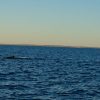
Making a Whale of a Difference to Marine Conservation
The thrill of watching a whale up close or schools of dolphins frolicking in an ocean are much sought after experiences today, boosting the demand for tours that provide people the opportunity to see these marine animals in their natural habitats. But becoming a major tourist drawcard has also exposed cetaceans (whales, dolphins and porpoises) and their environs to risks and challenges.
Justin Trudeau´s Blackface
Politics is a dodgy game, maybe even more so if you represent political views based on a moral approach. When the charismatic Justin Trudeau, son of a cosmopolitan liberal who served as Canada´s Prime Minister for 16 years, in 2015 was elected Prime Minister it was within a global political climate different from what it is today. Barack Obama was in the White House, Angela Merkel served her third period as German Chancellor, and the UK Government had not yet announced its country's withdrawal from the EU. Nevertheless, Russia had three months before Trudeau´s election annexed Crimea, while Viktor Orbán´s Hungarian government the month before initiated the construction of a 4 metres high barrier along its nation´s eastern and southern borders to keep immigrants out.
“Window of Opportunity to Avoid Catastrophic Climate Change is Fast Shrinking”
“The window of opportunity to avoid catastrophic climate change is fast shrinking,” executive director of the Green Climate Fund (GCF), Yannick Glemarec, tells IPS. 
Global Climate Change Investment Heavily Tilted Towards Mitigation and Low on Adaptation
Good news: the graph depicting climate investments has been steadily increasing. Climbing from the 2012 figure of $360 billion in climate investments across the world to close to $600 billion currently.
Africa’s Mineral Wealth May Just have to Stay in the Ground to Protect a Changing Climate
As a result of climate change, resource extraction industries in Africa will be impacted by asset stranding, researchers say.
Ground-breaking Clean Air Protocol to Guard Human Health and the Planet, Enters into Force
European and North American countries will take a major stride in cleaning up the atmosphere next Monday, 7 October, through the implementation of an amended legally binding treaty to limit the amount of emissions polluting the air.
Can Cities Save the World?
By 2050 two thirds of the world’s population will live in cities, and that infrastructure could be the key to managing the climate crisis, if we act now.
Q&A: Holistic Land Management – Only a Movement can Prevent Desertification
Desertification is not cheap. It has social, cultural, environmental and of course economic costs to reverse what it destroys.
Salvaging the SDGs: New Thinking to Spur Action Takes Shape
For the first time since a new development agenda was adopted in 2015 to make the world a better place for everyone, government leaders assembled at the United Nations in late September to take stock of progress. The verdict of this summit was not good.
China Wants to Mainstream Environmental Protection
In the 2014 China-US joint announcement on climate change, China promised to peak its greenhouse gas (GHG) emissions around 2030. Later this commitment was cemented in the Paris Agreement signed in 2016.
Combining Biogas and Solar, the Best Energy Deal in Brazil
"Biogas is the best energy, it has no contraindications," and if you combine it with solar it becomes "the best energy business," at least in Brazil, says Anélio Thomazzoni.
The looming climate crisis: Where is our Greta Thunberg?
The Inter-governmental Panel on Climate Change (IPCC) has issued its latest warning saying that the world’s oceans are rising twice as fast as they did in the last century due to fast-disappearing ice-sheets in the Antarctic and Greenland. The IPCC predicts that as much as two-thirds of the permafrost could be gone before the end of the current century, further exacerbating carbon dioxide emissions as humongous amounts of CO2 trapped in the permafrost would be released in the process. In other words, all the apprehensions about climate change are much more menacing than anticipated earlier, making for huge shifts in climate patterns that will wreak havoc on the coastal cities and habitations around the world. On the one hand, rising sea levels will inundate low-lying coastal areas and, on the other hand, all the entrapped heat in the oceans will give rise to far more destructive cyclones more frequently. The world as we knew it in the pre-industrial era is gone for ever.
Barbados Prime Minister Warns of Mass Migration Backlash Because of Climate Crisis
The Prime Minister of Barbados Mia Mottley tells IPS her patience is running thin, as she challenges the world to tackle the climate crisis.
Confronting New Climate Reality in Asia & the Pacific
Last week, world leaders gathered at the United Nations in New York for the Climate Action Summit. Their goal was simple: to increase ambition and accelerate action in the face of a mounting climate emergency.
Caribbean Adopts Remote Sensing to Prepare for Hurricanes
The Caribbean is currently deploying a new technology to help it build resilience to natural disasters. Known as LIDAR, the acronym for light detection and ranging, the technology is being used to gather data that will help regional governments better predict the impacts of climate-related events and determine how best to prepare for them. 
Q&A: How Vietnam went from Zero to Hero in Developing Solar Projects and What Other Countries Can Do for Climate Change
A week ago, downtown New York witnessed one of the most historic moments in the climate action moment — hundreds of thousands of people attended the Climate Strike, where teen activists delivered powerful speeches and blows to world leaders for not taking climate change seriously.
Investments to Cushion African Countries against Climate Shocks Not Enough
African Development Bank (AfDB) President Akinwumi Adesina unveiled millions of dollars of new pledges at the United Nations this week amid growing fears of climate change ravaging the continent and derailing anti-poverty targets.
Finance Global Green New Deal for Sustainable Development
The United Nations (UN) Sustainable Development Goals (SDGs) can only be achieved by 2030 with the political will to change international economic rules and mobilize resources needed for a massive public sector-led investment push to reinvigorate world economic progress sustainably, says UNCTAD’s Trade and Development Report 2019 (TDR 2019).« Previous Page — Next Page »


Through our global network of local writers, we are continuing our award-winning coverage of global and local environmental challenges, with a focus on the people for whom the ecosphere matters in a direct way: rural dwellers who have little means to protect themselves against adverse conditions; communities that need to switch to sustainable development in order to survive; poor women and children, who are the most vulnerable in natural disasters. Sponsored by the United Nations Environment Program (UNEP), the United Nations Development Program (UNDP) and The World Bank (WB), IPS also maintains the award-winning Tierramérica, a specialised information service on environment and development.

The Week with IPS

Tracking global progress towards a sustainable world


