
Friday, November 20, 2026



News and Views from the Global South
Environment
Politics of Numbers
The Pakistan Economic Survey 2015-16 reminds us of our ticking population bomb. We are told that today the country`s population stands at 195.4 million 3.7m more than it was the previous year. We have regressed.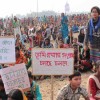
Addressing the Land Question
In a developing country such as Bangladesh, where the implementation of democracy still seems a far flung dream as national budgets blur the line between fantasy and expectation, land has come to be the defining issue of the day. It is of little surprise that a third-world country, caught in the throes of frantic industrial development, would have to deal with the issue of land. Add to it the fact that Bangladesh is the most densely populated country in the world and what you basically have is a recipe for development induced disasters. But even taking all of these challenges into account the current state of land rights in the country is appalling. Almost 56 percent of the entire population is functionally landless, getting by either through odd jobs or becoming part of the industrial division of labour. The average size of land holding is a meagre 0.6 hectare. For a country that is yet almost completely dependent on agrarianism as part of its economy, that is a terrible figure.
Water Scarcity Could Impact West Asian Credit Ratings
Water scarcity, conflict and refugee exodus is the strongest megatrend in West Asia, indicating the status of current trends and how these factors may shape the future, according to UN Environment Programme’s sixth Global Environment Outlook - GEO-6 Regional Assessment for West Asia released May 2016.
India’s Dwindling Tiger Population Face Water Shortages

Students Journey: A Step Closer to the SDGs in Rural India
As the seventh largest economy in the world by nominal GDP, India has fared better than many. Through a mix of interventions from the public and private sector, India’s economy has promoted growth and welfare. However, in spite of these developments, the challenge of hunger and malnutrition remain.
‘What Can We Do for You?’ Aid Projects Pour Into Myanmar
International aid agencies, big and small, are beating a path to Myanmar, relishing the prospect of launching projects in a nation of 51 million people tentatively emerging from more than five decades of military rule.
Asia-Pacific Region Aims at Hunger-Free Goal by 2030
The Asia Pacific region - home to two of the world's most populous countries - faces major food security challenges. According to the Asian Development Bank (ADB), both China and India are not only two of the world's biggest producers of food but also the world's biggest consumers.
New Protocol Aims to Cut Trillion-Dollar Food Waste Bill
Four years ago, 27-year-old Tsering Dorji of western Bhutan’s Satsam village took to organic vegetable farming. Since then, thanks to composted manure and organic pesticide, the soil health of his farm has improved, and the yield has increased manifold.
Polynesian Voyagers Bring Messages of Hope to UN on World Oceans Day
Polynesian voyagers who have sailed the world by canoe using ancient navigation skills will bring pledges they collected along the way to the UN on Wednesday as part of World Oceans Day celebrations.
Coral Reef Tourism in Danger as Reefs Struggle to Adapt to Warming
A recent UN Educational, Scientific and Cultural Organization (UNESCO) report on world heritage sites in danger from climate change received widespread media attention after the Australian government requested the removal of a chapter on the Great Barrier Reef.
Q&A: Crisis and Climate Change Driving Unprecedented Migration
Climate change is now adding new layers of complexity to the nexus between migration and the environment.
Golden Rice: The Malnutrition Fighting Crop
Over the past two decades, Bangladesh has remarkably managed to feed an increasing population better - the UN's Food and Agricultural Organization estimates that in 1993, the average Bangladeshi had access to just 2,000 calories per day, whereas today that number has increased to 2,450 calories per day. To a large extent, this success comes on the back of ever-higher rice production - rice makes up 70 percent of the average daily calorie intake.Issues of Overdevelopment
Urbanisation in Pakistan has been moving at a swift pace, albeit in a rudderless fashion. The Planning Commission estimates that half of our population shall be living in cities by 2030. Among other impacts, the approach and conduct of land governance shall drastically change for the worse, clear evidence of which is visible even today.Climbing the Knowledge Ladder
After the Paris Agreement on climate change endorsed by every participating country last December at the 21st Conference of Parties (COP21) of the United Nations Convention in Climate Change (UNFCCC), all the participants , including both developing as well as developed countries, have to put in place a clear strategy to not only reduce emissions of greenhouse gases through mitigation actions, but also to adapt to the adverse impacts of human-induced climate change.
World Oceans Day – A Death Sea Called Mediterranean
While the United Nations identifies 17 major regional seas in its planning, the Mediterranean is perhaps the most dramatic case as it has gone from being the so-called cradle of civilization to be a cemetery for thousands of asylum-seekers and migrants. And it is most probably also the most polluted water basin the whole world. See this report.
Mega Dams Remain Controversial Source of Energy
Although mega dams can have devastating impacts on ecosystems and indigenous communities, many of the world’s poorest countries still see them as a way to fill gaping holes in their energy supplies.
What Lies Ahead for Oceans, Seas and Marine Resources
In September 2015, the international community adopted 17 Sustainable Development Goals, including Goal 14: Conserve and sustainably use the oceans, seas and marine resources for sustainable development.Wildlife Trafficking Needs to Be a Policy Priority in Asia Pacific Before It Is Too Late
This year’s World Environment Day on June 5 puts the spotlight on the illegal trade in wildlife. The problem has particular significance in Asia, which is the destination for most of the ivory taken from 20,000 to 25,000 elephants and the horns of more than 1,200 rhinos killed in Africa every year. Demand in the region is driven by fast growing middle and upper classes with an appetite for exotic pets, décor, food and fashion.Mea Culpa
Some reports suggest that more than 150 infants have died in Sindh`s Tharparkar district since January of this year alone. However, officials of the government of Sindh`s health department have said that 140 is the fatality toll for children under five years since October last year. Either way, does this not come close to the number of children who were martyred in the gruesome attack on the Army Public School in Peshawar?
Closing the Gaps in Fight Against Wildlife Trafficking in Latin America
Although it violates the international conventions that regulate the wildlife trade, it is possible to go online and find websites to buy, for example, axolotl salamanders (Ambystoma mexicanum) or spiny softshell turtles (Trionyx spiniferus).
Battered by Storms, Sri Lanka Rethinks Food Security
The picture could be straight out of a tourist postcard – a sleepy green mountain with misty clouds floating above the canopy – if not for one fatal flaw: the ugly gash running right through the middle.« Previous Page — Next Page »


Through our global network of local writers, we are continuing our award-winning coverage of global and local environmental challenges, with a focus on the people for whom the ecosphere matters in a direct way: rural dwellers who have little means to protect themselves against adverse conditions; communities that need to switch to sustainable development in order to survive; poor women and children, who are the most vulnerable in natural disasters. Sponsored by the United Nations Environment Program (UNEP), the United Nations Development Program (UNDP) and The World Bank (WB), IPS also maintains the award-winning Tierramérica, a specialised information service on environment and development.

The Week with IPS

Tracking global progress towards a sustainable world


