
Sunday, November 22, 2026



News and Views from the Global South
Environment
Ecobreves – VENEZUELA: Lionfish Confirmed as Voracious Predator
The red lionfish (Pterois volitans), a species native to the Pacific Ocean that escaped from aquariums in the Caribbean Sea two decades ago, is advancing on fish stocks and devouring young specimens of dozens of species in the waters off northern Venezuela.Ecobreves – HONDURAS: New Center for the Recovery of the Flora and Fauna of Olancho
Honduran and international institutions have joined forces to construct a center aimed at preserving endangered flora and fauna, such as the jaguar, in the northeastern department of Olancho.Ecobreves – CHILE: Government Assesses Construction of “Water Highway”
The government of Chile has commissioned preliminary studies for the proposed construction of a so-called water highway, which would transport water from the mouths of rivers in the south to the arid regions of the north.Ecobreves – BRAZIL: Industrial Waste Used to Produce Concrete
Researchers at the Institute of Architecture and Urban Planning at the University of São Paulo have developed a type of concrete made with recycled materials.
Women Hit Hard by Natural Disasters
In the aftermath of a natural disaster, women are often the most vulnerable. Particularly in rural areas, women suffer disproportionately from inadequate shelter and poor sanitation facilities and are often tasked with rebuilding shattered homes.
Q&A: Disaster Resilience Starts with Grassroots Women
Women and girls can be powerful agents of change, but they are disproportionately affected by disasters because of social roles, discrimination and poverty.
Rural Women in Peru Cope “Where Life Is Very Sad”
When the crops in her rural highlands community in southern Peru were covered with a thick layer of ice one night, Felícitas Quispe, 43, organised her neighbours to make an effort to keep people from starving to death.
India Ignoring Coastal Biodiversity – NGOs
Indian civil society organisations see in the 11th United Nations Conference of the Parties (COP11) to the Convention on Biodiversity (CBD), underway in this south Indian city, a rare opportunity to highlight alleged neglect of biodiversity along the country’s extensive coastal and marine areas.Oil Industry Moves to Block New U.S. Transparency Rules
Lobby groups representing the oil industry filed a lawsuit in Washington court on Wednesday that seeks to halt the implementation of a new set of rules requiring U.S.-registered extractives companies to disclose all payments made to foreign governments.
Groups Rewarded in Their Fight for Fair Food
The Korean Women's Peasant Association won the 2012 Food Sovereignty Prize for its efforts on behalf of the survival of small-scale and ecologically sustainable farming in South Korea.KYRGYZSTAN: Mining Sector in Nationalists’ Crosshairs
When nationalist MP Kamchybek Tashiev led his supporters over a fence surrounding parliament in early October, both foreign and local executives working in Kyrgyzstan’s mining industry braced for the worst.
Haiti’s Capital Languishes as Govt Rebuilds Ministries
Even though a restrictive government decree that blocked reconstruction of downtown Port-au-Prince for almost two years was finally annulled, questions, frustrations and doubts abound about the eventual recovery of Haiti’s economic, cultural and political capital.
Sendai Shares Big Lessons from the Great Quake
The debris of the devastated Arahama elementary school yielded two enduring lessons for its principal, Takao Kawamura, in the months after the massive 9.0-magnitude earthquake and tsunami that hit Japan’s north-east coastland on Mar. 11, 2011.

Garifuna Women, Custodians of Culture and the Environment in Honduras
Hurricane Mitch, which devastated Honduras 14 years ago, prompted a group of Garifuna women to start organising, to help the people in greatest need of assistance.
Pangolin Trade Betrays Apathy for Biodiversity
Conservationists see the decimation of pangolins (scaly anteaters) in Pakistan as a sign of the callousness with which this country’s rich biodiversity is being traded away for commercial gain.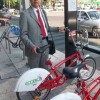
Bicycles Defend Their Place in Mexico City’s Concrete Jungle
Juan Longueira, 56, uses the bicycles of the Ecobici system three times a day, to commute to and from work and to exercise along the Paseo de la Reforma, a central Mexico City avenue.Funds Crunch Skews Aichi Targets on Biodiversity
The United Nations 11th Conference of the Parties to the Convention on Biological Biodiversity (COP 11 CBD), underway in this southern Indian city, is lost on where to garner the billions of dollars needed to implement the ‘Aichi targets,’ due to be met by 2020.Ecobreves – HONDURAS: Indigenous Community Exports Squash to U.S.
An indigenous community has managed to place some 5,800 kilos of high-quality squash on the market in the U.S. city of Miami, with the support of an international cooperation project.Ecobreves – BRAZIL: Football World Cup Will Emit 11 Million Tons of CO2
The Brazil 2014 Football World Cup will emit more than 11 million tons of carbon dioxide, according to a study conducted by the consulting firm Personal CO2 Cero.Ecobreves – ARGENTINA : Communities to Monitor Clean-Up of Riachuelo River Basin
Residents of the Matanza-Riachuelo river basin, the most polluted in Argentina, situated south of the country’s capital, will monitor the clean-up of the area through a community participation program.
Environmentalists in Rio Worried about Reindustrialisation
The decline in Brazil’s manufacturing sector has not affected some parts of the country, which on the contrary have grown, driven by polluting industries like iron and oil production.« Previous Page — Next Page »


Through our global network of local writers, we are continuing our award-winning coverage of global and local environmental challenges, with a focus on the people for whom the ecosphere matters in a direct way: rural dwellers who have little means to protect themselves against adverse conditions; communities that need to switch to sustainable development in order to survive; poor women and children, who are the most vulnerable in natural disasters. Sponsored by the United Nations Environment Program (UNEP), the United Nations Development Program (UNDP) and The World Bank (WB), IPS also maintains the award-winning Tierramérica, a specialised information service on environment and development.

The Week with IPS

Tracking global progress towards a sustainable world


