
Sunday, November 22, 2026



News and Views from the Global South
Environment
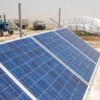
A Little Power to Some Palestinian People, For Now
A handful of makeshift homes built from small boulders and plastic tarps and secured with thick ropes sit in the isolated community of She’b El- Buttum in the South Hebron Hills. A few metres away, several rows of solar panels and two wind turbines are affixed to the rocky hilltop, providing electricity to the village’s 150 residents.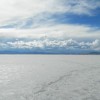
Native People in Argentina Demand a Say in Lithium Mining
Native communities in northwest Argentina turned to the Supreme Court to claim their right to be consulted about projects for prospecting and mining of lithium, regarded as the mineral of the future, located under an enormous salt flat.
Chad Famine – Mothers Breaking Apart Anthills in Search of Food
"Only God knows what will happen to me and my children - for two months there's been nothing to eat. We're living like beggars," Henriette Sanglar, a mother of four in the Moursal quarter of the Chadian capital, N'Djamena, told IPS.Scientists Claim Their Place in Struggle for Food Security
Weather events such as extreme temperatures and drought caused global agricultural losses of 11.4 billion dollars in 2011, while 12 million hectares of farmland are lost to land degradation every year, and unsustainable agricultural practices contribute to the emission of greenhouse gases.
Petrol Guzzlers Send Venezuela’s Carbon Emissions Soaring
China may be the country that emits the most carbon dioxide (CO2), but oil-rich Venezuela and some of its Caribbean neighbours produce more of this greenhouse gas responsible for global warming on a per capita basis.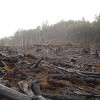
Rio+ 20 Suffers Leadership Void Weeks Ahead of Summit
When a landmark U.N conference on sustainable development kicks off in Brazil mid-June, more than 120 world leaders are expected to participate in the much-ballyhooed talkfest on the future of the global environment.
More Ecology, Less Economy for Rio+20
Hundreds of non-governmental organisations and social movements from around the world hope to counter the failure of the United Nations Conference on Sustainable Development (Rio+20), which they consider inevitable, with the success of the alternative People’s Summit.Climate Change Threatens the Poor in Cities
India, like other Asian countries, has focused its climate change adaptation strategies on rural and urban areas while neglecting the urban fringes, say experts.
World Congress Hopes to Enforce Commitments Made at Rio+20
World leaders may face an unexpected challenge come June, when a major global summit on sustainable development will be held in Brazil. Unlike during previous summits, these leaders might have trouble making promises they are unable to keep.
Climate Change Aggravates Water Shortage in Cuba
In this eastern Cuban city, Danny Dip Leyva has begun to use her shower again after decades of hauling water into her house by hand. But in Aurora, a small neighbourhood on the outskirts of Havana, Manuel Roque still longs for a regular supply of piped water.
Urgent Need for “New Deal” in Equality and Sustainability
The pressing need for a global "new deal" to foster sustainable development and reduce inequalities was the conclusion of the 2012 Global Human Development Forum, a new initiative by the United Nations, held in Istanbul from Mar. 22-23.
Soaring Energy Prices Push Anguilla Toward Renewables
The 15,000 residents of this British Overseas Territory had always prided themselves on having perhaps the most reliable and efficient source of electricity in the Caribbean.
Jamaica’s Food Security Hinges on Shaky Agricultural Fortunes
Like its Caribbean neighbours, Jamaica is looking for outcomes that will address its food security challenges when world leaders meet in Rio de Janeiro for the United Nations Conference on Sustainable Development Jun. 20 to 22.
More Ecology, Less Economy for Rio+20
Indigenous people’s rights and gender equity should be addressed in discussions around sustainable development at Rio+20, say activists.
Grenada Under Climate Stress
Fishing, agriculture and tourism are feeling the pains of climate change in Grenada, a small island state in the southeastern Caribbean.Ecobreves – HONDURAS: Promoting the Use of Biogas
The government of Honduras is studying ways to promote the generation of biogas from organic waste, to reduce the country’s dependence on imported oil.Ecobreves – BRAZIL: Raw Materials from the Northeast for Smart Packaging
The Brazilian Agricultural Research Corporation (EMBRAPA) has opened a laboratory in the northeast Brazilian city of Fortaleza for the development of biodegradable and edible packaging.Ecobreves – MEXICO: NGOs Denounce Delay in Clean Fuel Production
Environmental organizations have denounced that the Mexican government intends to postpone the production of ultra-low-sulfur diesel until 2015.
Development Deficit Compounds Indian Sundarbans Crisis
Sahara Bibi, a 47-year-old poor Muslim woman living on one of the climate- impacted islands of Eastern India’s fragile Sundarbans archipelago in West Bengal state, was forced to pull her two young sons out of school and send one of them to the Southern state of Kerala to earn a decent income.Counting the Cost at 2,600 Litres of Water a T-Shirt
The share of organic cotton is increasing in an unstable cotton market, thanks to big European retailers like H&M and C&A who've jumped on the bandwagon of offering organic clothing at a low price. But whether this benefits the farmer is another matter.Myanmar ‘Reforms’ Elude Kachin Refugees
For thousands of ethnic Kachins who fled fighting between government troops and rebels and survived a bitter winter in the refugee camps that dot northern Myanmar (or Burma), another test of survival looms – gale force winds.« Previous Page — Next Page »


Through our global network of local writers, we are continuing our award-winning coverage of global and local environmental challenges, with a focus on the people for whom the ecosphere matters in a direct way: rural dwellers who have little means to protect themselves against adverse conditions; communities that need to switch to sustainable development in order to survive; poor women and children, who are the most vulnerable in natural disasters. Sponsored by the United Nations Environment Program (UNEP), the United Nations Development Program (UNDP) and The World Bank (WB), IPS also maintains the award-winning Tierramérica, a specialised information service on environment and development.

The Week with IPS

Tracking global progress towards a sustainable world


