
Sunday, November 22, 2026



News and Views from the Global South
Environment

Dominica Seeks Millions for Climate Change Strategy
Dominica presented its "2012-2020 Low Carbon Climate Resilient Development Strategy" to donors including the World Bank on Wednesday in a bid to gain wider access to funding and position itself as a regional leader in renewable energy.
Locals Don’t Want Cell Phone Towers Next to See-saws in El Salvador
"You see? That's where they were going to put the antenna," says Alicia Suncín, pointing to a spot in the middle of a park in the Salvadoran capital where a private company was planning to erect a cell phone tower, 10 metres away from swings and see-saws where children play.
Tourism Woes Replace Terrorism in Kashmir
As separatist militancy peters out in Kashmir, the valley is beset by armies of tourists who bring in the dollars but devastate the fragile ecology of ‘Asia’s Switzerland’.
Zimbabwe’s Mopani Worms Disappearing from Rural Diets
Job Mthombeni loves traditional food. One of his favourite culinary delights is Mopani worms, referred to locally as amacimbi, which means caterpillar in Ndebele. At an early age he understood the nutritional value of the worm, which is found in his rural hometown of Plumtree, in southwestern Zimbabwe.Opinions Divided Over Chevron Trial in Brazil
Opinions are divided in Brazil over the prosecution of U.S. oil giant Chevron for two oil spills. While some argue that the legal action is an over-reaction triggered by nationalism, others say it is necessary to show that Brazil is serious about protecting the environment.
Kazakhstan, Uzbekistan Take Differing Approaches on Aral Sea
The saga of the Aral Sea is now a tale of two bodies of water. One holds the promise of a happy ending, the other remains enmeshed in tragedy.
Mexico, So Close to Oil, So Far from Clean Energy
Mexico is not only lagging in the development of renewable energies, but some of the projects that are being carried out actually pose a threat to the environment and biodiversity, such as a wind farm on the island of Cozumel, activists say.
Emerald Energy Exploits Colombian Andes
A thick fog flows over the eastern range of the Colombian Andes. Here and there, the constant wind lifts the clouds to reveal lagoons, cloud forests, and páramo, an Andean alpine ecosystem known as a "mountaintop sponge" for its massive water-holding capacity.
Treat Illegal Logging Like Organised Crime, Urges World Bank
With illegal loggers clearing the equivalent of a football field of the world's most valuable forests every two seconds, local and international law enforcement systems should target the criminal operations that profit most from the trade, according to a new report released here Tuesday by the World Bank.
More Transparent Forest Governance in Peruvian Amazon
In Peru, where over half of the national territory is covered by forests and the logging industry is marred by corruption, transparency and good forest management are closely linked.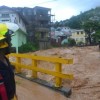
Caribbean Farmers and Fishermen Feel Pains of Climate Change
James Nicholas has always made a living off the sea. A fisherman in the tri-island state of Grenada, Carriacou and Petite Martinique, he recalls the profitable business of selling his daily catch to residents and restaurants on the island and even exporting fish to luxury hotels in neighbouring ones.Energy: Chilean Community Wins First Round Against Brazilian Billionaire
Plans to build a massive thermoelectric power plant complex near an area of rich marine biodiversity has sparked fierce opposition from the small northern Chilean farming town of Totoral, which has now scored its first victory in court.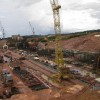
World Water Forums Expose Large Dams as ‘Unsustainable’
Numerous non-governmental organisations used the World Water Forum (WWF) held in Marseille last week as an opportunity to remind the international community about the serious global impacts of large dams all over the world.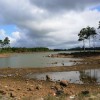
As the Taps Run Dry in Mauritius
Rani Murthy, a public officer who lives in Plaines Wilhems, central Mauritius, wakes at three every morning to wait for the water tanker from the Central Water Authority so that she can collect water for cooking and household chores.Ecobreves – CUBA: Crocodile to be “Repatriated” During Pope’s Visit
A young Cuban crocodile (Crocodylus rhombifer), a highly endangered species found only in a very limited area of Cuba, will be returned to its country of origin from Rome in late March, coinciding with the visit by Pope Benedict XVI.Ecobreves – HONDURAS: School Kids Learn How to React to Floods and Landslides
More than 600 students from two schools located in areas at high risk for flooding and landslides in the Honduran capital are receiving training on what to do when these disasters occur.Ecobreves – VENEZUELA: University Team Designing Used Battery Treatment Plant
A team of scientists at Simón Bolívar University in Venezuela is designing a plant for the processing of used household batteries, in order to prevent their incorrect disposal and to extract the toxic materials they contain in the form of reusable chemical compounds.Ecobreves – BRAZIL: University of São Paulo Creates Climate Study Center
The University of São Paulo has created the Interdisciplinary Climate Investigation Center (INCLINE) to integrate all of university’s studies in this field.
Caribbean Mobilises Funds for Ten-Year Climate Plan
Failure to adapt to climate change will derail the development aspirations of the 15-member Caribbean Community (Caricom), researchers warn, siphoning off an average of five percent of 2004 gross domestic product regionwide by 2025.
Q&A: Expo 2012 to Focus on Protecting World’s Marine Resources
The United Nations, which is hosting a major international summit on the global environment in Brazil in late June, points out that while the world's oceans account for 70 percent of the earth's surface, only one percent of this area is protected.
Urban Chicken-Keeping Movement Spreads Its Wings
With increasing concerns about the economy and environmental sustainability on the minds of many U.S. citizens, leaders in the grassroots movement to promote urban chicken-keeping report a renewed interest in their cause.« Previous Page — Next Page »


Through our global network of local writers, we are continuing our award-winning coverage of global and local environmental challenges, with a focus on the people for whom the ecosphere matters in a direct way: rural dwellers who have little means to protect themselves against adverse conditions; communities that need to switch to sustainable development in order to survive; poor women and children, who are the most vulnerable in natural disasters. Sponsored by the United Nations Environment Program (UNEP), the United Nations Development Program (UNDP) and The World Bank (WB), IPS also maintains the award-winning Tierramérica, a specialised information service on environment and development.

The Week with IPS

Tracking global progress towards a sustainable world


