
Monday, November 23, 2026



News and Views from the Global South
Environment
LATIN AMERICA: Digging Deep for Transparency in Oil and Mining
Oil and mineral resources are abundant in several Latin American countries but will not last forever, and should be used to fuel the transition to a more diversified economy.
Q&A: “The Battle for Patagonia Has Just Begun” in Chile
The HidroAysén hydroelectric project in Chile’s Patagonia region is causing "a credibility crisis for institutionality and (President) Piñera," environmentalist Sara Larraín told Tierramérica.
Global Refugee Problem Bigger Than Ever
This year marks the 60th anniversary of the landmark 1951 U.N. Convention on the Status of Refugees defining their rights and states' legal obligations to protect them.Ecobreves – VENEZUELA: Argentine Birds Spend the Summer on the Orinoco
During April, May and June, half a million brown-chested martins (Progne tapera fusca) flock from southern Argentina to the city of Guayana on the banks of the lower Orinoco River in northeastern Venezuela, where they set up their “headquarters” in 18 ceiba trees in the downtown square known as Plaza de las Ciencias.Ecobreves – HONDURAS: San Pedro Sula Wants to Sell Carbon Bonds
The local government of San Pedro Sula, 250 kilometers from the Honduran capital, plans to sell carbon credits to finance the preservation of El Merendón mountain, considered the “green lung” of the city.
Amazon Dams Mean Progress for Some, Lost Livelihoods for Others
A way of life will disappear under water due to the dams being built in a corner of northwestern Brazil, bringing progress at the cost of life-altering changes.
“The Battle for Patagonia Has Just Begun"
HidroAysén will create an energy duopoly that cuts off access to the market for other actors who want to participate with clean energy sources, says environmentalist Sara Larraín in this interview.Ecobreves – BRAZIL: Sugar Cane Straw Reduces Greenhouse Gas Emissions
Researchers at São Paulo State University in Brazil have determined that leaving sugar cane straw in the soil after harvesting reduces carbon emissions. They reached this conclusion after having compared two methods of harvesting sugar cane: mechanized harvesting and manual harvesting after the straw has been burned off the sugar cane plants.Ecobreves – CUBA: Exotic Weed Used to Produce Charcoal for Export
The exotic plant known in Cuba as marabu (Dichrostachys cinerea), formerly considered a pesky weed, is now being used to produce charcoal, and there are plans to increase production to 40,000 tons for export to Europe this year, official sources told Tierramérica.
Sorghum Proving Popular with Kenyan Farmers
Gadam sorghum was introduced to semi-arid regions of eastern Kenya as a way for farmers to improve their food security and earn some income from marginal land. The hardy, high-yielding sorghum variety has not only thrived in harsh conditions, it has won a place in the hearts - and plates - of local farmers.JAPAN: Respect for Authority Gives Way to Anger
More than a hundred young nursing mothers living in Fukushima and nearby areas have signed up to get themselves checked for radiation contamination, but they would rather do it on their own, with no help from the Japanese government.BOLIVIA: Deforestation Devours Rich Ecosystems
Occupations of land for agriculture over the last four decades in Bolivia, whether by individuals or in organised collective initiatives, have led to severe ecological damages and low levels of productivity because of the intensive use of machinery and the failure to take into account the limitations of the soil, said environmentalist Marco Ribera.
HEALTH: Water, Sanitation Could Erase Cholera and Guinea Worm
The World Health Assembly could adopt landmark resolutions asking governments to improve water and sanitation to eradicate cholera and guinea worm, the latter of which exists in just four countries in Africa. While safe drinking water and toilets are the most cost-effective public health measures, they have not been a priority for most developing countries.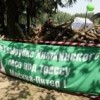
ENVIRONMENT-RUSSIA: Activists Protest Destruction of 500-Year-Old Forest
Environmentalists and rights campaigners have mounted pressure on the Russian government to rescind the decision to demolish more than 500-year-old woodlands to make way for the construction of a new super-highway linking Moscow with the country's northern capital, St. Petersburg.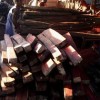
Illegal Logging Spreading in Madagascar
The transitional authorities in Madagascar are struggling to overcome the problem of illegal logging of precious wood. In spite of an April 2010 decree that prohibits the logging, transporting, trading and export of precious woods, felling in the forests is still continuing.
Still Awaiting a Roadmap for Sustainable Development
The road to the crucial Rio+20 conference on greening the world economy next year has hit a setback with the breakdown of the 19th session of the U.N. Commission on Sustainable Development after 10 days of intense negotiations.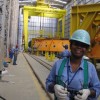
BRAZIL: Women Break Down Barriers in Heavy Construction
They represent just seven percent of the workers building the Santo Antonio hydroelectric dam on the Madeira River, which cuts across the Amazon jungle in northwest Brazil. But the women workers total 1,200, and many of them have had to break down barriers to jobs seen as the preserve of men.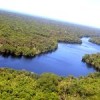
Guatemalan Beaches Threatened by Iron and Gas Operations
"If they come here to extract iron from the beach, it will mean the destruction of our natural wealth and the end of tourism," warned Leonel Palma, a hotel employee in Puerto de San José on Guatemala’s Pacific coast, where the government has granted mineral exploration licenses.
Pension Fund Investors May be to Blame for Escalating Food Prices
Long-term investors like pension funds are probably the reason why the prices of commodities, including crops, have been driven to a higher level than in 2008 when food riots erupted in 30 countries, according to the British nongovernmental organisation Christian Aid.
BRAZIL: New Forest Code Could Hinder Climate Goals
The adoption of a new Forest Code in Brazil could threaten efforts to curb Amazon deforestation, which was reduced 70 percent between 2004 and 2010.
DEVELOPMENT: Chinese Step In, Efficiently
For Jany Chen from Shanghai, concern often-raised in Europe and North America about the Chinese invasion of Africa is a lot of wasteful talk that deserves to be flushed down the toilet. Efficiently.« Previous Page — Next Page »


Through our global network of local writers, we are continuing our award-winning coverage of global and local environmental challenges, with a focus on the people for whom the ecosphere matters in a direct way: rural dwellers who have little means to protect themselves against adverse conditions; communities that need to switch to sustainable development in order to survive; poor women and children, who are the most vulnerable in natural disasters. Sponsored by the United Nations Environment Program (UNEP), the United Nations Development Program (UNDP) and The World Bank (WB), IPS also maintains the award-winning Tierramérica, a specialised information service on environment and development.

The Week with IPS

Tracking global progress towards a sustainable world


