
Wednesday, November 25, 2026



News and Views from the Global South
Environment
ENVIRONMENT-INDIA: Green Activists Gain Ground with Successive Victories
Green activists in India have chalked up a series of successes recently and feel heartened that the central government is heeding their call. A number of mega projects which would have displaced vulnerable communities or caused damage to the environment were recently scrapped by the government.Sao Tome and Principe at Oil Bonanza Crossroads
With an estimated 10 billion barrels of oil in the Gulf of Guinea, the small archipelago of Sao Tome and Principe faces the possibility of benefiting from considerable oil revenues. However, a report released by Human Rights Watch (HRW) on Tuesday documents the difficulties in managing the revenues from the hydrocarbon business in an effective and transparent way.
KENYA: A Bid to Save Macadamia Crops
Joseph Ndirangu Muriithi is a worried man. After watching the fall of coffee farming in Kenya a decade ago, he now fears that his other cash crop will also go into decline as a new disease preys on his macadamia trees.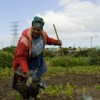
SOUTH AFRICA: Climate Change Policy Ignores Women Farmers
When asked if they have already felt the effects of climate change, Mary-Anne Zimri and Katrina Scheepers eagerly nod their heads. The two small-scale farmers say lack of rain this winter has foiled their planting season, ruined their harvest – and drastically slashed their income.Pakistani Officials Seek Funds, Debt Relief in Washington
Pakistani officials continued their quest for help in light of the floods that have affected 20 million people in their country by meeting with officials at the International Monetary Fund here Monday.Civil Society Watchdogs Crucial in New Global Order
Six hundred delegates from more than 80 countries flocked to Montreal Aug. 20-23 for the CIVICUS World Assembly in search of innovative ways to approach global challenges like poverty and climate change.Ecobreves – BRAZIL: City Beaches Could Disappear
Rising sea levels and the lack of sedimentation are leading to the disappearance of many of Brazil's beaches, according to geographer Dieter Muehe, who authored a study of the problem.Ecobreves – ARGENTINA: Massive Fish Die-Off
More than four tons of dead fish - including the sábalo (Prochilodus lineatus), tararira (Hoplias malabaricus), pejerrey (Odontesthes bonariensis) and catfish - appeared last week in the reservoir of the Hondo River in northern Argentina, apparently killed by industrial pollution.Ecobreves – HONDURAS: Fund for Climate Disasters in the Capital
The Honduran Congress approved 4.5 million dollars in a loan from the Inter-American Development Bank for recovery from the damage caused by heavy rains in Tegucigalpa.
ZAMBIA: Water Committee Prospers in Lusaka
Residents of Lusaka's George Compound remember the bad old days in the early 1990s, when the area suffered ugly outbreaks of waterborne diseases.
ENERGY: Brazilian Biofuels Run into EU Obstacles
Brazil has begun a counterattack on the European Union's measures for certifying crop-based fuels, which could lead to import barriers for this energy source coming from the South American giant.The Mystery of the Vanishing Squid in South Atlantic
Environmental factors, lack of cooperation and overfishing have caused a sharp fall in catches of squid in the southwestern Atlantic ocean, the most important fishery in the world for this species.BOTSWANA: Acquiring a Taste for Recycled Water
Many Batswana are quick to recoil at the mere mention of drinking treated wastewater.US: Govt Claims Slammed as “Final Kill” Looms for Gulf Oil Leak
Between April and August this year, 4.9 million barrels of oil were spilled into the Gulf of Mexico. How much remains today is not yet clear and is a hot topic of debate among academic and government scientists.
Mississippi Shrimpers Refuse to Trawl, Fearing Oil, Dispersants
The U.S. state of Mississippi recently reopened all of its fishing areas. The problem is that commercial shrimpers refuse to trawl because they fear the toxicity of the waters and marine life due to the BP oil disaster.
BRAZIL: Water Abounds in Amazon, But Sanitation Is Scarce
It might seem a bit strange to adopt, in the Amazon rainforest, a solution developed for drought-stricken northeastern Brazil. But rainwater collected on rooftops and stored in tanks is helping to improve the health, hygiene and overall living conditions of rural communities in the jungle.U.N. Steps Up Pressure to Raise Funds for Pakistan
The U.N. General Assembly met Thursday to express the world community's solidarity with the people of Pakistan and to urge member states to step up their aid commitment to the flood stricken country.MEXICO: Capital Badly in Need of Urban Regeneration
Is urban regeneration feasible in Mexico's capital city? This is a question asked by planning experts and by a large proportion of the city's population. Some projects currently underway indicate that the answer could be yes.
ENVIRONMENT: Uruguay Tries to Solve Its Forestry Puzzle
"A Uruguayan consumes 40 kilos of paper per year, compared to 400 kilos consumed by someone in Finland. We produce wood pulp to feed foreign consumption," says sociologist María Selva Ortiz, representative of the environmental group Redes-Friends of the Earth Uruguay.KENYA: Poor Women Beset On All Sides By Violence
"My daughter had repeatedly tried to describe to me what her step-father would do to her when I was not home," says Wanza*, a 28-year-old mother resident of Nairobi's Mathare slum. "On this particular night I pretended to be asleep and watched as he left our bed and went for my eight-year-old daughter."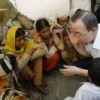
Funding Lags to Aid Pakistan’s Millions of Displaced
U.N. Secretary-General Ban Ki-moon returned from Pakistan Monday calling the floods there the worst disaster he has ever witnessed and urging the world community to speed up assistance to the Pakistani people.« Previous Page — Next Page »


Through our global network of local writers, we are continuing our award-winning coverage of global and local environmental challenges, with a focus on the people for whom the ecosphere matters in a direct way: rural dwellers who have little means to protect themselves against adverse conditions; communities that need to switch to sustainable development in order to survive; poor women and children, who are the most vulnerable in natural disasters. Sponsored by the United Nations Environment Program (UNEP), the United Nations Development Program (UNDP) and The World Bank (WB), IPS also maintains the award-winning Tierramérica, a specialised information service on environment and development.

The Week with IPS

Tracking global progress towards a sustainable world


