
Wednesday, November 25, 2026



News and Views from the Global South
Environment
MOZAMBIQUE: Women at Forefront of Resisting Climate Change
The Mozambican government has adopted various policies to address the effects of climate change, with special attention to women as studies show that they are more adversely affected by this phenomenon.
GALÁPAGOS: The Return of the Giant Tortoise
The historic reintroduction of giant tortoises is under way on Pinta Island, where not a single one of the famous animals that gave their name to the Ecuadorian archipelago of Galápagos remained.
COLOMBIA: Palm Planters and Displaced People Wait for New Government
Twenty-three African palm plantation owners, who invested 34 million dollars in Colombia up to 2003 and have spent another 15 million dollars on a palm oil refinery, are soon to be sentenced by a court.The Return of the Bicycle
The bicycle has many attractions as a form of personal transportation. It alleviates congestion, lowers air pollution, reduces obesity, increases physical fitness, does not emit climate-disrupting carbon dioxide, and is priced within the reach of the billions of people who cannot afford a car.
DEVELOPMENT-LAOS: Water Flows from Villagers’ Own Toil
With just 13.4 percent of the country’s 6.3 million people having access to piped water at present, Lao authorities would have to work more than double time if the rest of the population are to have clean and safe water within a decade.AMERICAS: We Need Sustainable Development Banks, Say NGOs
Non-governmental organisations from across the Americas are demanding that the World Bank and the Inter-American Development Bank institute policies that favour sustainable energy and help mitigate climate change.
GERMANY: Nature vs. Nurture in Forest Recovery
Amidst criticism and applause from environmentalists and experts, a programme is emerging in Germany to expand the total area covered by forests -- to as much as five percent of national territory. The debate centres on just how much human intervention there should be.
The Return of the Giant Tortoise
An ecological restoration plan in Ecuador is unfolding with the successful return of 39 Galápagos tortoises to their habitat.
“Latin America Faces an Environmental Emergency”
An Uruguayan expert warns that the unrelenting extraction of natural resources in Latin America fails to take into account the environmental damage, with the pretext that the wealth generated will sustain social programs.Ecobreves – BRAZIL: Lack of Seeds for Reforestation
The scarcity of seeds and seedlings of native species is blocking Brazil's plan to plant 20 billion trees over the next five years.Ecobreves – VENEZUELA: A Bicycle in Exchange for Zero Garbage
The government of the northern Venezuelan state of Miranda, which covers 8,000 square kilometers and includes the eastern one-third of Caracas, launched a "Zero Garbage" program at the Monagas school to convince students and teachers alike to recycle plastic, paper and glass.Ecobreves – HONDURAS: Coral Reefs Have Legal Protection
The Honduran Parliament approved a special law to preserve coral reefs in the Islands of Bahía, in the Caribbean, said legislator Germán Leitzelar, of the Innovation and Social Democratic Unity Party.Ecobreves – CHILE: Environmentalists on War Footing
More than 70 national and foreign organizations together issued a public statement in opposition to the proliferation of open-pit coal mining projects in Chile, citing their disastrous environmental consequences.
MEXICO: Conservation Can Be a Weapon Against Poverty
"I cut down all of that section," said Esteban Martínez as he pointed to a rectangle of land cleared of trees in the central Mexican state of Querétaro.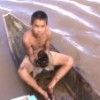
PERU: ‘Don’t Minimise’ Impacts of Amazon Oil Spill
Pluspetrol's Jun. 19 petroleum spill has left the Marañón River, in the Peruvian Amazon, with oil and grease levels thousands of times greater than the maximum allowed for human consumption, affecting more than 4,000 local residents.ANGOLA: Drilling Ever Deeper, Hoping for the Best
While BP struggles to contain an oil spill that U.S. government estimates indicate is now the largest ever in the Gulf of Mexico, questions are being asked about how well prepared Africa's oil-producing countries are for a similar incident.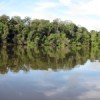
BRAZIL: Belo Monte Dam Means Floods for Some, Drought for Others
"There will be two years of abundance, and then famine," says Brazilian indigenous leader José Carlos Arara, laying bare his opinion of the promises that the Belo Monte hydroelectric dam will not alter the living conditions of the people in this part of the eastern Amazon.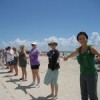
Gulf Spill Galvanises Activist Community
With the U.S .government and oil giant British Petroleum under fire for their handling of the more than two-month-old Gulf Coast oil spill disaster, environmental and community activists across the country are taking matters into their own hands.Caribbean Summit Seeks United Front to Economic Crisis
Caribbean Community (Caricom) leaders are gathering here next week for their annual summit still struggling to recover from the two-year global economic and financial crisis that has taken a major toll on their individual economies.
PARAGUAY: Clean Water Out of Reach for Native Peoples
Of the many things that are not within the reach of everyone in Paraguay, safe drinking water is the one the indigenous population longs for most.Free Ride for Oil and Coal Industry May Be Over
Every day, governments give away an estimated two billion dollars of taxpayer money to the fossil fuel industry. This unmatched largesse to a highly profitable sector by countries verging on bankruptcy or unable to feed large numbers of their own people is "complete madness", according to many experts.« Previous Page — Next Page »


Through our global network of local writers, we are continuing our award-winning coverage of global and local environmental challenges, with a focus on the people for whom the ecosphere matters in a direct way: rural dwellers who have little means to protect themselves against adverse conditions; communities that need to switch to sustainable development in order to survive; poor women and children, who are the most vulnerable in natural disasters. Sponsored by the United Nations Environment Program (UNEP), the United Nations Development Program (UNDP) and The World Bank (WB), IPS also maintains the award-winning Tierramérica, a specialised information service on environment and development.

The Week with IPS

Tracking global progress towards a sustainable world


